c. 1585
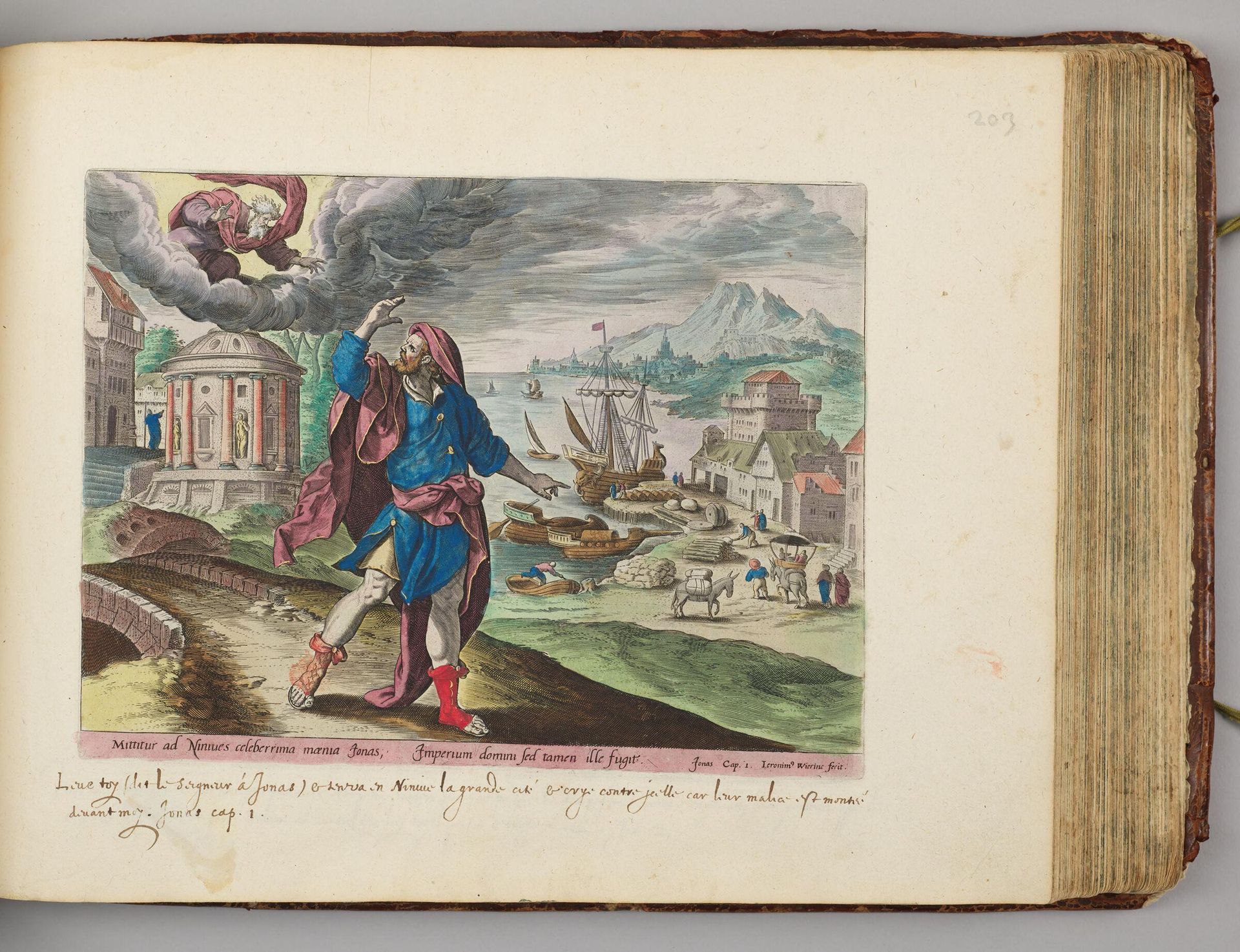
Jonah Fleeing the Presence of the Lord


Listen to curator's interpretation
Curatorial notes
Curator: Hieronymus Wierix's engraving, "Jonah Fleeing the Presence of the Lord," depicts the prophet’s ill-fated journey. Its crisp lines and vibrant washes of color offer a complex vision. Editor: There’s a palpable sense of anxiety in this scene. Jonah, caught between divine command and personal will, emanates conflict. Curator: Indeed. The image employs classic symbols. The ship stands for escape, while God’s wrath appears as a storm cloud, signifying divine power and inevitable judgment. Editor: The architectural elements, like the rotunda on the left, contribute to the scene’s unsettling atmosphere, suggesting a world of classical order disrupted by Jonah's disobedience. How would this image have been received in its time? Curator: Likely with a mix of moral instruction and awe. Wierix, deeply rooted in the Counter-Reformation, used such imagery to reinforce religious doctrine and the consequences of defying divine authority. Editor: Understanding the historical context transforms this from a mere illustration to a potent political and religious statement. It makes me consider the role of art in shaping social behaviors. Curator: Precisely! Symbols like these retain their power because they tap into archetypal human experiences. Editor: I find myself contemplating how interpretations evolve—and remain relevant.