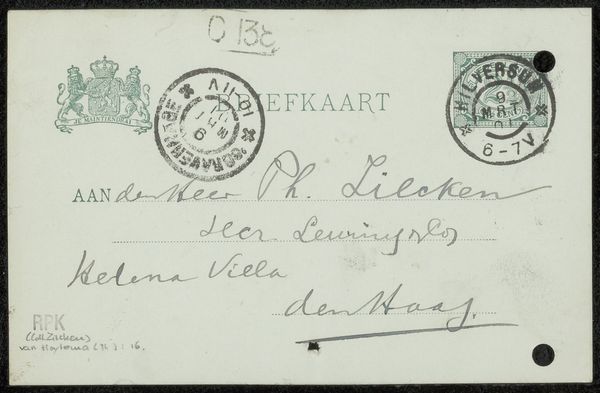
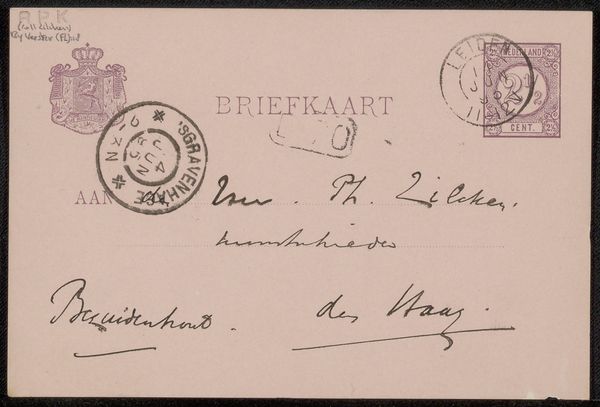
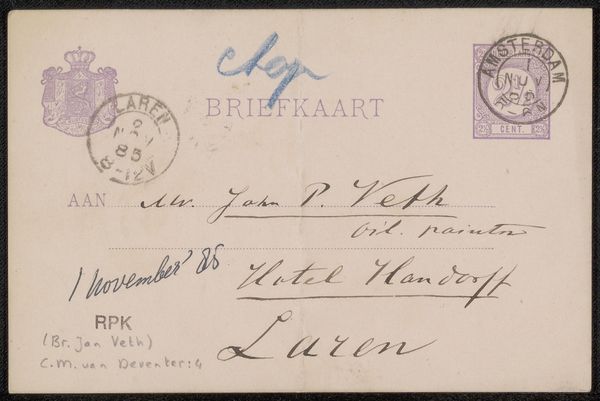
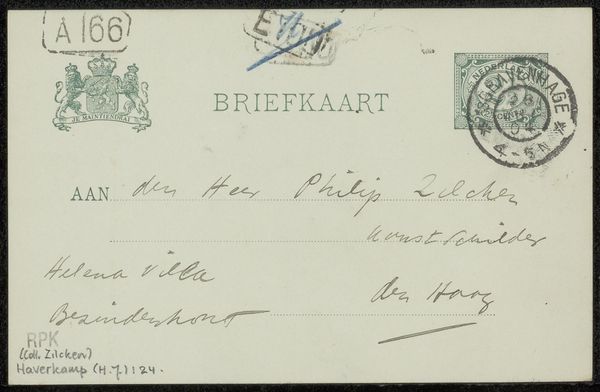
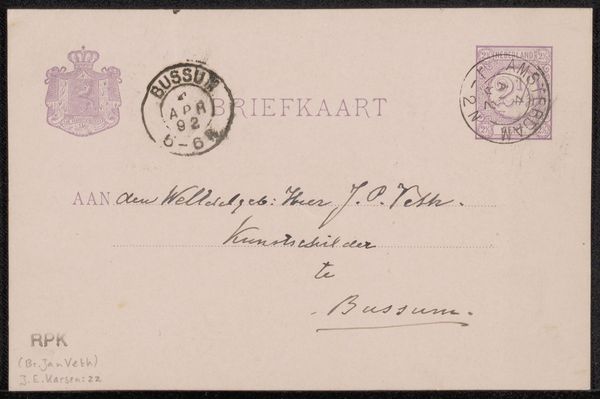
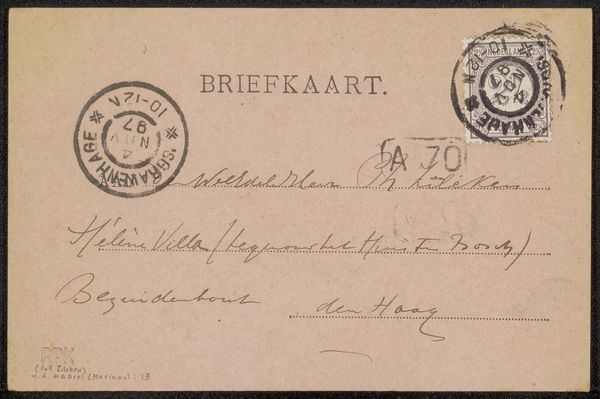
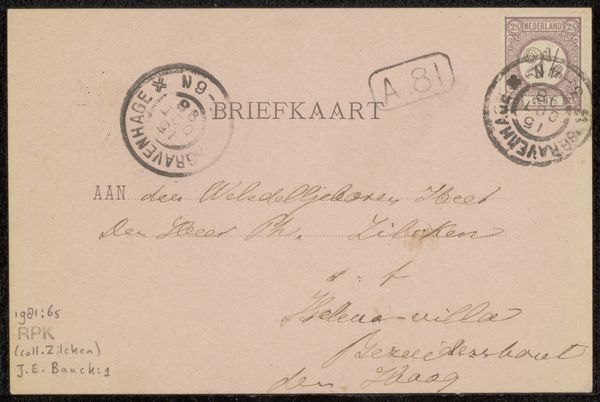
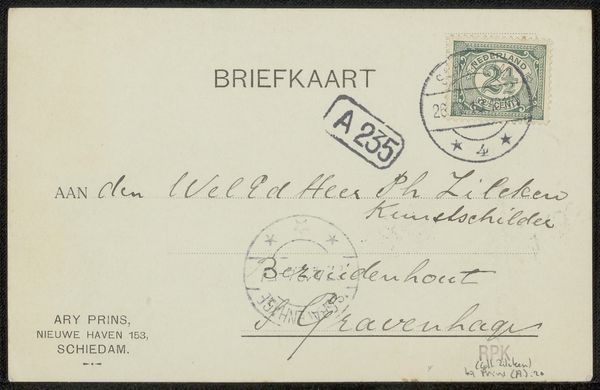
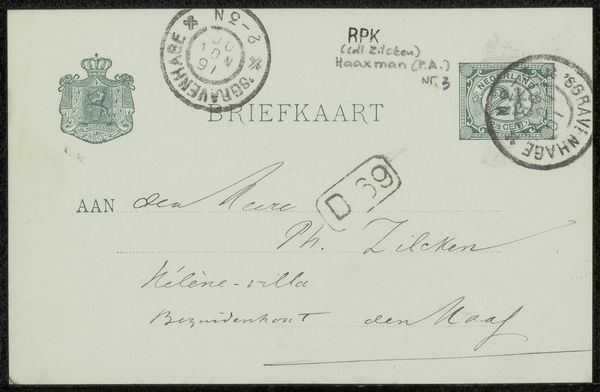
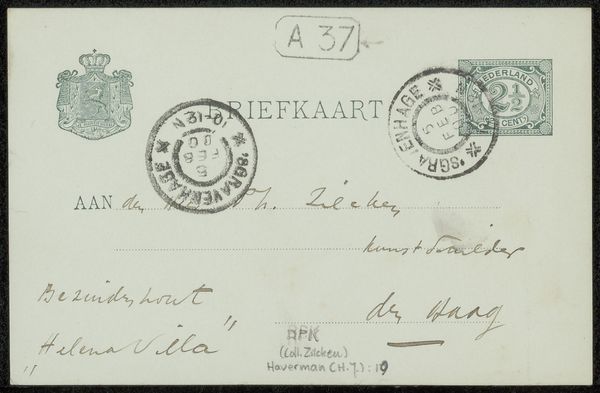
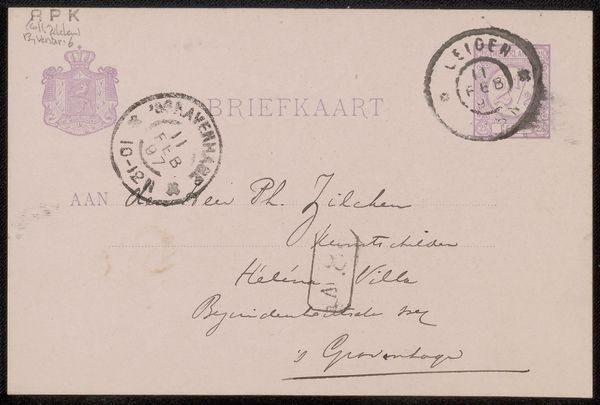
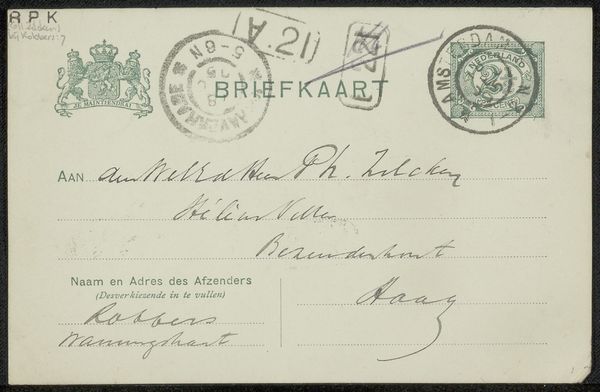
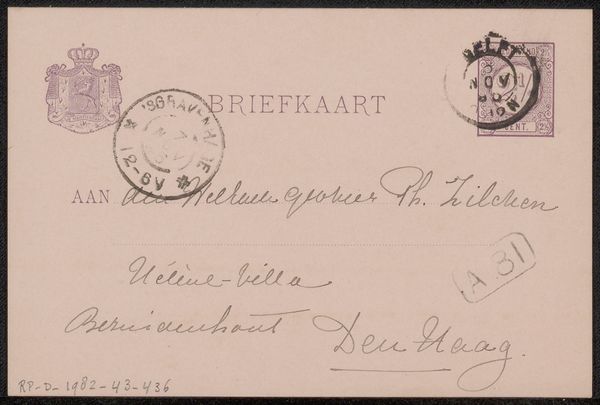
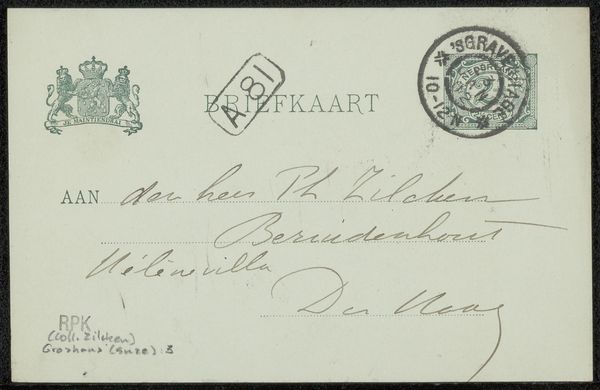
drawing, photography, ink
#
drawing
#
photography
#
ink
Copyright: Rijks Museum: Open Domain
Editor: So, this is "Briefkaart aan Philip Zilcken," a postcard potentially created between 1900 and 1911 by Willem van Konijnenburg. It combines drawing, photography, and ink. It seems so ordinary, yet I feel like it’s hinting at something. What do you see in this seemingly simple piece of correspondence? Curator: I see echoes of connection. Notice the heraldic symbol, the lion rampant – a familiar emblem of national identity, used to publicly legitimise its administration. Then consider the stamp; not just an emblem of state, but a symbol of exchange, of something passed from one hand to another. It suggests shared experience, commerce, and shared social understanding. Editor: So, beyond just delivering a message, it's participating in cultural meaning? Curator: Precisely. Consider the postmarks, those official stamps marking time and place. They ground this little card in a specific moment. They act as tiny, almost ritualistic symbols validating its journey. Editor: It’s interesting to think of these small details – stamps, seals, handwriting – as part of a visual language we’re still deciphering today. Curator: Absolutely. These aren't just administrative necessities. They are vestiges of history, capturing individual human stories alongside collective cultural values. And even the act of handwriting speaks volumes – a unique imprint of the sender, a direct, intimate link across time. It asks, how does state symbology intersect the daily lives of its people? Editor: I hadn't thought about the personal touch of handwriting in that context before. This really puts a new spin on the meaning of "correspondence." Thank you. Curator: My pleasure. I hope it encourages visitors to appreciate how official and vernacular symbologies shape even our most personal communications.
Comments
No comments
Be the first to comment and join the conversation on the ultimate creative platform.
 Collect
 React
React Comment
More like this