About this artwork
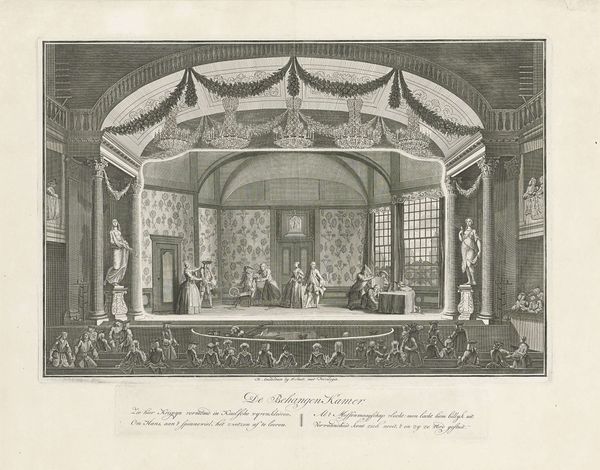
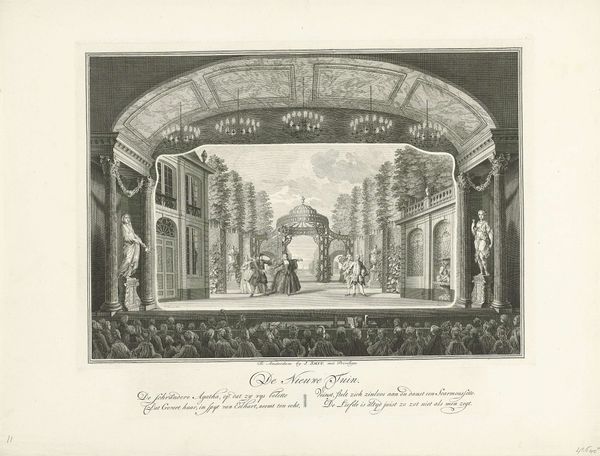
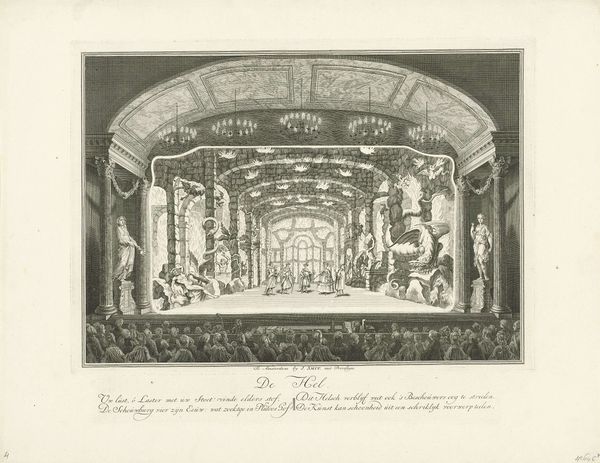
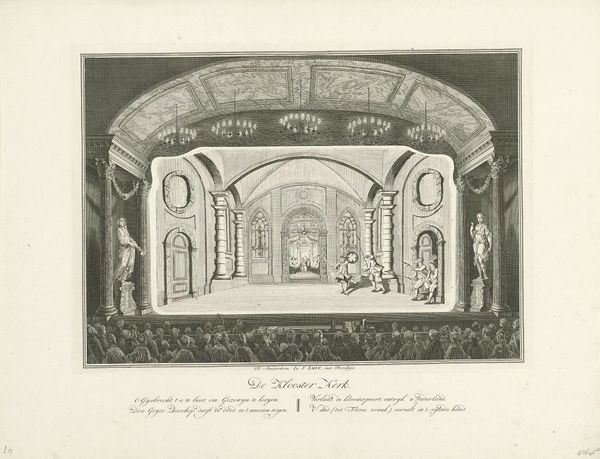
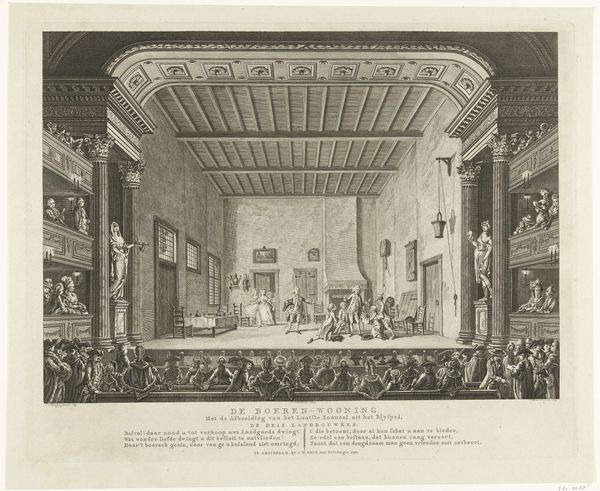
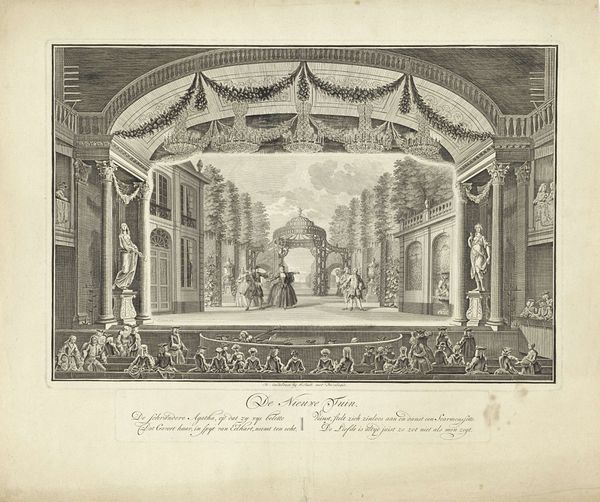
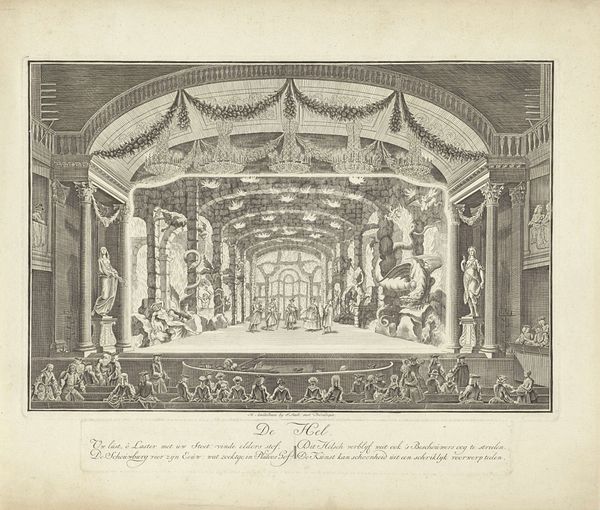
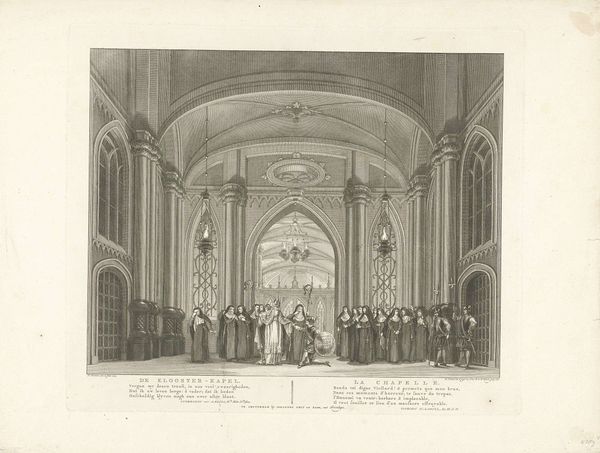
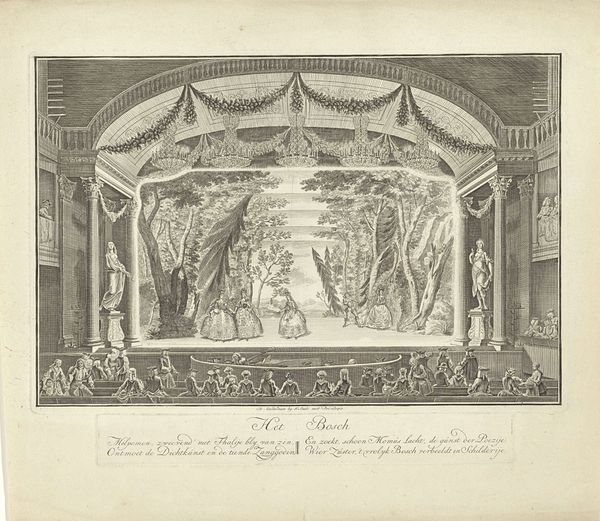
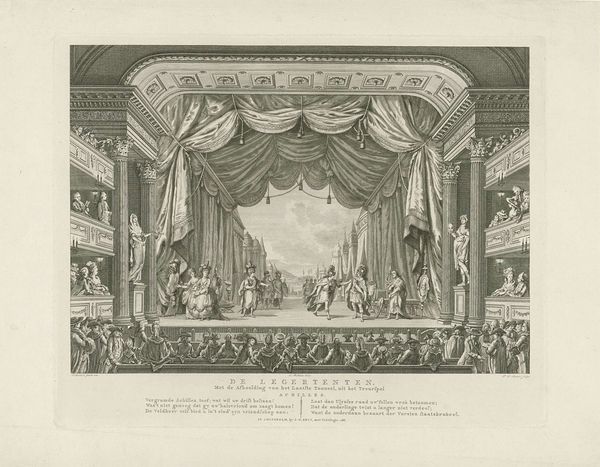
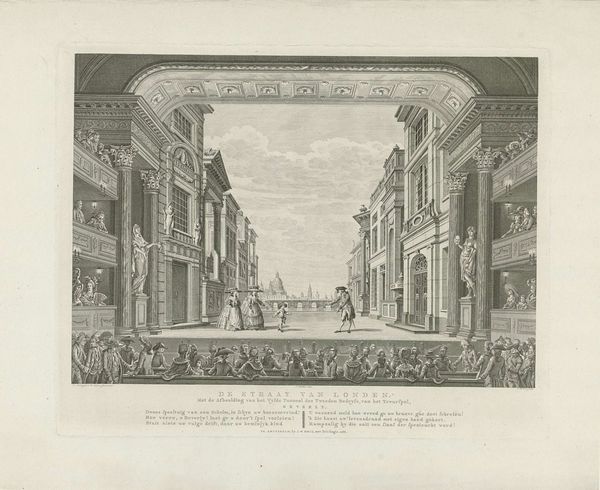
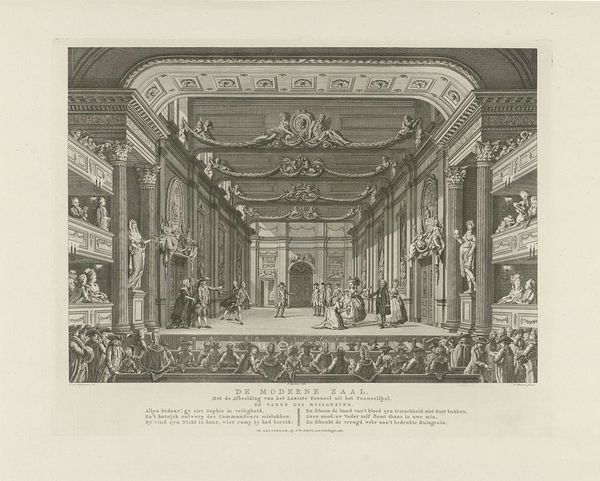
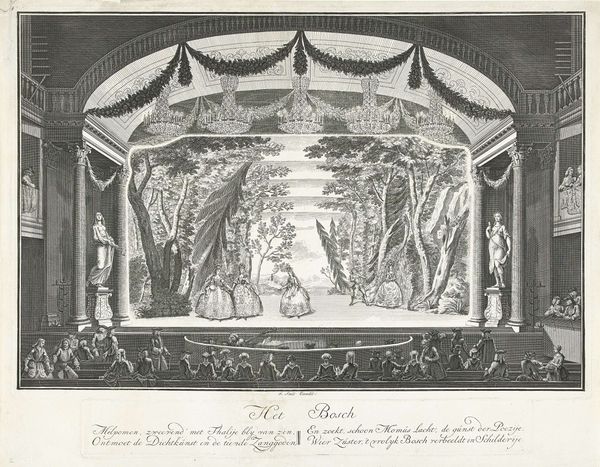
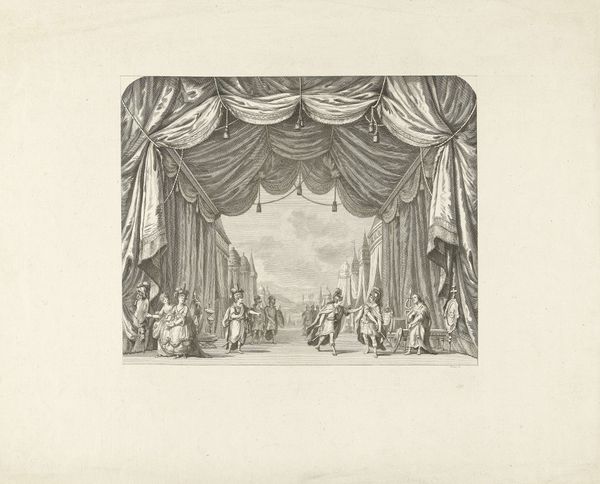
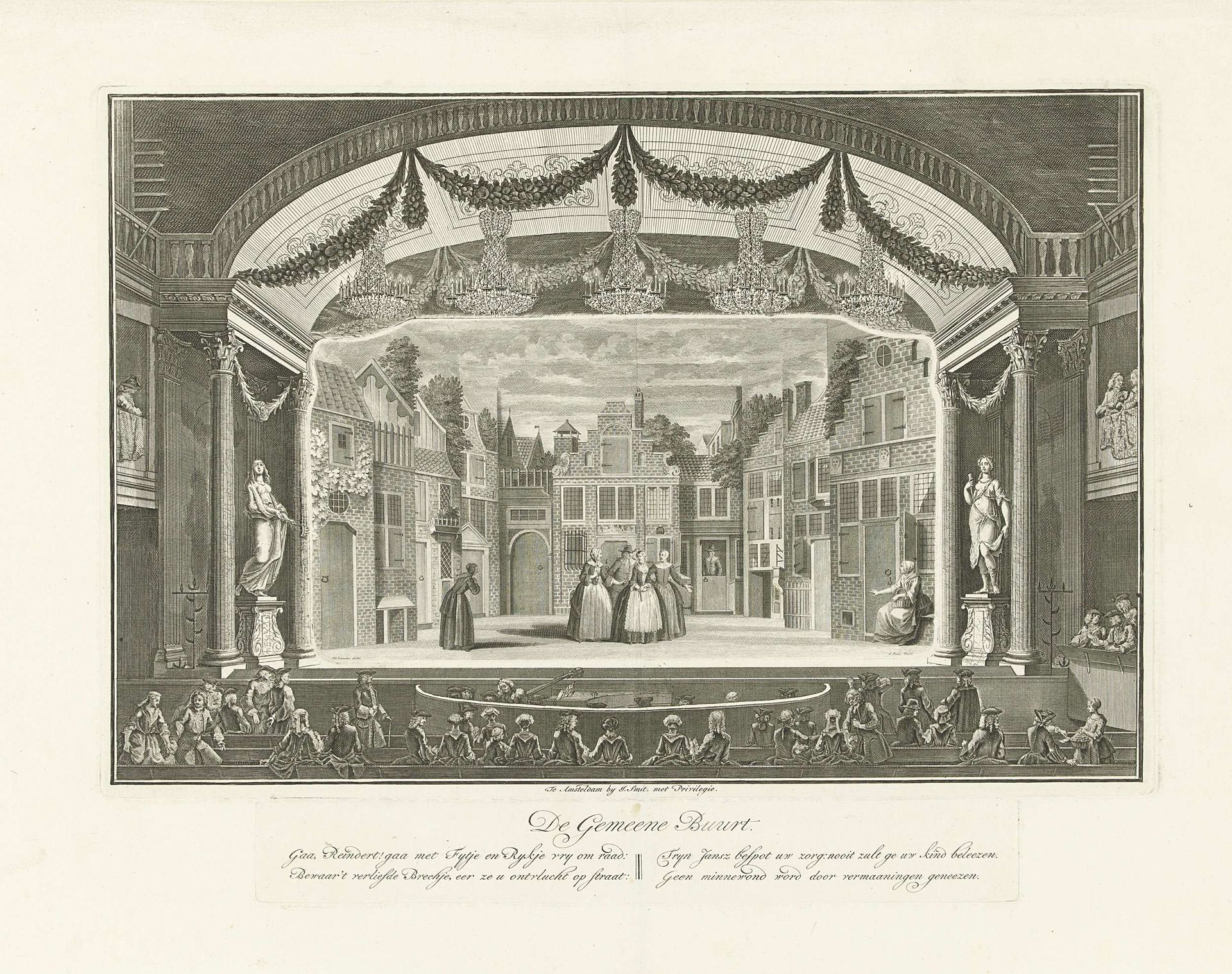
This print of a theater interior, showing a stage set for "De Gemeene Buurt," was made by Jan Punt in the 18th century. As an engraving, it's a product of highly skilled labor. The artist meticulously cuts lines into a metal plate, which is then inked and pressed onto paper. Consider the work involved in each print: the preparation of the plate, the precision of the engraving, and the controlled application of ink. These processes, while perhaps undervalued today, were central to disseminating knowledge and culture in the 18th century. Think about how the print medium would have made theater more accessible, through circulation of the image. It's fascinating to consider the contrast between the high-art subject matter of theater, and the reproductive nature of printmaking, a medium that allowed for wider distribution. It challenges our notions of what constitutes a unique work of art, versus a multiple.
Schouwburg met toneeldecor: De Gemeene Buurt 1760 - 1765

Jan Punt
1711 - 1779Location
RijksmuseumArtwork details
- Dimensions
- height 420 mm, width 532 mm
- Location
- Rijksmuseum
- Copyright
- Rijks Museum: Open Domain
Comments
No comments
About this artwork
This print of a theater interior, showing a stage set for "De Gemeene Buurt," was made by Jan Punt in the 18th century. As an engraving, it's a product of highly skilled labor. The artist meticulously cuts lines into a metal plate, which is then inked and pressed onto paper. Consider the work involved in each print: the preparation of the plate, the precision of the engraving, and the controlled application of ink. These processes, while perhaps undervalued today, were central to disseminating knowledge and culture in the 18th century. Think about how the print medium would have made theater more accessible, through circulation of the image. It's fascinating to consider the contrast between the high-art subject matter of theater, and the reproductive nature of printmaking, a medium that allowed for wider distribution. It challenges our notions of what constitutes a unique work of art, versus a multiple.
Comments
No comments