About this artwork
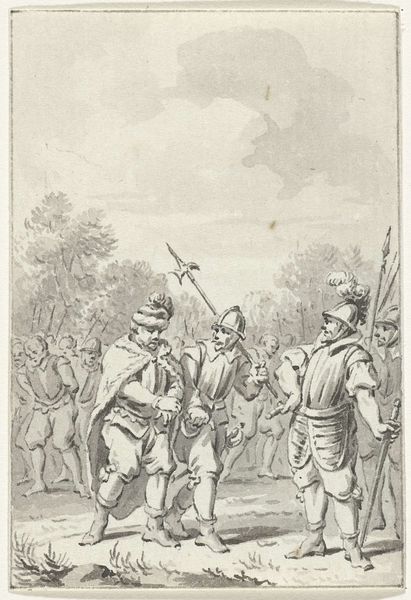
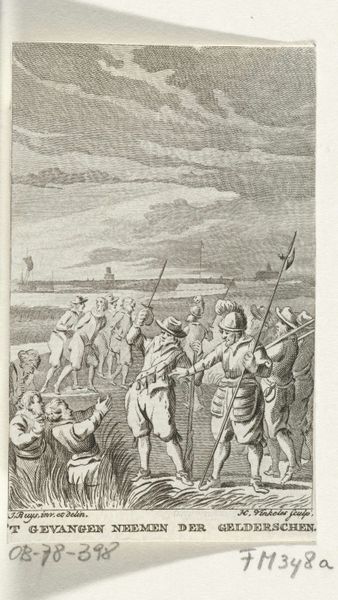
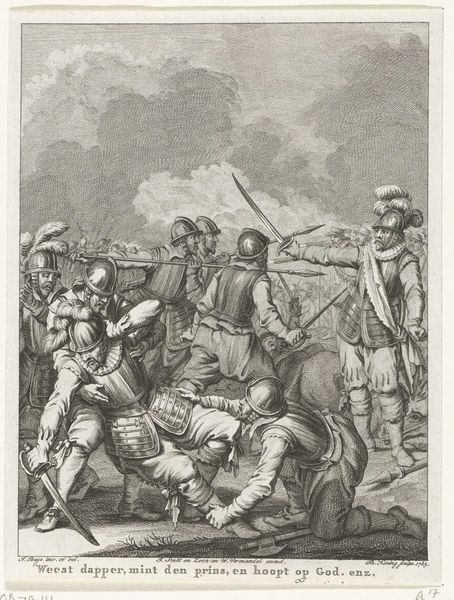
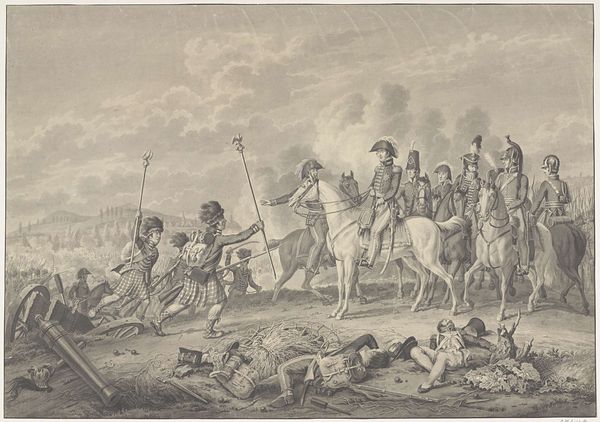
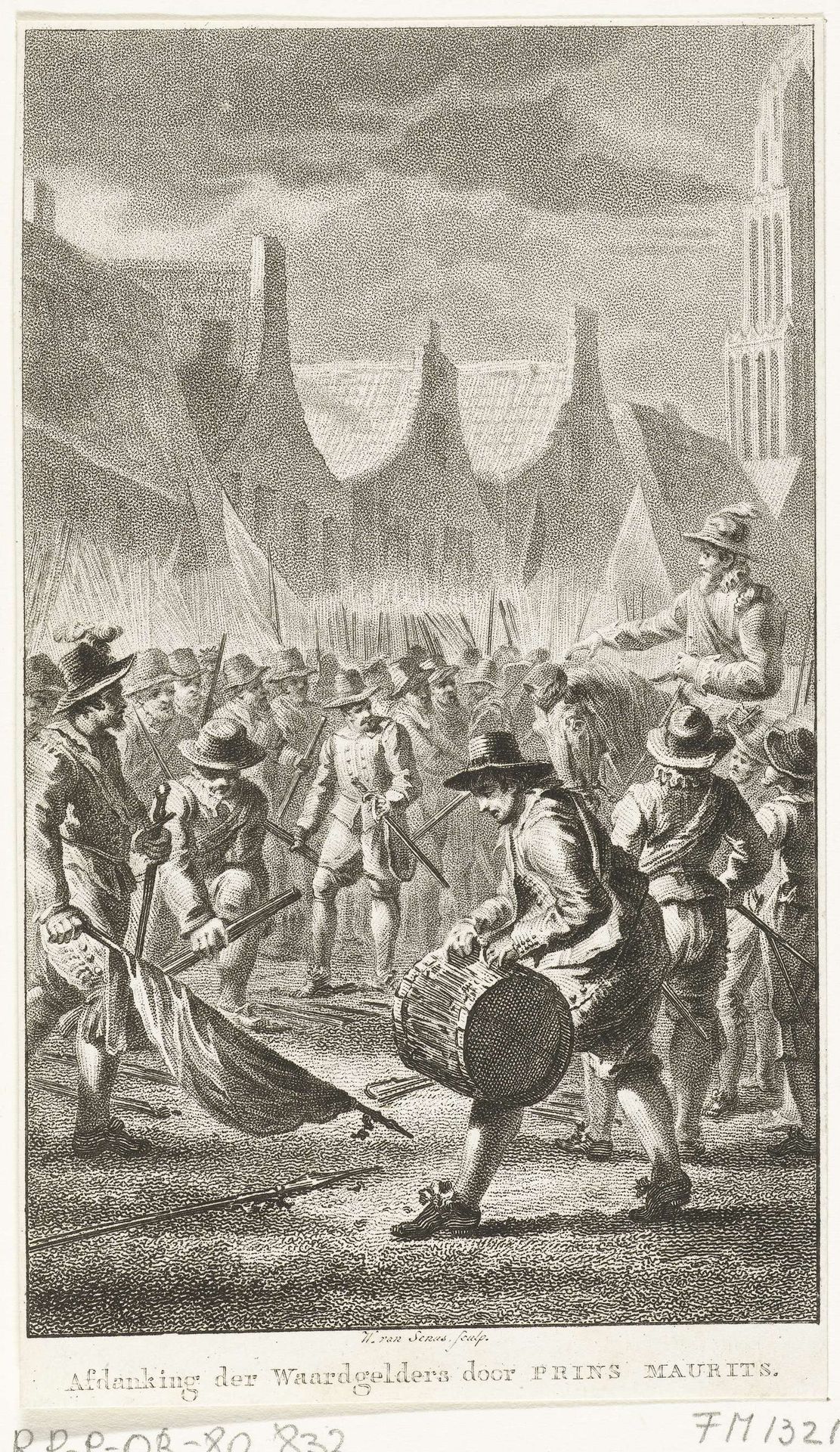
Willem van Senus created this print, "Het afdanken van de waardgelders te Utrecht, 1618", using engraving, a process that involves meticulously cutting lines into a metal plate. The fine lines and tonal variations achieved through this method allow for detailed depictions of figures and settings. Considered through the lens of labor and class, the print captures a moment of disbandment, where soldiers, presumably of lower social standing, are being dismissed. The act of disbanding, while seemingly straightforward, has significant implications for these individuals' livelihoods and their place in society. Their uniforms, flags, and weapons—products of industry and labor themselves—are rendered obsolete in this instant. Senus’s technique of engraving further emphasizes the social context of the scene. Each line etched into the metal plate represents not only the artist's labor but also the broader economic and political forces shaping the lives of the subjects depicted. The print serves as a reminder of the human cost often hidden behind historical events and the labor involved in both creating and dismantling systems of power.
Het afdanken van de waardgelders te Utrecht, 1618
1783 - 1851

Willem van Senus
1773 - 1851Location
RijksmuseumArtwork details
- Dimensions
- height 149 mm, width 88 mm
- Location
- Rijksmuseum
- Copyright
- Rijks Museum: Open Domain
Comments
Share your thoughts
About this artwork
Willem van Senus created this print, "Het afdanken van de waardgelders te Utrecht, 1618", using engraving, a process that involves meticulously cutting lines into a metal plate. The fine lines and tonal variations achieved through this method allow for detailed depictions of figures and settings. Considered through the lens of labor and class, the print captures a moment of disbandment, where soldiers, presumably of lower social standing, are being dismissed. The act of disbanding, while seemingly straightforward, has significant implications for these individuals' livelihoods and their place in society. Their uniforms, flags, and weapons—products of industry and labor themselves—are rendered obsolete in this instant. Senus’s technique of engraving further emphasizes the social context of the scene. Each line etched into the metal plate represents not only the artist's labor but also the broader economic and political forces shaping the lives of the subjects depicted. The print serves as a reminder of the human cost often hidden behind historical events and the labor involved in both creating and dismantling systems of power.
Comments
Share your thoughts