About this artwork
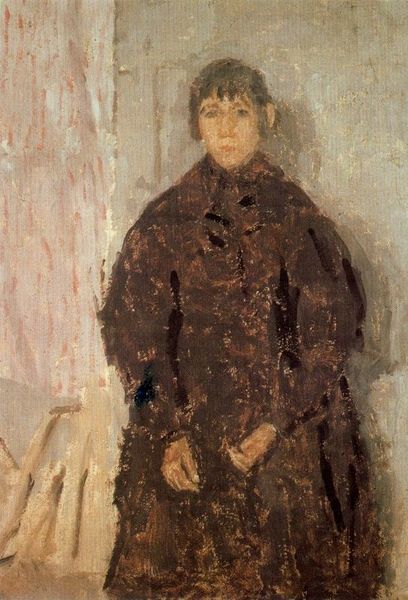
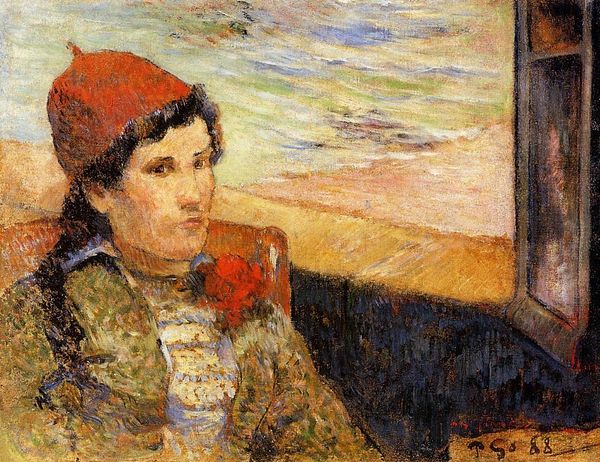
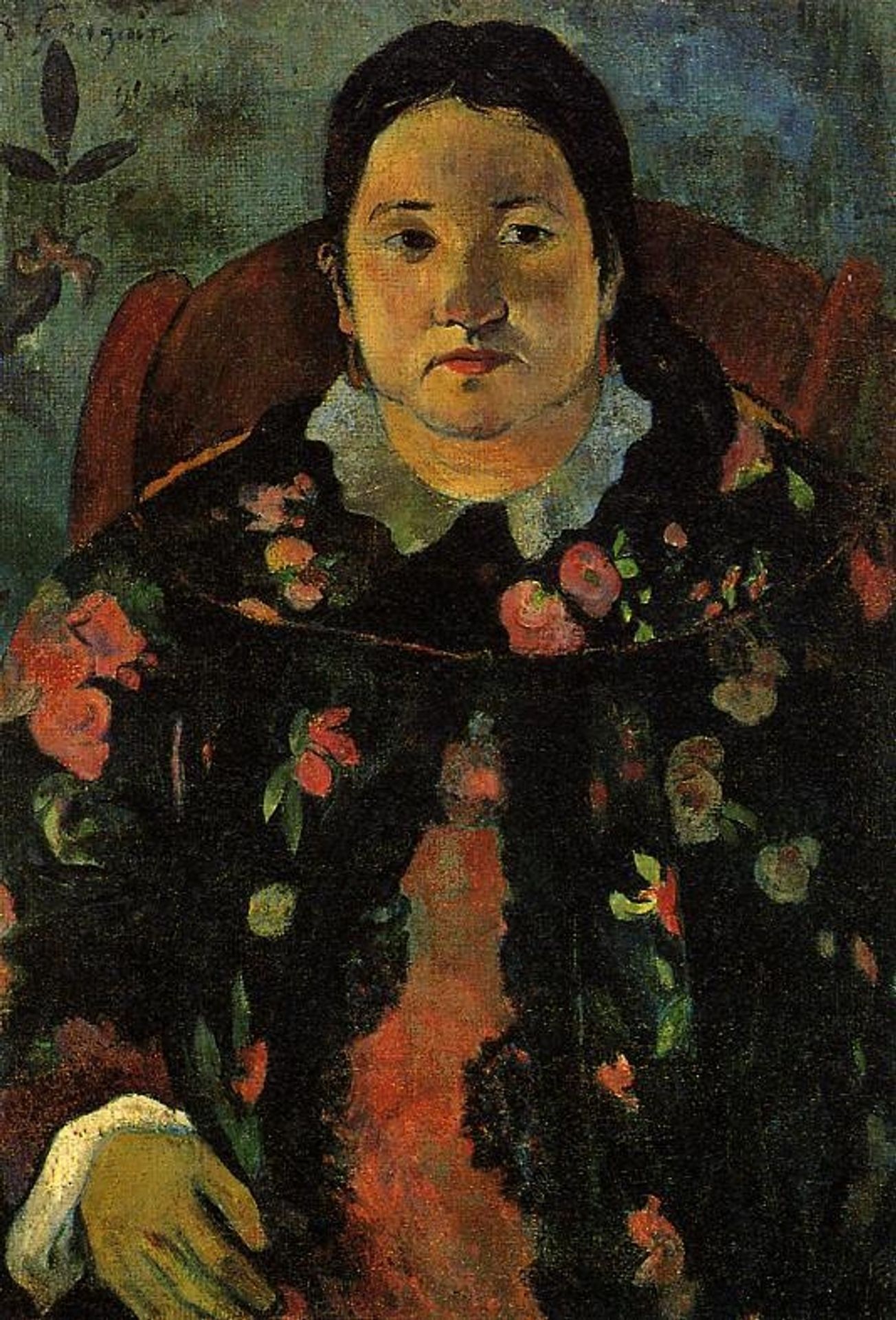
Paul Gauguin’s "Portrait of Suzanne Bambridge," held at the Royal Museums of Fine Arts of Belgium, presents a seated woman rendered in a palette of earthy tones, with vibrant floral accents on a dark patterned dress. The overall effect is one of flattened perspective and deliberate simplification. Gauguin's approach to composition in this portrait challenges conventional representation, embodying a shift towards modernist aesthetics. The flattening of the picture plane, combined with the non-naturalistic use of colour, moves away from traditional illusionism, focusing instead on the symbolic and emotional potential of the visual elements themselves. The heavy outlines and blocks of colour evoke a sense of the primitive, a quality Gauguin sought in his rejection of Western academic art. Ultimately, this portrait encapsulates Gauguin's broader project of deconstructing established artistic norms. By prioritizing formal elements over realistic depiction, he not only challenges the viewer's expectations but also invites us to reconsider the very nature of representation itself.
Portrait of Suzanne Bambridge
1891

Paul Gauguin
1848 - 1903Location
Royal Museums of Fine Arts of Belgium, Brussels, BelgiumArtwork details
- Medium
- painting, oil-paint, impasto
- Dimensions
- 70 x 50 cm
- Location
- Royal Museums of Fine Arts of Belgium, Brussels, Belgium
- Copyright
- Public domain
Tags
Comments
Share your thoughts
About this artwork
Paul Gauguin’s "Portrait of Suzanne Bambridge," held at the Royal Museums of Fine Arts of Belgium, presents a seated woman rendered in a palette of earthy tones, with vibrant floral accents on a dark patterned dress. The overall effect is one of flattened perspective and deliberate simplification. Gauguin's approach to composition in this portrait challenges conventional representation, embodying a shift towards modernist aesthetics. The flattening of the picture plane, combined with the non-naturalistic use of colour, moves away from traditional illusionism, focusing instead on the symbolic and emotional potential of the visual elements themselves. The heavy outlines and blocks of colour evoke a sense of the primitive, a quality Gauguin sought in his rejection of Western academic art. Ultimately, this portrait encapsulates Gauguin's broader project of deconstructing established artistic norms. By prioritizing formal elements over realistic depiction, he not only challenges the viewer's expectations but also invites us to reconsider the very nature of representation itself.
Comments
Share your thoughts