Copyright: Public domain
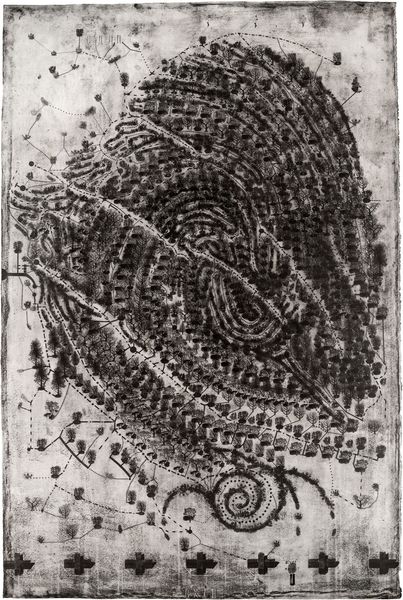
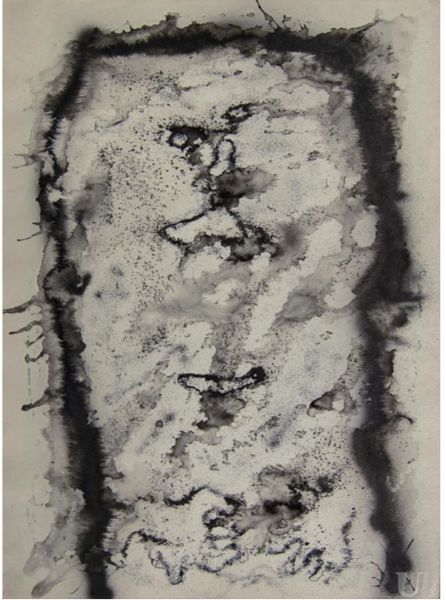
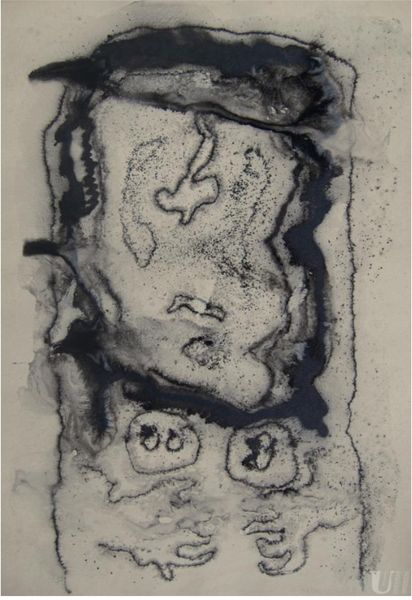
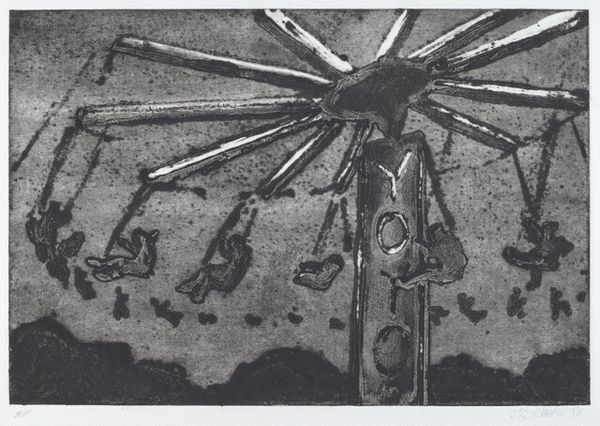
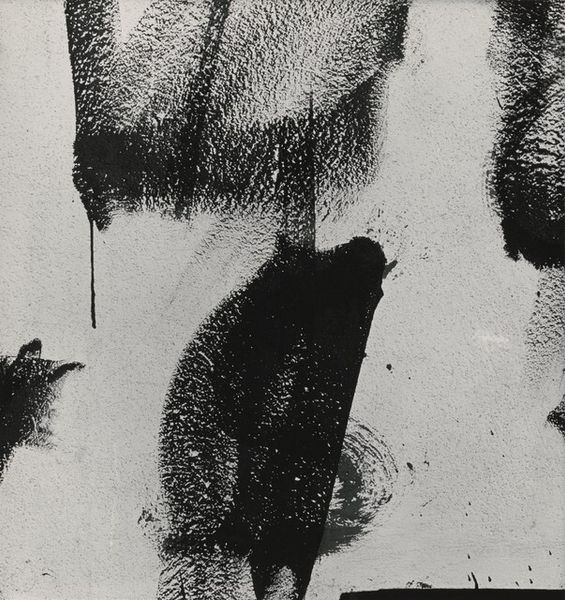
Victor Hugo, the famous 19th-century French novelist and poet, created this work on paper called "Lace and Ghosts," using ink and watercolor. The ghostly face that emerges from the delicate lace patterns reflects the fascination with the supernatural and the occult during the Romantic era. Hugo was involved in the political turmoil of his time and this interest can be traced in his artworks. The spectral imagery in "Lace and Ghosts" may also be interpreted as a commentary on the social and political unrest brewing in France. The juxtaposition of lace, symbolizing fragility and high society, with the macabre imagery of ghosts, could be read as a critique of the established order, haunted by its own history. Historians can look at Hugo's vast literary works, political essays, and biographical materials to find possible meanings and contexts for his art. By considering the institutional and social forces at play during Hugo's time, we can begin to understand how this work reflects and comments on the culture of 19th-century France.
Comments
No comments
Be the first to comment and join the conversation on the ultimate creative platform.
 Collect
 React
React Comment
More like this