About this artwork
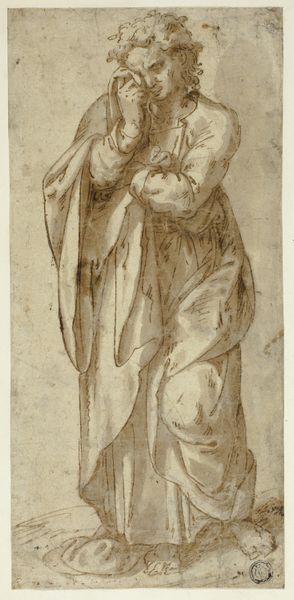
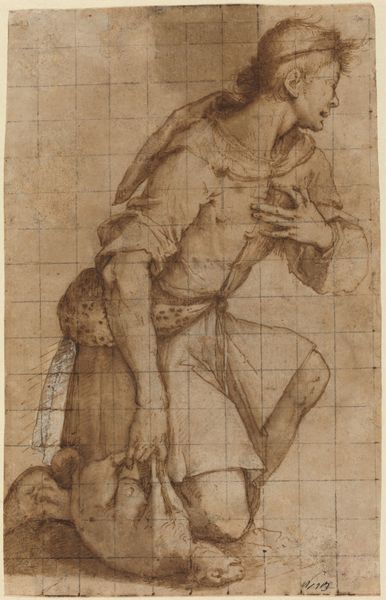
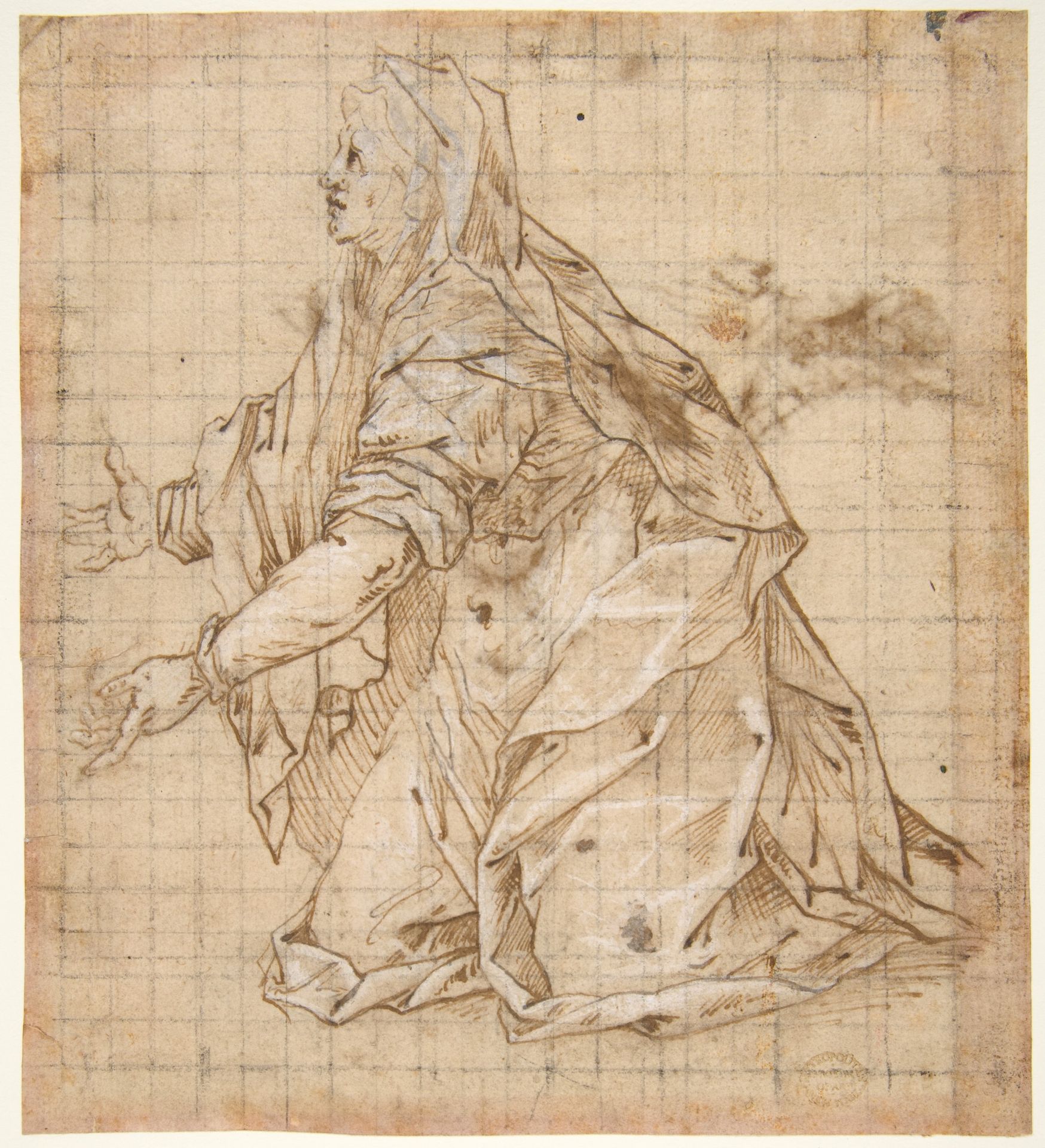
This drawing in pen and brown ink by Giovanni Battista Trotti, known as Il Malosso, features a woman kneeling. The figure is sketched on a grid, giving it a structured, almost architectural base. Notice the use of line. Trotti employs a dense network of hatching to model form and shadow, creating depth and volume with simple strokes. The figure's posture, kneeling and angled to the left, is dynamic, and the grid contrasts with the fluid lines of her robes and body, creating a tension between order and spontaneity. The overall composition seems to capture a moment of supplication or contemplation. The grid itself acts as a sign, a structuring device that invites us to consider how the artist approached the task of representation. It is both a tool for precise rendering and a framework that underlies the image, reminding us of the constructed nature of the artwork. It challenges our perception by exposing the underlying framework that informs how we see and interpret the world.
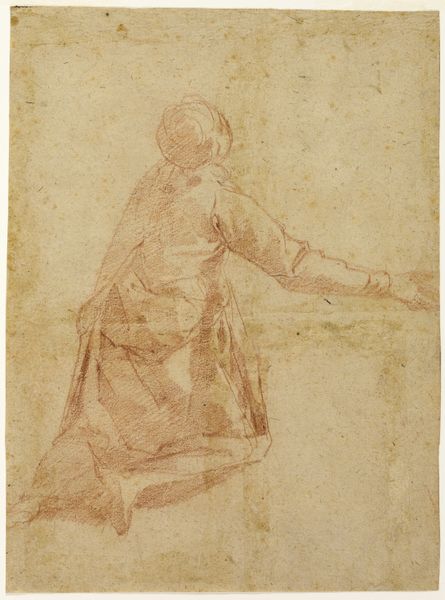
Woman Kneeling Facing Left (recto); Seated Woman Facing Right (verso) 1555 - 1619

Giovanni Battista Trotti ("Il Malosso")
1556 - 1619
The Metropolitan Museum of Art
Metropolitan Museum of Art, New York, NYArtwork details
- Medium
- drawing
- Dimensions
- 7-13/16 x 7-1/16 in. (19.9 x 17.9 cm)
- Location
- Metropolitan Museum of Art, New York, NY
- Copyright
- Public Domain
Tags
portrait
drawing
mannerism
figuration
italian-renaissance
Comments
No comments
About this artwork
This drawing in pen and brown ink by Giovanni Battista Trotti, known as Il Malosso, features a woman kneeling. The figure is sketched on a grid, giving it a structured, almost architectural base. Notice the use of line. Trotti employs a dense network of hatching to model form and shadow, creating depth and volume with simple strokes. The figure's posture, kneeling and angled to the left, is dynamic, and the grid contrasts with the fluid lines of her robes and body, creating a tension between order and spontaneity. The overall composition seems to capture a moment of supplication or contemplation. The grid itself acts as a sign, a structuring device that invites us to consider how the artist approached the task of representation. It is both a tool for precise rendering and a framework that underlies the image, reminding us of the constructed nature of the artwork. It challenges our perception by exposing the underlying framework that informs how we see and interpret the world.
Comments
No comments