1839 - 1860
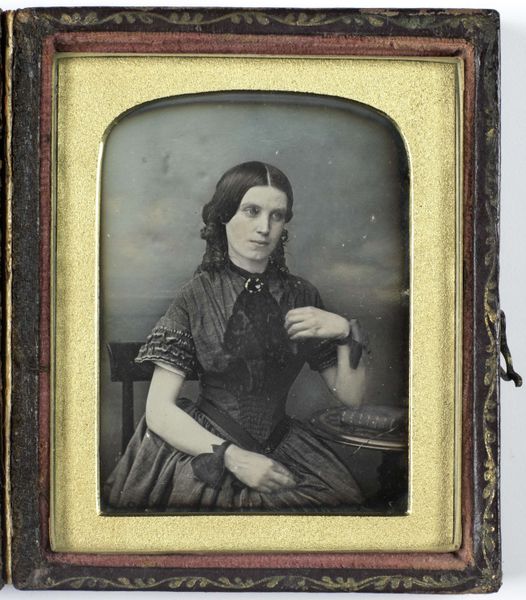
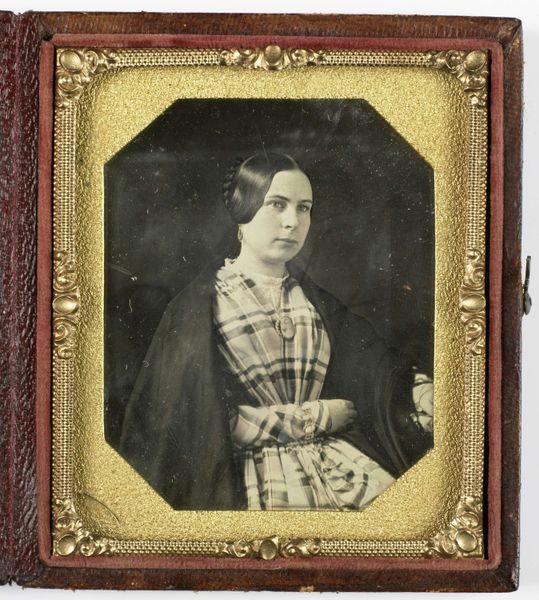
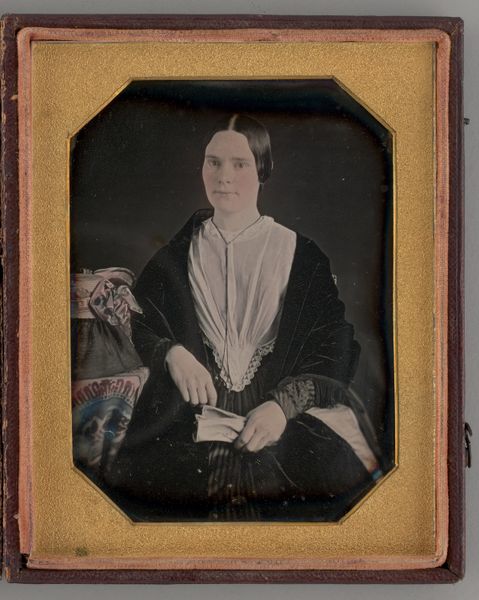
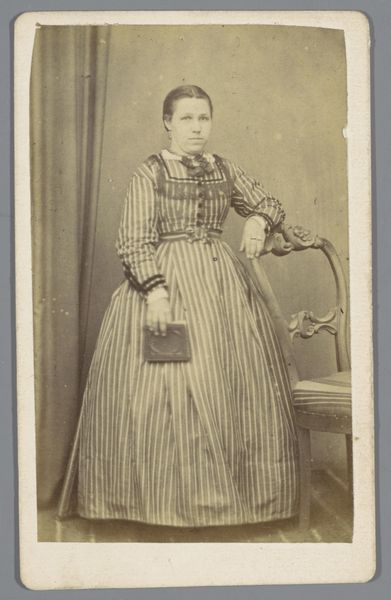
Untitled (Portrait of a Young Woman in a Dark Silk Dress)


Listen to curator's interpretation
Curatorial notes
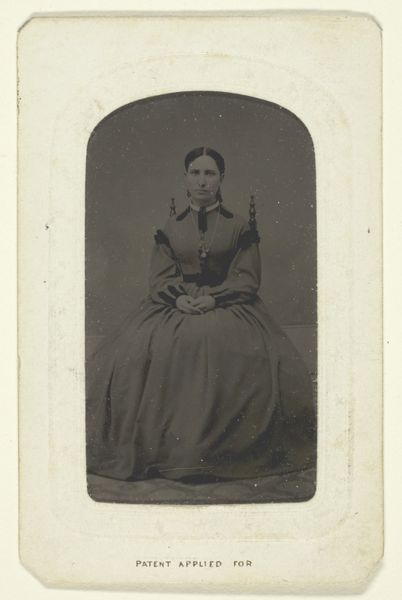
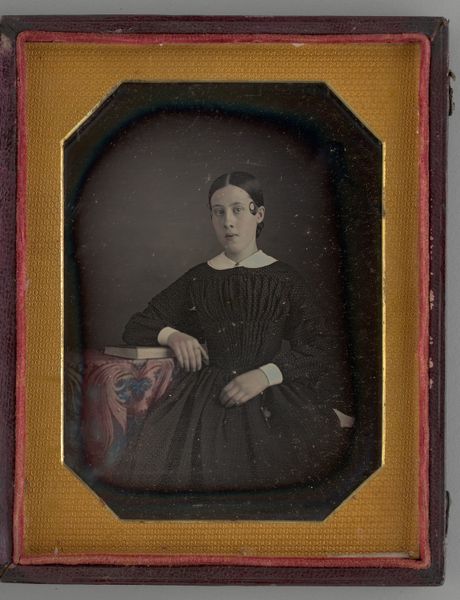
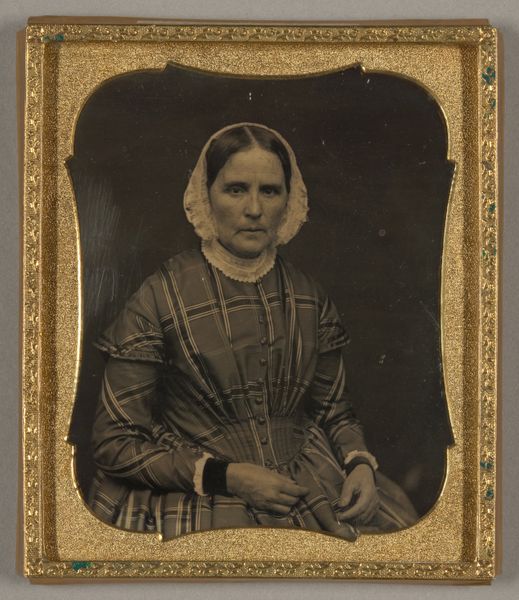
Editor: Here we have an anonymous daguerreotype from around the mid-19th century, titled "Untitled (Portrait of a Young Woman in a Dark Silk Dress)". The first thing that strikes me is its quiet intensity – almost haunting. How do you interpret this work? Curator: The haunting quality, I think, stems from several places. Daguerreotypes, as early photographs, offer a directness that painting often lacks. We're looking, supposedly, at an unmediated trace of this woman. What do you notice about her gaze? Editor: She looks directly at the viewer, but there’s also a sense of sadness or resignation in her expression, like she’s seen a lot for such a young age. Curator: Precisely. Now consider the social context. The 1840s and 50s were decades of tremendous social upheaval and debate about the roles of women. Middle and upper-class women were often constrained by expectations of domesticity, piety, and subservience. The dark dress, though silk, suggests a somber restraint. Do you think her expression could reflect some of those constraints, perhaps even a quiet resistance? Editor: That makes me see it differently. Maybe the intensity comes not just from the directness of the photography but from her subtle defiance. I hadn't considered her dress to symbolize restriction, rather than status. Curator: The personal is political, even in portraiture. The simple act of looking directly at the camera, unsmiling, could be interpreted as a quiet assertion of self in a society that sought to define women solely through their relationships to men. It is a powerful statement! Editor: I see the portrait as so much more complex now – a window into the life of a woman navigating a restrictive society, expressing individuality within its confines. Thank you. Curator: Indeed, analyzing it through a gendered lens really enriches our understanding. I learned from you, too. It’s important to remember that our interpretations are always evolving, shaped by our own contemporary contexts.