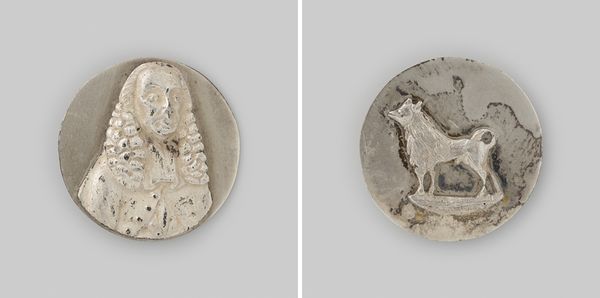
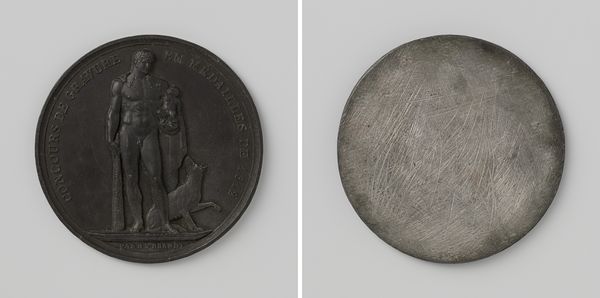
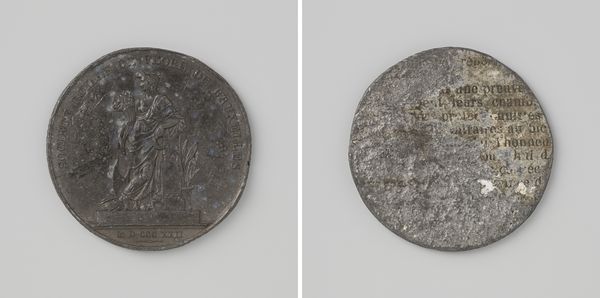
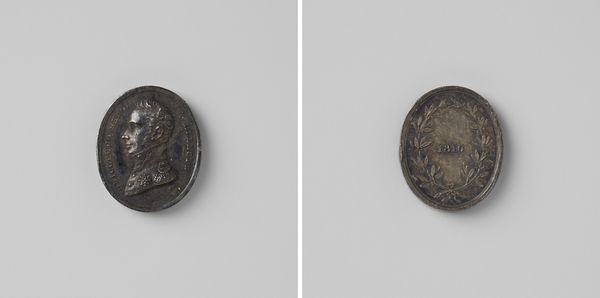
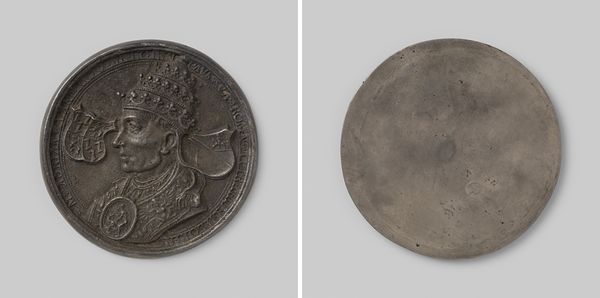
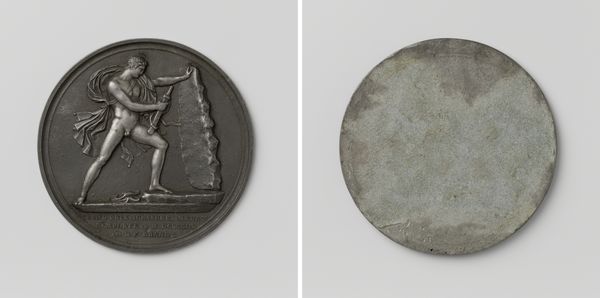
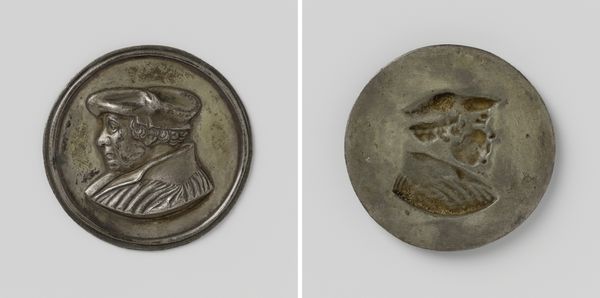
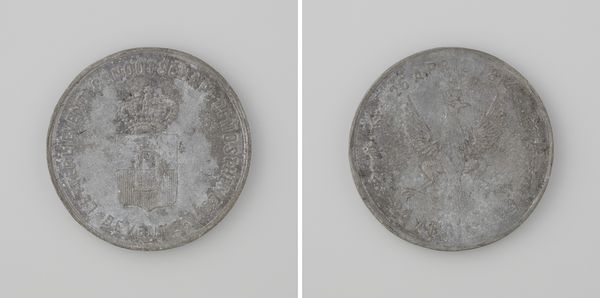
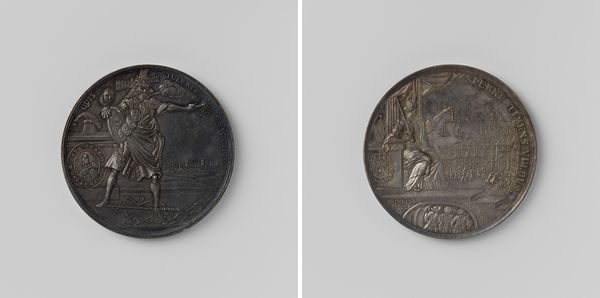
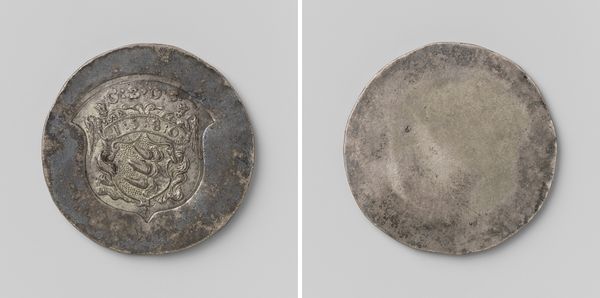
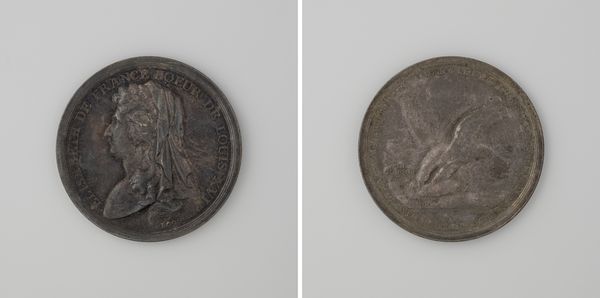
Opening van het Kanaal van Bergen naar Doornik, ter ere van Willem I Frederik, koning der Nederlanden 1826

metal, relief, bronze, sculpture
neoclacissism
metal
sculpture
relief
bronze
sculpture
history-painting
Dimensions: diameter 5 cm, weight 27.27 gr
Copyright: Rijks Museum: Open Domain
Editor: This is a bronze relief, a medal actually, commemorating the "Opening of the Canal from Bergen to Doornik" in 1826, honoring King William I Frederick. It’s quite a detailed scene crammed onto a small, circular surface. The figures have a dramatic flair. What strikes you about it? Curator: I find myself considering the socio-economic context in which this object was produced. A bronze medal – a relatively reproducible object – served as a tool to disseminate and solidify power. What kind of labor went into the canal’s construction, and how is that labor aestheticized – or perhaps more accurately, obscured – within the celebratory imagery? Editor: That's an interesting perspective. I hadn't really thought about the actual labor that made the canal possible. The scene on the medal is purely about the King’s glory, almost like a classical myth. Curator: Exactly! And it is interesting to think about this medal as a form of propaganda, that elevates certain actors over others. Furthermore, what of the materiality? Bronze, while seemingly permanent, is a resource extracted and processed through complex networks of labor and capital. Consider the social implications inherent in even the selection of material. Editor: So you're suggesting that even a commemorative object like this reveals underlying power structures and resource dynamics of the time? Curator: Precisely. We can trace the historical and economic context embedded within the object itself, beyond its explicit celebratory function. Consider what that contrast might have meant to a worker on the canal seeing it? Editor: I see. It shifts my focus from admiring the craftsmanship to questioning the story it's telling, and *who* is being elevated in the story. Thanks! Curator: It's these layers of production and meaning-making which, for me, bring such an object to life. Now I'm curious to do further research about that.
Comments
No comments
Be the first to comment and join the conversation on the ultimate creative platform.
 React
React Comment