1644 - 1696
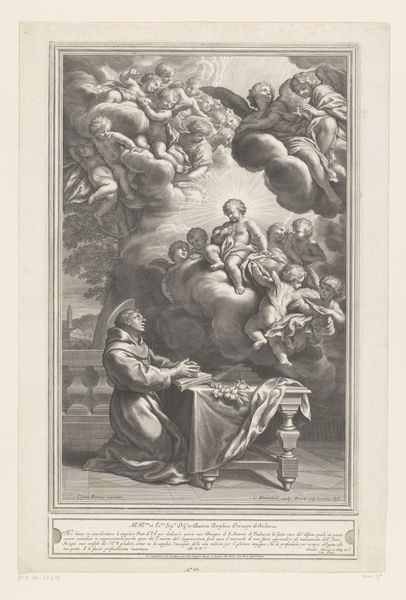
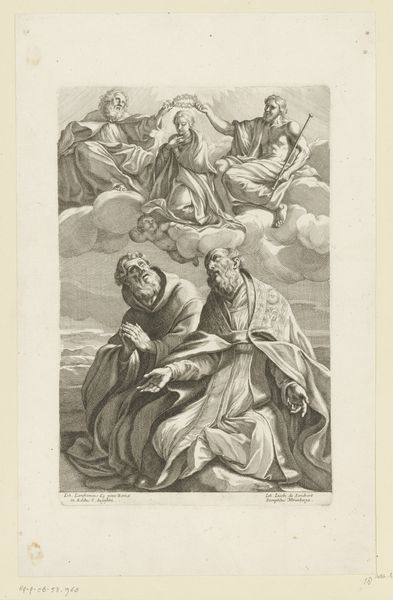
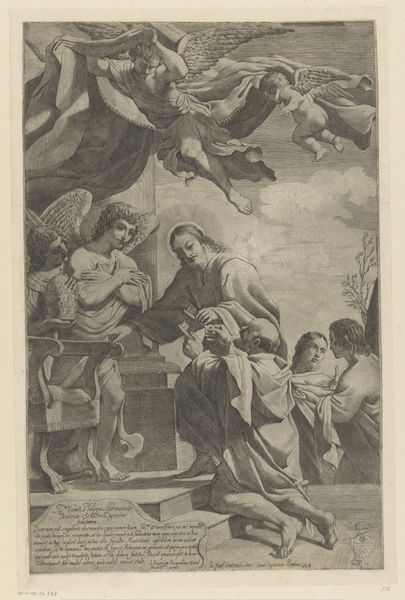
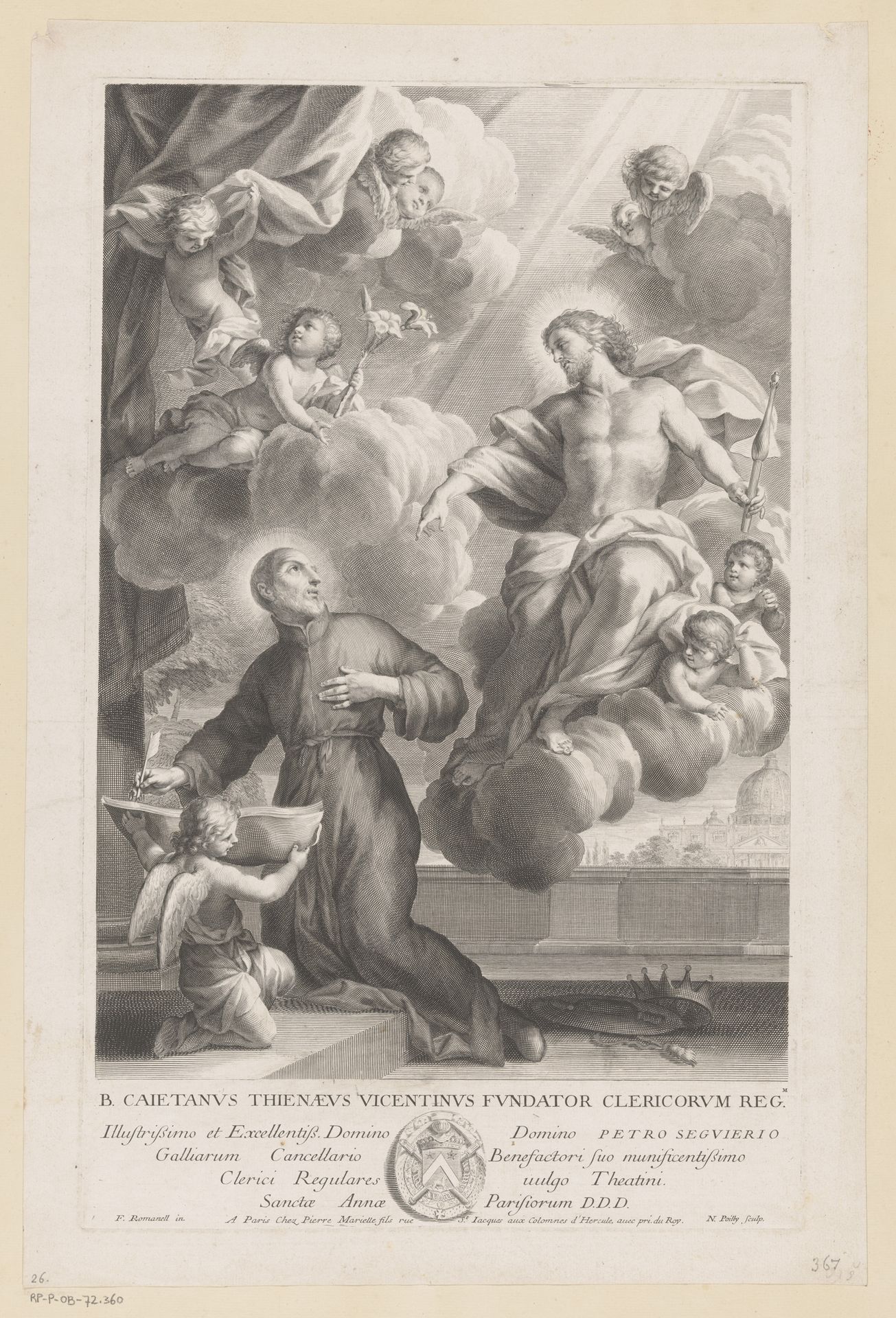
Christus verschijnt aan Cajetanus van Tiene

Nicolas de (I) Poilly
1626 - 1696Location
RijksmuseumListen to curator's interpretation
Curatorial notes
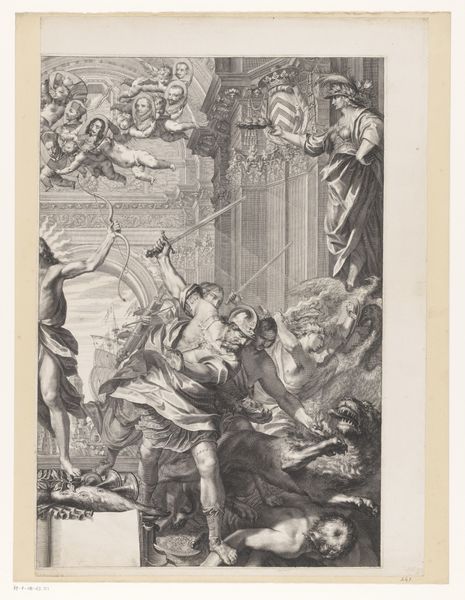
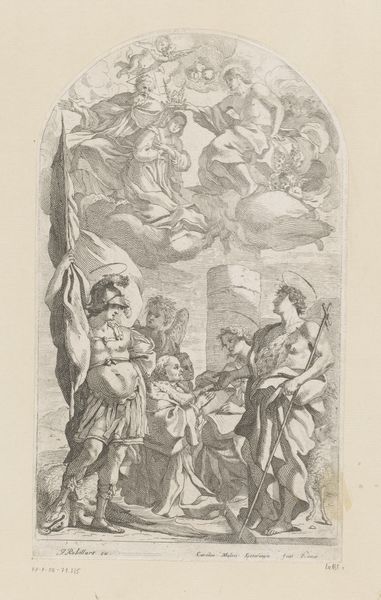
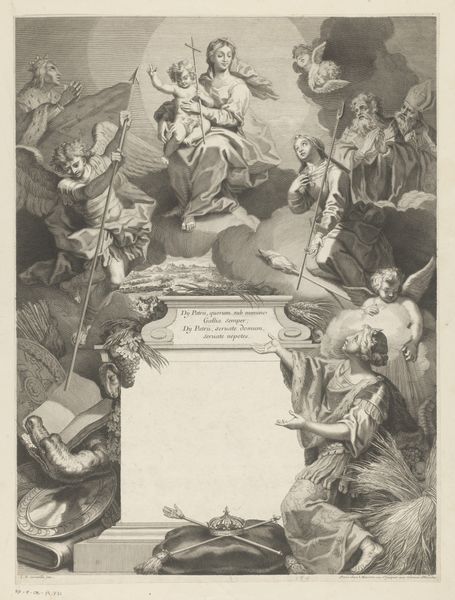
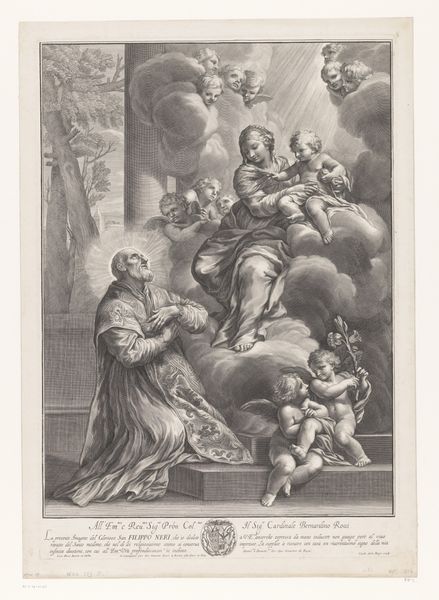
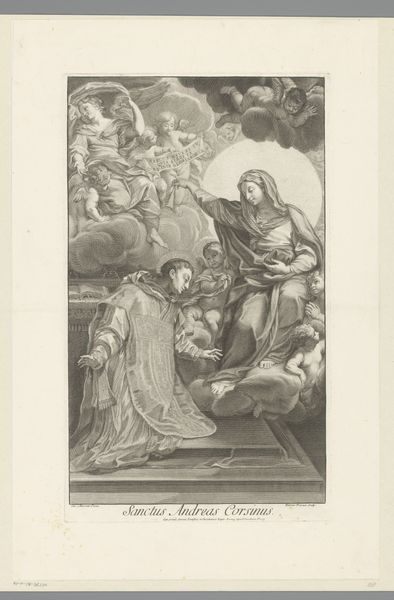
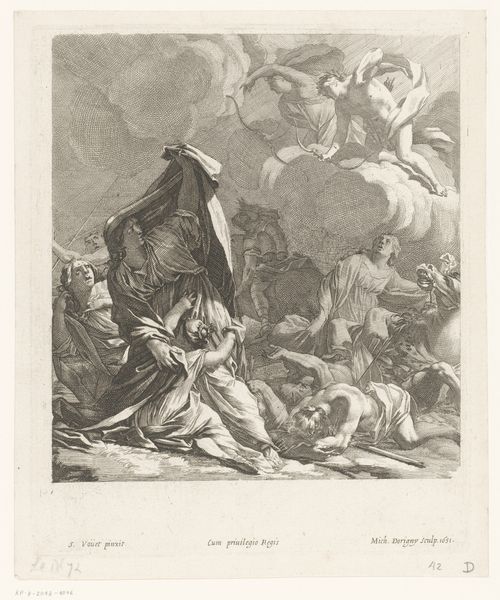
Nicolas de Poilly created this print, "Christ appears to Cajetanus of Tiene," using etching and engraving techniques. Look closely, and you’ll see how these processes dictated the final appearance. Etching allows for a greater freedom of line; the artist covers a plate with wax, scratches into it with a needle, and then bathes it in acid, which bites away the exposed metal. Engraving, by contrast, involves physically cutting lines into the plate with a tool called a burin. Poilly combined both approaches, achieving a range of textures, from the soft, atmospheric clouds to the crisp architectural details. Prints like this were essentially a reproductive technology. They allowed images to be disseminated widely, contributing to both religious devotion and artistic exchange. The skilled labor required for the etching and engraving processes underscores the collaborative nature of art production during this period, involving not just the artist, but also the artisans who translated designs into material form. By appreciating these methods, we recognize the true breadth of creativity at play.