1680 - 1746
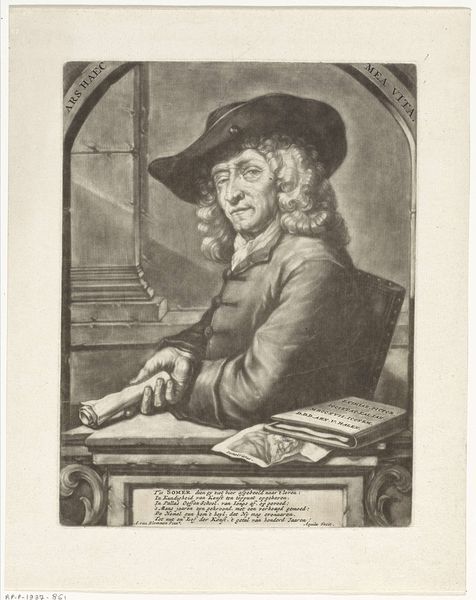
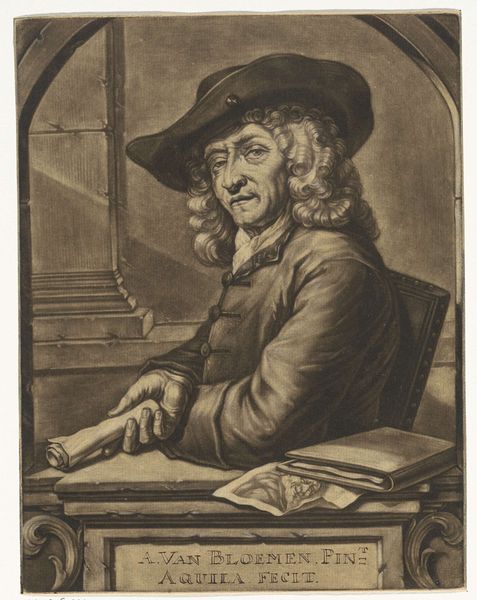
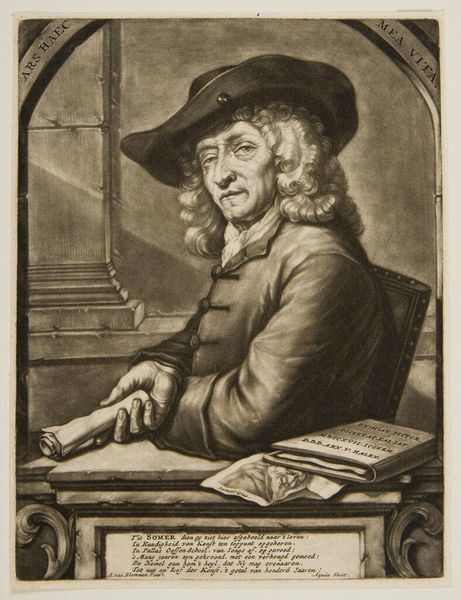
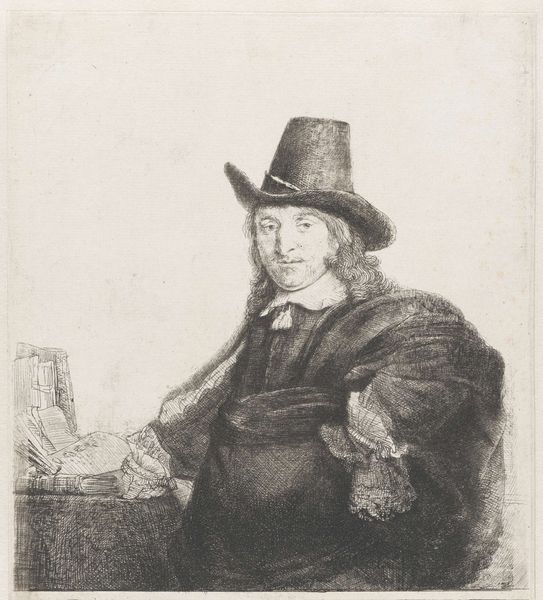
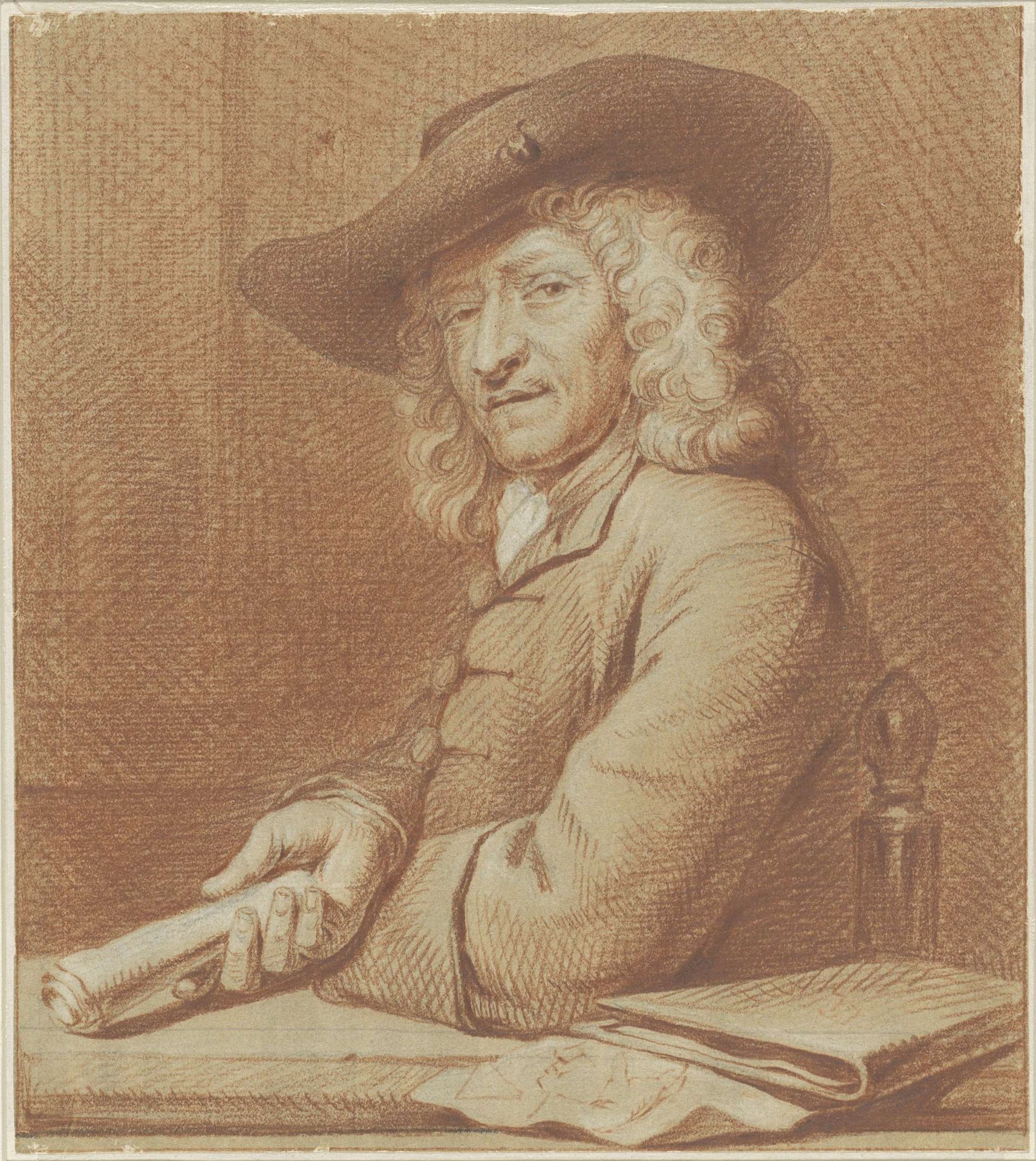
Portret van de tekenaar Jan Pietersz. Zoomer, met hoed en rol papier

Listen to curator's interpretation
Curatorial notes
Norbert van Bloemen made this portrait of the draughtsman Jan Pietersz. Zoomer using pen in brown ink. This image speaks to the growing status of the artist within Dutch society, and its institutional structures in the late 17th and early 18th centuries. Here, Jan Pietersz. Zoomer is not depicted at work, but in an intimate and relaxed pose, emphasizing his personal qualities. The rolled paper in his hand and other papers on the table function as symbolic attributes of his trade and artistic identity. The Dutch Republic differed from other European nations in that it had no royal court that could dictate artistic taste, and no formal art academy to shape its production. Instead, artists relied on the open market and the patronage of the middle classes. The image subtly reflects these social conditions, suggesting that the artist enjoyed a certain amount of professional autonomy and social recognition. By exploring the economic history of art, and understanding the conditions of its making, we can gain insight into how individual images like this one reflect wider cultural values.