

c. 1939
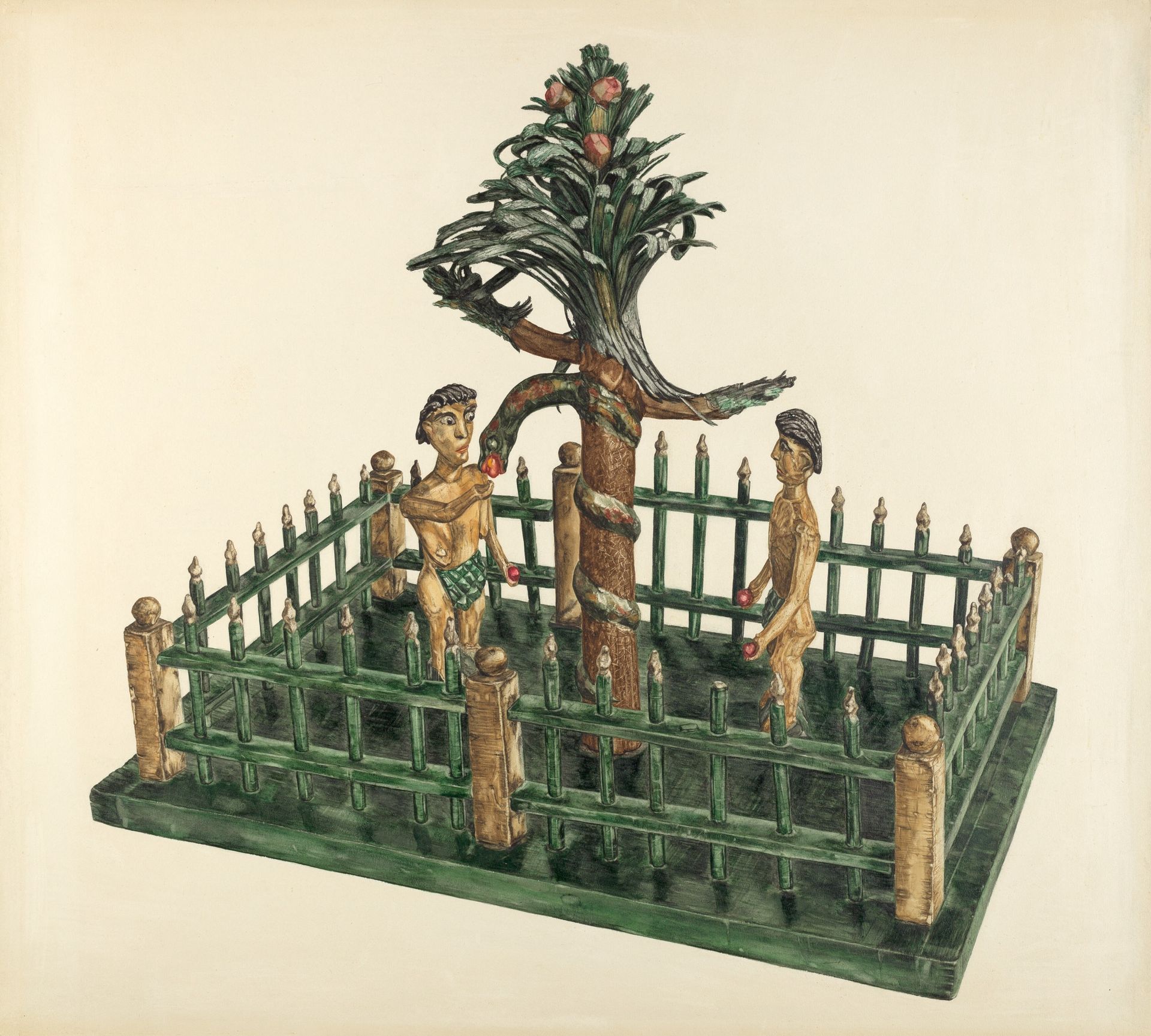
Adam and Eve


Listen to curator's interpretation
Curatorial notes
Editor: This is Yolande Delasser’s "Adam and Eve," circa 1939, created with coloured pencil and watercolour. It's striking how Delasser encloses the figures within a distinctly artificial-looking garden. What is your take on this depiction of the iconic biblical scene? Curator: This depiction prompts reflection on the garden itself as a constructed space, a deliberate staging. Delasser created this work at a time when artists were increasingly aware of the power of visual culture and how images shape our understanding of history and myth. Is this garden meant to critique traditional interpretations, framing it within controlled narratives? Editor: That's a great point. The rigid fence certainly disrupts the idyllic image we might expect. Could this speak to societal control or even personal limitations the artist felt? Curator: Precisely. It highlights the artificiality of societal structures imposed upon narratives, impacting individual agency. The date of the work, 1939, is also significant, as it coincides with the outbreak of World War II. Editor: So, the piece may reflect broader anxieties of the period, using the Adam and Eve story to address societal unease? Curator: The setting emphasizes restriction. What freedoms are being lost? Why enclose it all? I think Delasser prompts reflection on institutional control and public perception of history. It asks how we interact with inherited stories and whose version of them we see. Editor: This definitely challenges the idea of the Garden of Eden as an untouched paradise. Thanks, I learned a lot by looking at it that way. Curator: Likewise. This perspective enhances the conversation beyond traditional interpretation.