1881
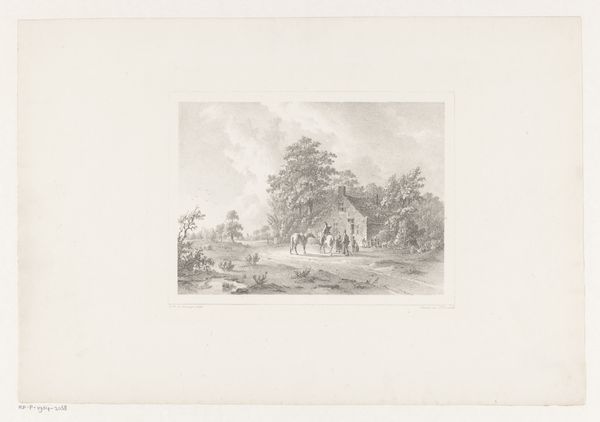
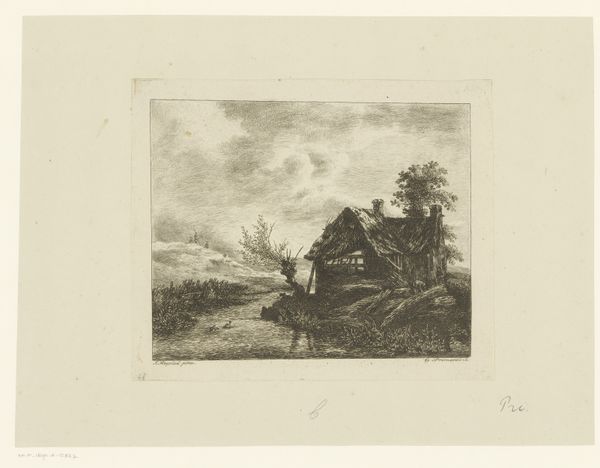
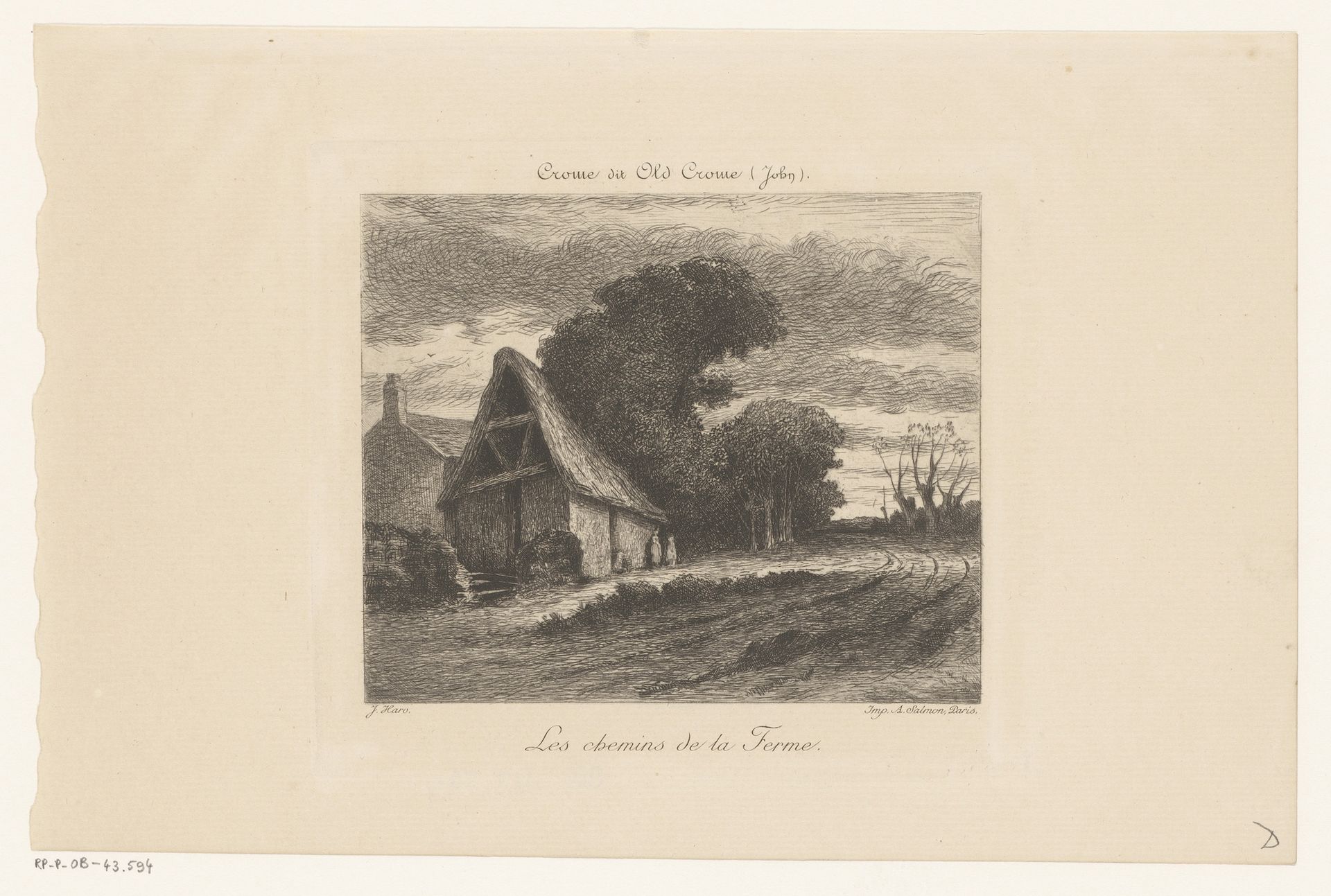
Gezicht op een boerderij langs een weg

Listen to curator's interpretation
Curatorial notes
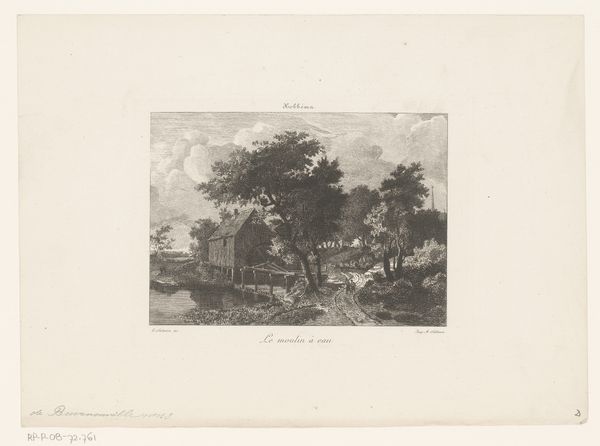
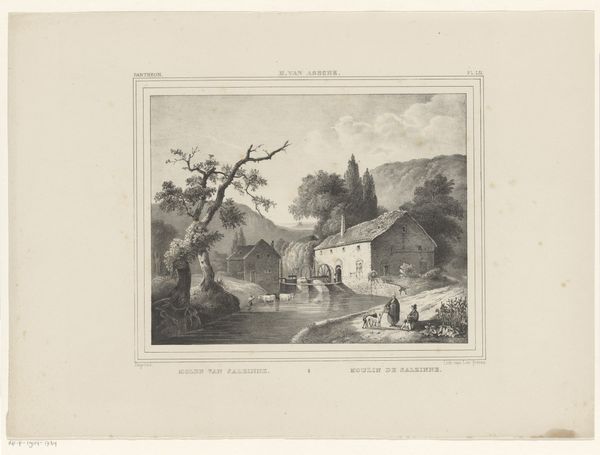
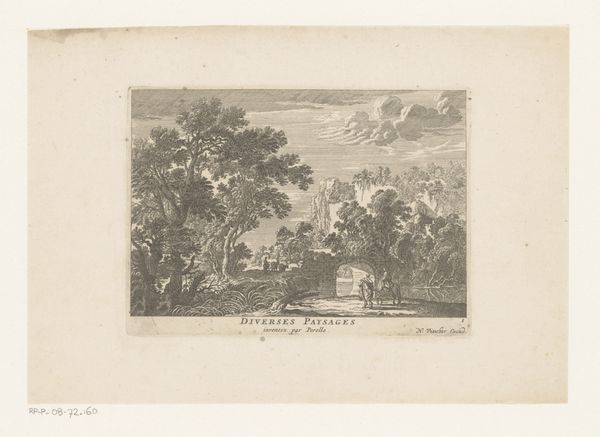
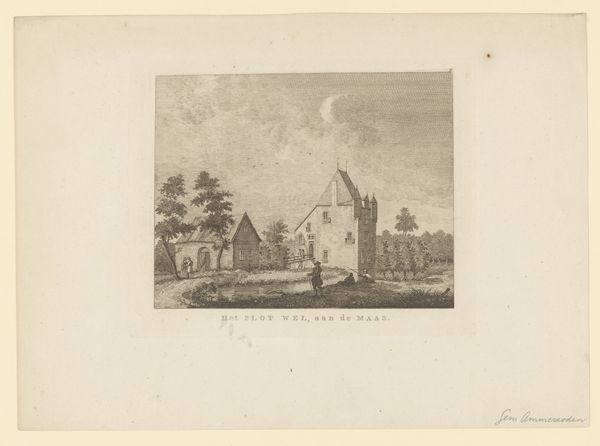
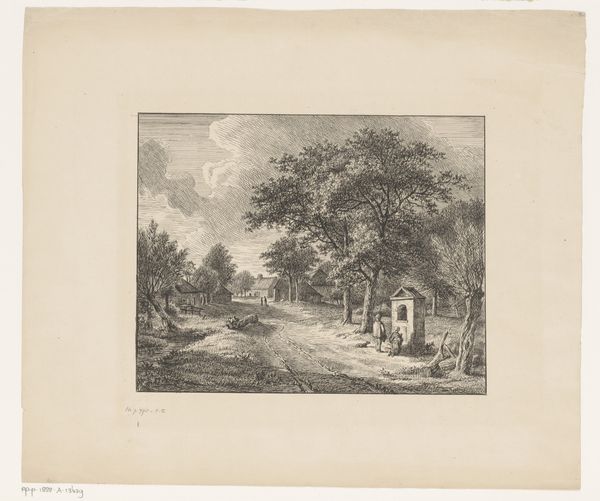
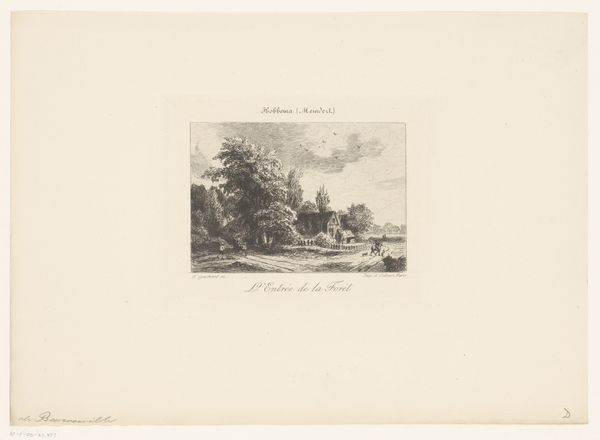
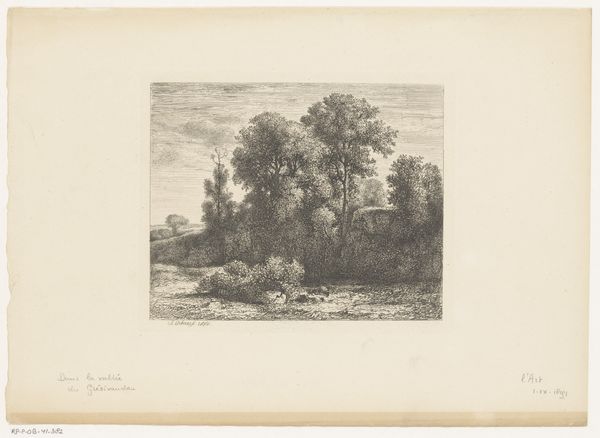
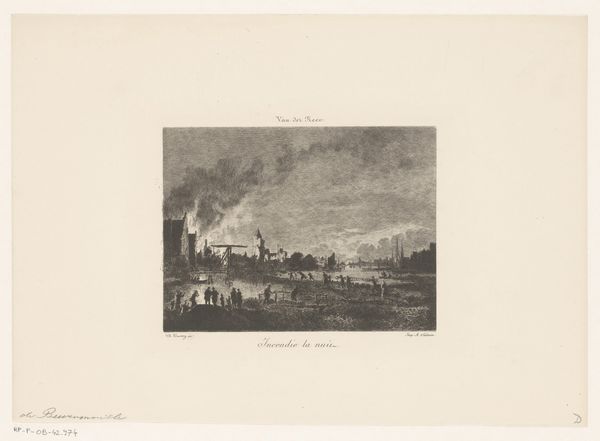
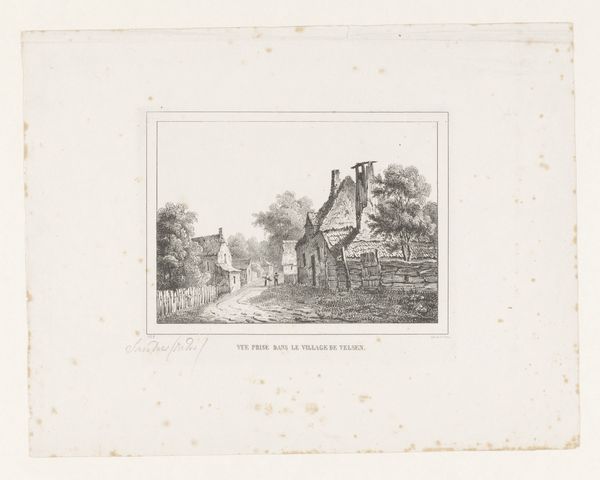
Curator: Let's examine "Gezicht op een boerderij langs een weg," or "View of a Farm Along a Road," an etching from 1881. It’s by Jules Haro. Editor: It has a subdued, almost somber atmosphere. The way the light fades into the horizon, and the dark foliage contrasts against the muted sky... it all contributes to this very grounded, realistic effect. Curator: Absolutely. Look at the textural details achieved through etching—the varied line weights and cross-hatching define form, particularly the roof. Semiotically, the path could be interpreted as leading us toward an enclosed refuge. What meaning do you find here? Editor: For me, it's tied to a larger narrative of rural life during the period. The work speaks volumes about the burgeoning industrial revolution. The humble farmhouse represents a receding agrarian world in France; and even just consider the image itself—the reproductive medium of etching is so relevant to the rise of pictorial media, capturing a seemingly distant life that's suddenly made present to the public. Curator: An interesting juxtaposition. Do you find the visual rhetoric effective in portraying the artist's statement on this matter? Editor: I do. There's a stark realism that permeates the landscape—almost like documentary evidence. However, it's important to recognize how that realism itself becomes a carefully composed effect when mediated through artistic choices such as composition. It romanticizes a lifestyle that's, most likely, vanishing. Curator: Indeed, Jules Haro masterfully manipulates tone and shadow. Note the atmospheric perspective; a visual metaphor for the fading relevance you observed? The way details blur further down the road… it certainly feels purposeful. Editor: To further push my thought, I wonder if images like these impacted government initiatives to support rural populations. Did the government use images like this to create sympathy towards these rural communities, in order to rally support, for example? Curator: Perhaps the image, in its detailed attention and realism, gave form to new arguments advocating a kind of agrarian conservation... A fascinating direction, thank you. Editor: And thank you. Considering the work's sociopolitical context has brought new dimension to appreciating the skill with which it was made.