About this artwork
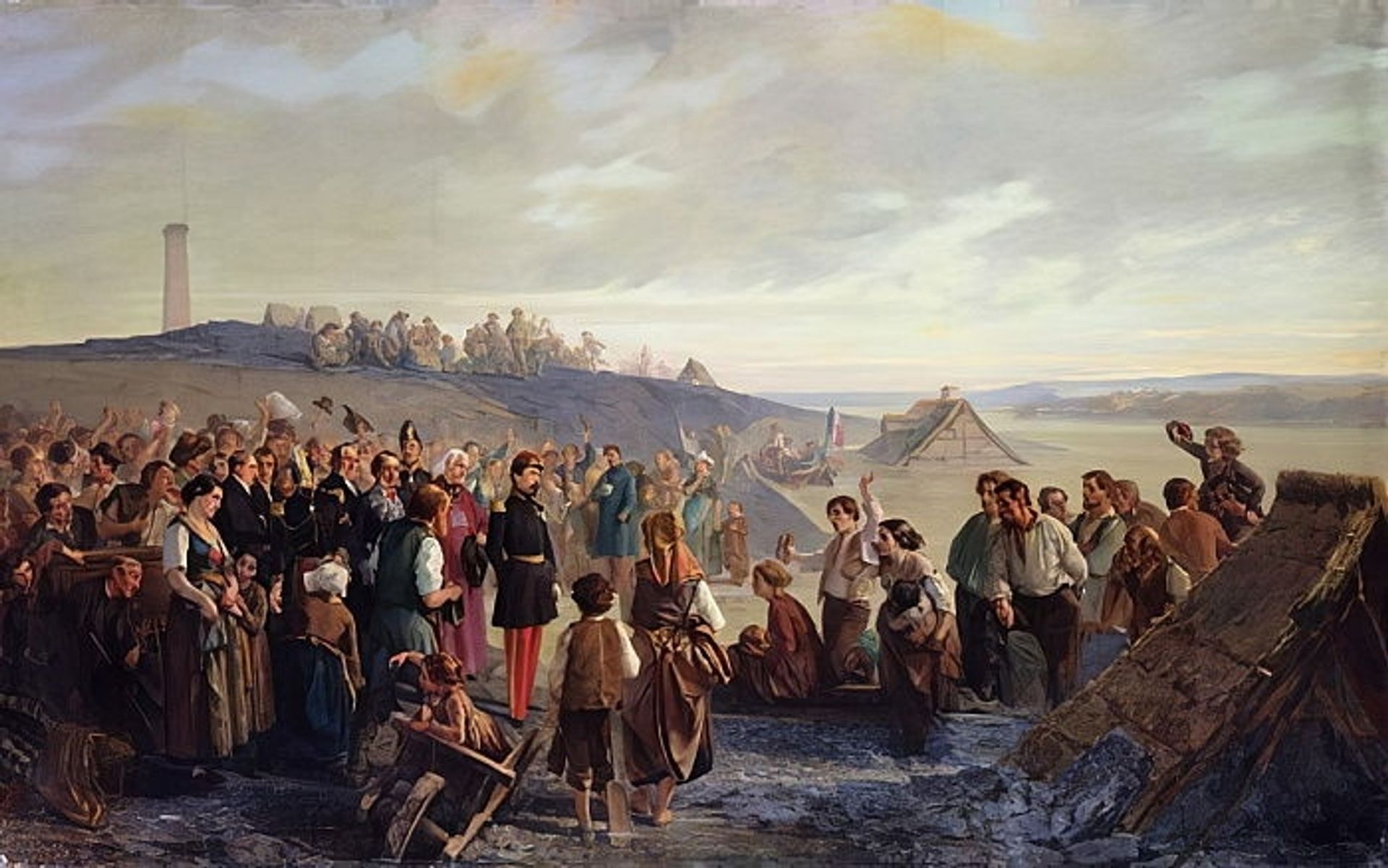
Alexandre Antigna painted this scene of Napoleon III visiting the Slate Quarries of Angers. The visual experience is dominated by a vast crowd stretching across the canvas, punctuated by the stark contrast between the dark, earthy tones of the foreground and the pale, ethereal sky. This juxtaposition evokes a sense of scale, emphasizing both human presence and the immensity of the landscape. The composition is structured to highlight the social hierarchy, with Napoleon III positioned amidst the workers, yet elevated by his attire and entourage. This arrangement invites us to consider the semiotics of power and representation. How does Antigna negotiate the relationship between the ruler and the working class? Note the line of the horizon, which cuts across the painting, creating a division between the earthly realm of labor and the open, boundless sky. It is through such formal elements that the artwork engages with broader philosophical inquiries about human existence and our place within the world.
Napoleon III Visiting the Slate Quarries of Angers
1856

Alexandre Antigna
1817 - 1878Location
Musée des Beaux-Arts d'Angers, Angers, FranceArtwork details
- Medium
- painting, oil-paint
- Location
- Musée des Beaux-Arts d'Angers, Angers, France
- Copyright
- Public domain
Tags
portrait
painting
oil-paint
landscape
oil painting
france
genre-painting
history-painting
academic-art
realism
Comments
Be the first to share your thoughts about this work.
About this artwork
Alexandre Antigna painted this scene of Napoleon III visiting the Slate Quarries of Angers. The visual experience is dominated by a vast crowd stretching across the canvas, punctuated by the stark contrast between the dark, earthy tones of the foreground and the pale, ethereal sky. This juxtaposition evokes a sense of scale, emphasizing both human presence and the immensity of the landscape. The composition is structured to highlight the social hierarchy, with Napoleon III positioned amidst the workers, yet elevated by his attire and entourage. This arrangement invites us to consider the semiotics of power and representation. How does Antigna negotiate the relationship between the ruler and the working class? Note the line of the horizon, which cuts across the painting, creating a division between the earthly realm of labor and the open, boundless sky. It is through such formal elements that the artwork engages with broader philosophical inquiries about human existence and our place within the world.
Comments
Be the first to share your thoughts about this work.