About this artwork
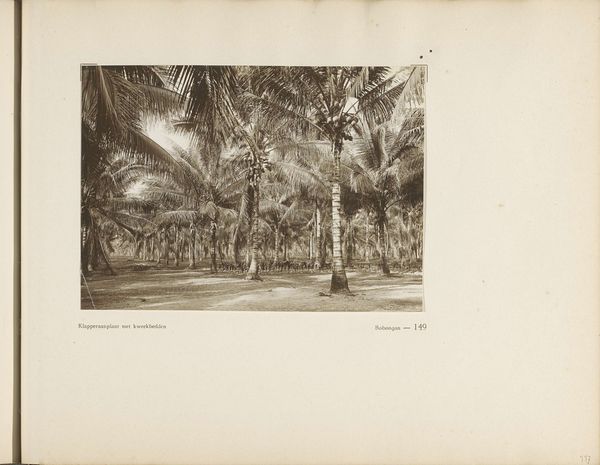
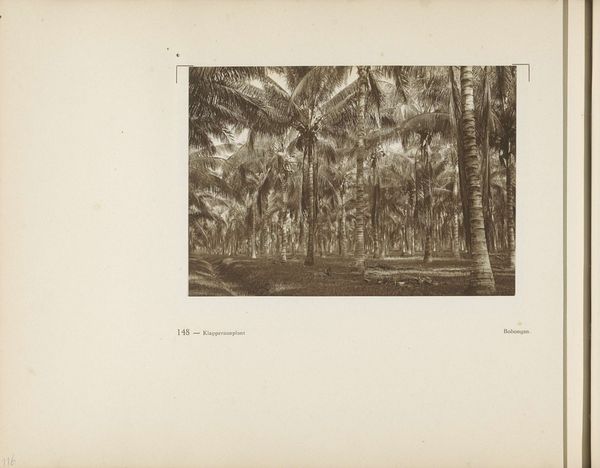
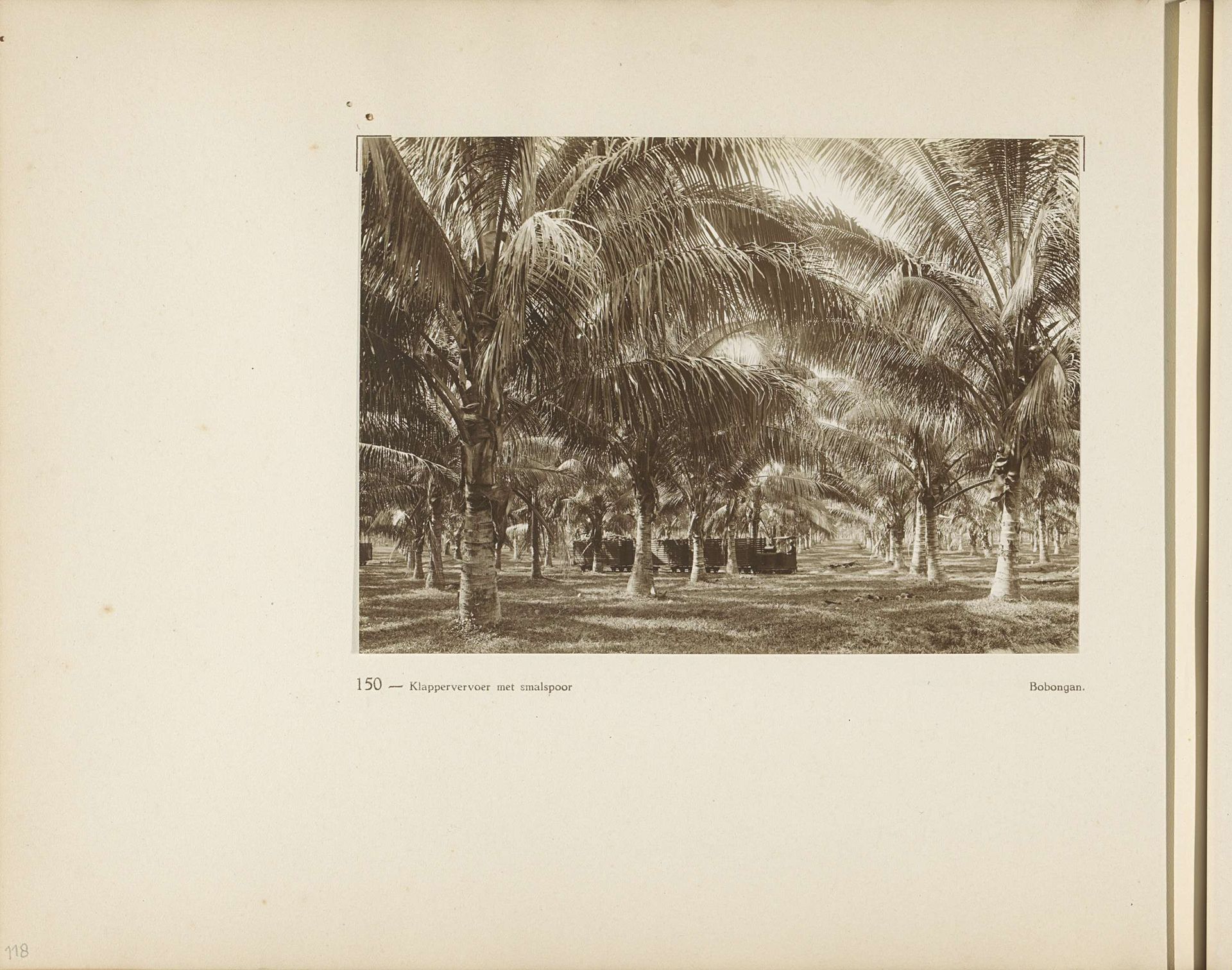
This photograph of a coconut plantation in Sumatra was taken by J.W. Meyster, as part of a book documenting the activities of the General Association of Rubber Planters. While photography is often considered a documentary medium, here it takes on a promotional role, celebrating the scale and order of the plantation system. Look closely and you can see a small railway used to transport the coconuts. The very organization of this landscape speaks to industrial processes. The repetitive rows of trees, the efficient transport system, all point to a capitalist enterprise aimed at maximizing production. The photograph also invites us to consider the human labor involved in creating this scene, labor that remains invisible. By focusing on the material realities of this image – the photographic paper itself, the ordered rows of coconut trees, and the implied network of extraction and distribution – we can begin to understand the complex relationship between art, industry, and colonial exploitation.
Pagina 150 van fotoboek van de Algemeene Vereeniging van Rubberplanters ter Oostkust van Sumatra (A.V.R.O.S.) c. 1924 - 1925

J.W. Meyster
1887 - 1945Location
RijksmuseumArtwork details
- Medium
- photography, gelatin-silver-print
- Dimensions
- height 240 mm, width 310 mm
- Location
- Rijksmuseum
- Copyright
- Rijks Museum: Open Domain
Tags
landscape
photography
gelatin-silver-print
realism
Comments
No comments
About this artwork
This photograph of a coconut plantation in Sumatra was taken by J.W. Meyster, as part of a book documenting the activities of the General Association of Rubber Planters. While photography is often considered a documentary medium, here it takes on a promotional role, celebrating the scale and order of the plantation system. Look closely and you can see a small railway used to transport the coconuts. The very organization of this landscape speaks to industrial processes. The repetitive rows of trees, the efficient transport system, all point to a capitalist enterprise aimed at maximizing production. The photograph also invites us to consider the human labor involved in creating this scene, labor that remains invisible. By focusing on the material realities of this image – the photographic paper itself, the ordered rows of coconut trees, and the implied network of extraction and distribution – we can begin to understand the complex relationship between art, industry, and colonial exploitation.
Comments
No comments