

1866
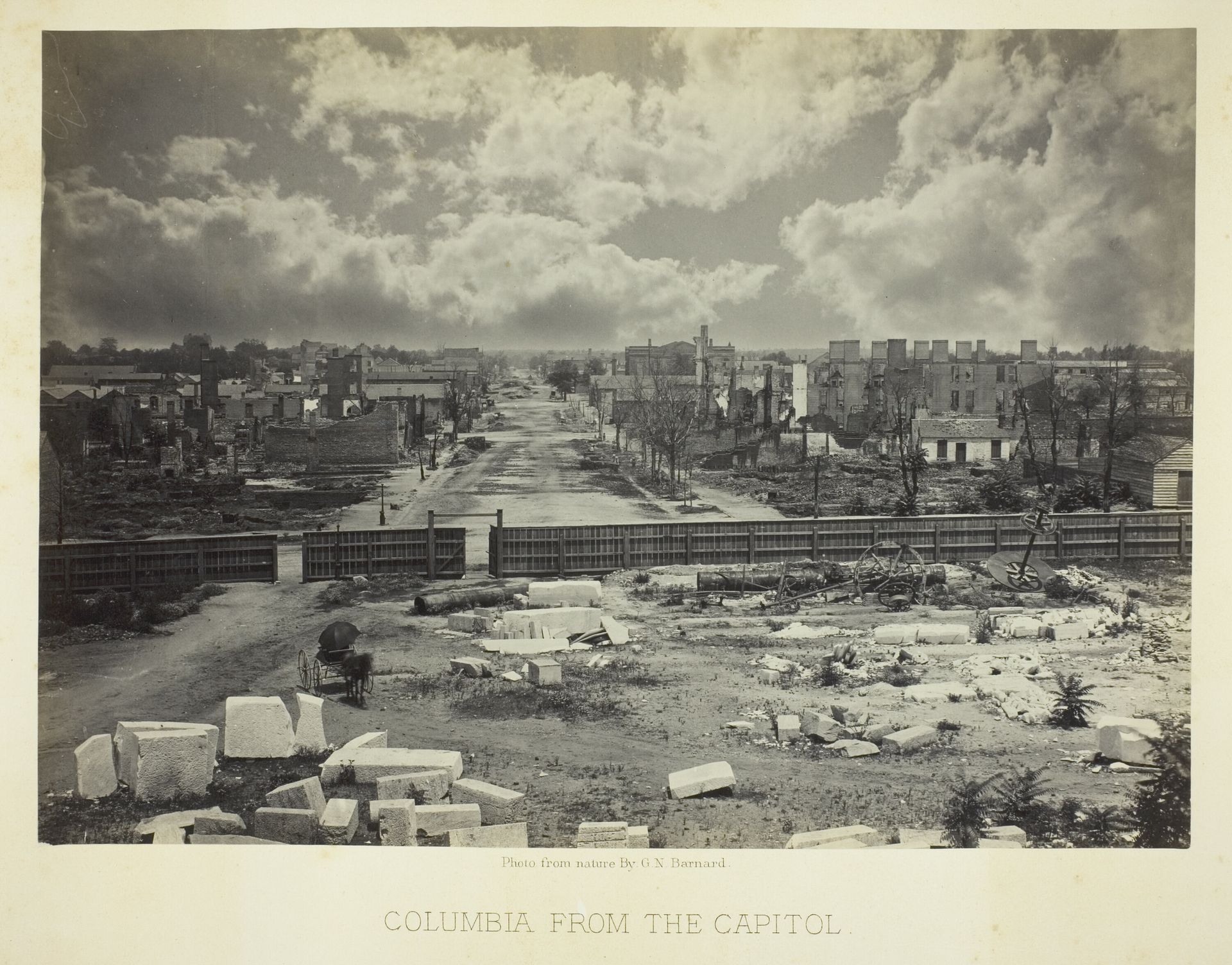
Columbia from the Capitol


Listen to curator's interpretation
Curatorial notes
George N. Barnard made this albumen print sometime in the 19th century. The process, invented in 1850, involves coating paper with egg white and then silver nitrate, creating a surface sensitive to light. The albumen print was an incredibly popular photographic process at the time, largely due to its sharp image and ability to reproduce fine detail. Looking at this photograph, the tonal range achieved through the manipulation of silver salts is remarkable. The chemical process is also what gives this work its specific sepia tone. This view of Columbia, South Carolina, from the Capitol, bears witness to a place undergoing enormous change and reconstruction. You can see the disruption, the rawness of a city recovering from conflict. We can appreciate the image not only for its aesthetic qualities but also for its historical significance, reminding us of the labor, politics, and societal shifts inherent in the development of a nation. It encourages us to consider the ways in which materials, making, and context intertwine to shape our understanding of visual culture.