

1662 - 1736
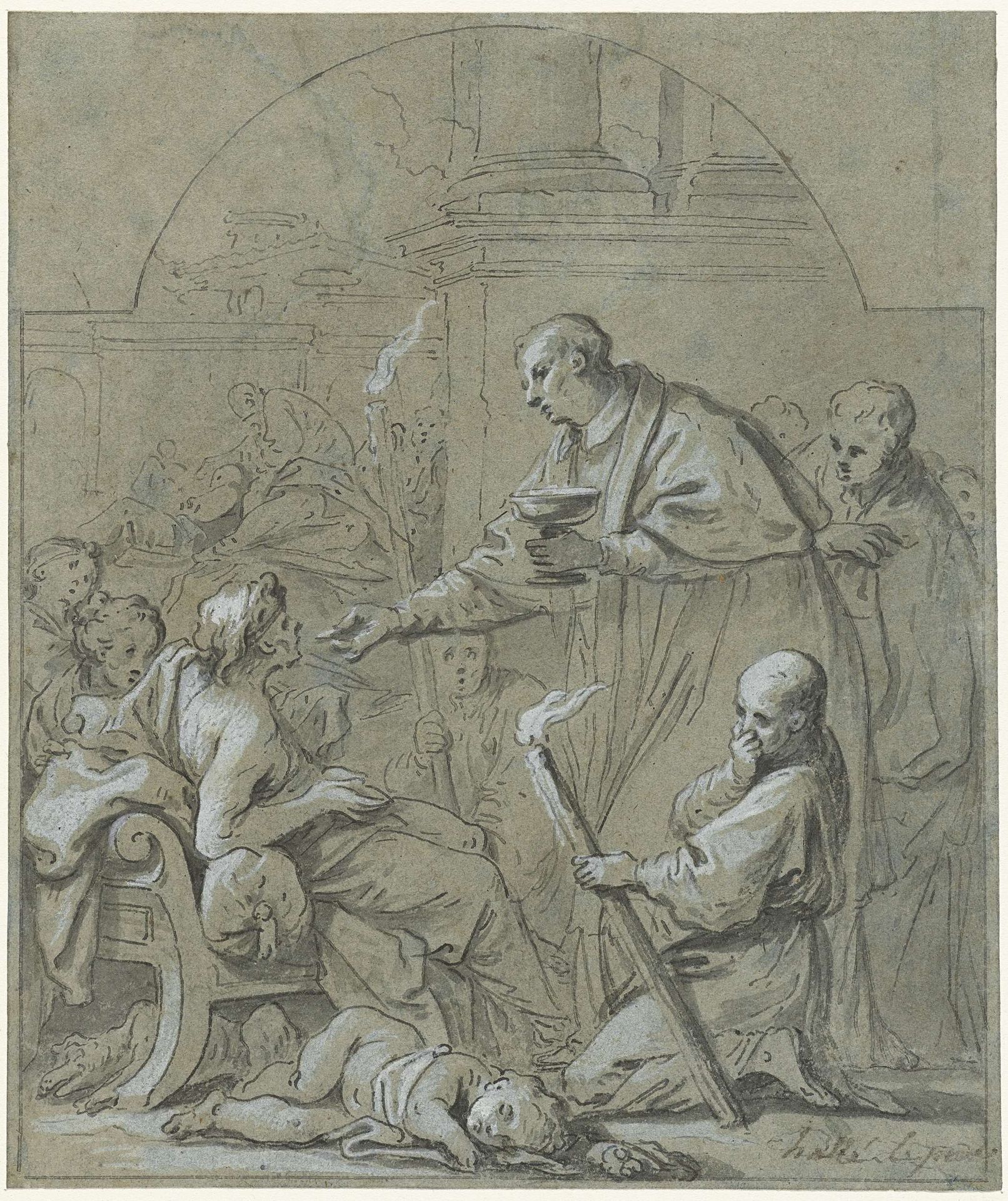
Heilige Carolus Borromeus geeft pestlijders de laatste Communie

Listen to curator's interpretation
Curatorial notes
Curator: This artwork hits you right in the gut, doesn’t it? It feels heavy, like a scene from a nightmare but rendered with such delicate lines. Editor: Indeed. Let’s set the stage. What we have here is "Heilige Carolus Borromeus geeft pestlijders de laatste Communie" by Claude Guy Hallé, created sometime between 1662 and 1736. It’s a pen, ink, and pencil sketch that depicts Saint Charles Borromeo administering the last sacrament to plague victims. The grayscale palette really amplifies the somber mood. Curator: Palette? More like shades of dread! It's stark. It feels like Hallé scrubbed all the joy out of it with the same determination Borromeo shows facing this plague head-on. Borromeo handing over communion in that small golden bowl; he looks completely committed to his calling! There’s something undeniably affecting about that visual commitment, maybe the sharpest object on the whole canvas! Editor: Absolutely. Structurally, the drawing utilizes a strong sense of chiaroscuro. Notice how Hallé plays with light and shadow to create depth and drama? The highlights on Borromeo contrast sharply with the shadowed figures of the sick and dying, drawing the eye toward that central act of communion, loaded with symbolic meaning Curator: Right? You can almost hear the shallow breaths and desperate pleas. Even the architectural background feels oppressive, looming like fate itself. Speaking of symbolism, isn't Borromeo himself fascinating? Canonized for his selfless acts during the Milan plague, this moment is supposed to depict real events: Hallé presents Borromeo as if the image needs little more than being transmitted from then to now for all people, believer or non, to appreciate that image! It cuts so deep you can nearly feel the agony rippling through the room; and Borromeo still faces everything, head-on. Editor: He's certainly the picture of stoic duty. The formal elements really reinforce this interpretation: Hallé employs dynamic lines to heighten the emotional tension; his confident use of space brings the viewer into the presence of extreme pain—the materiality of the scene isn't simply 'a drawing', but one that is trying its very best to emulate an event it did not occur during, relying purely on external sources. Curator: I'm so glad to have experienced and spoken about this powerful image here. Thank you for your help diving into the depth of such an amazing artwork; I wonder if one day our voices and analyses can add depth and accessibility for people on different mediums as we delve through history! Editor: And thank you, it’s pieces like this which give purpose and new-found clarity into my own work here. Such heavy emotions in one spot: how does that bowl not topple!