fibre-art, painting, paper
#
fibre-art
#
painting
#
flower
#
paper
#
geometric
#
naive art
#
abstraction
#
water
#
islamic-art
Copyright: Mustafa Duzgunman,Fair Use
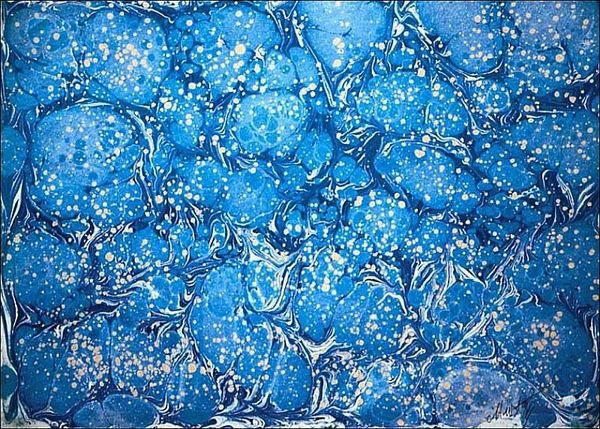
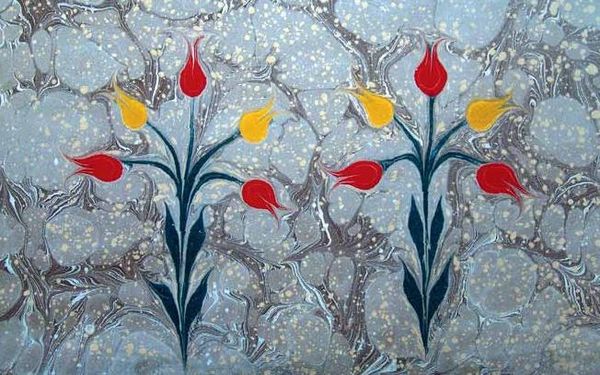
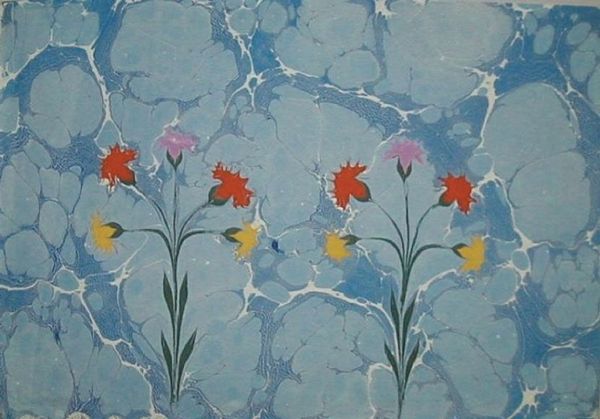
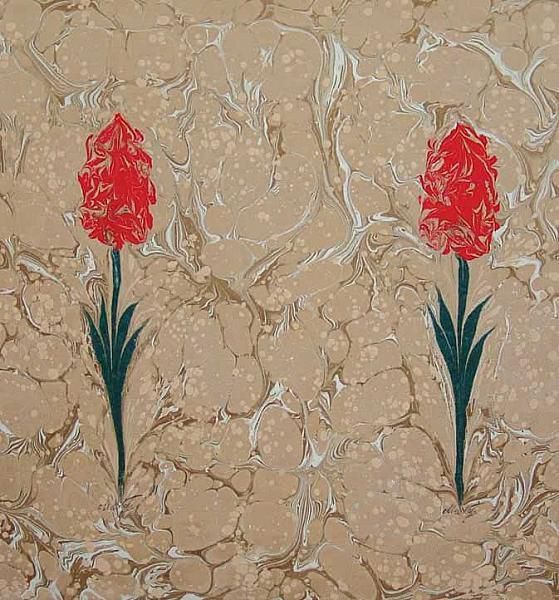
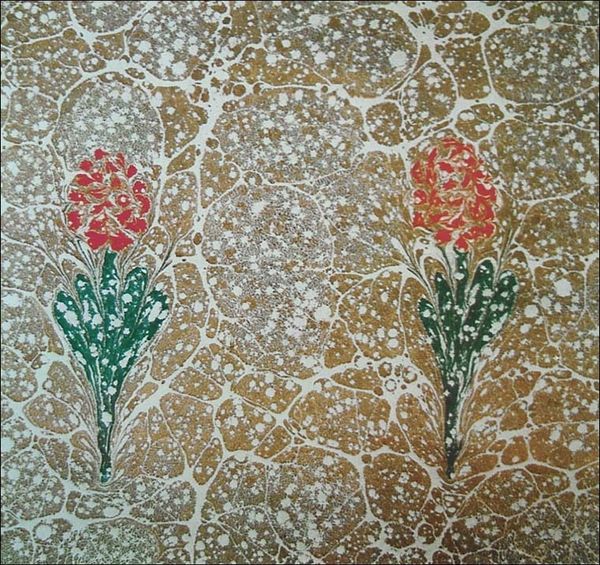
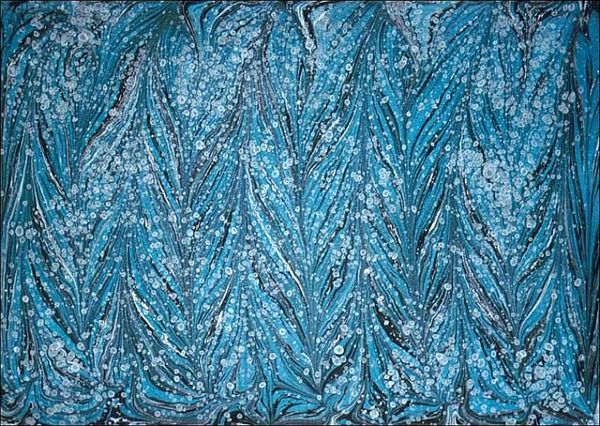
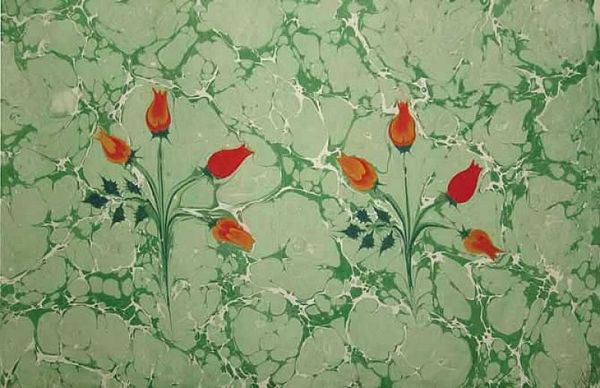
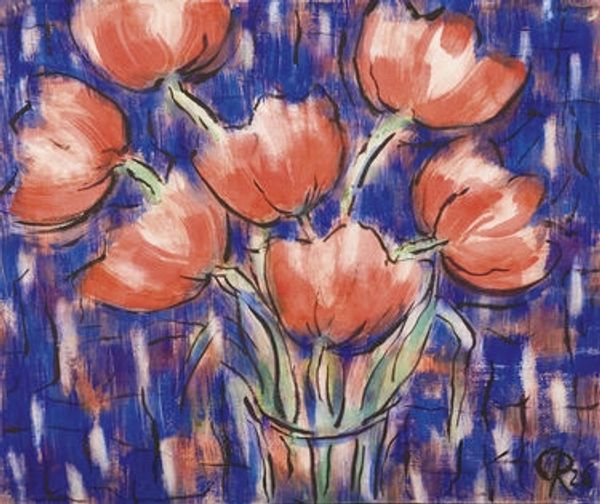
Curator: This intriguing artwork by Mustafa Duzgunman showcases the beautiful technique of Ebru, sometimes referred to as paper marbling or Turkish marbling, with the title simply noted as "Untitled". Editor: It's incredibly calming at first glance. The blues and whites give it such an airy, dreamlike quality, yet the sharp reds of the tulips punctuate that peacefulness in a startling way. Curator: Indeed. Ebru is an art form steeped in tradition. While undated, Duzgunman's embrace of this heritage places him within a specific cultural and historical context. Think of the Ottoman Empire and the intricate decorations of its imperial texts; it suggests an interplay between tradition and individual expression. Editor: And looking through a contemporary lens, I am wondering what it means to take this historical form, linked so strongly to craft traditions, and place it within a gallery setting? How does that influence or challenge our assumptions of artistic labor, given its association with historically marginalized forms of creative expression? Curator: The use of marbling directly connects to themes often linked to Islamic art, such as abstraction. Representation of the natural world, the flowers particularly, serves a meditative and decorative purpose, removing the images from conventional interpretations, and placing them in a cosmological setting. Editor: Yet those two vivid red tulips almost break free from that background. It's a dance between constraint and freedom. They're asserting their presence, refusing to be completely subsumed. To me, this brings to the fore ideas around self-expression versus cultural identity. How do we preserve traditions whilst also carving out space for our unique, individual selves to flourish? Curator: I agree, it's a striking balance, or perhaps even a tension, making for a particularly powerful interpretation of the Ebru tradition within the world of modern art and galleries. Editor: Ultimately, it highlights how an art form's meaning constantly evolves as it interacts with the ever-shifting landscapes of societal and political forces. I keep wondering how viewers coming from totally different cultural backgrounds interpret this symbolism, as well. Curator: A lovely perspective—reminding us of art’s power to transcend its original time and place. Editor: Exactly! And the way art, particularly within galleries, enables, or even encourages, broader intersectional interpretations related to identity, craft, and power.
Comments
No comments
Be the first to comment and join the conversation on the ultimate creative platform.
 Collect
 React
React Comment
More like this