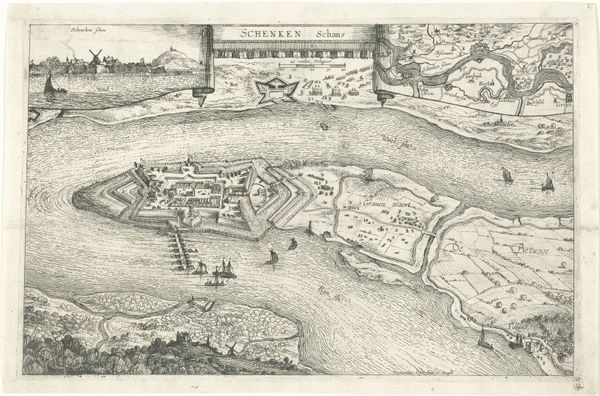
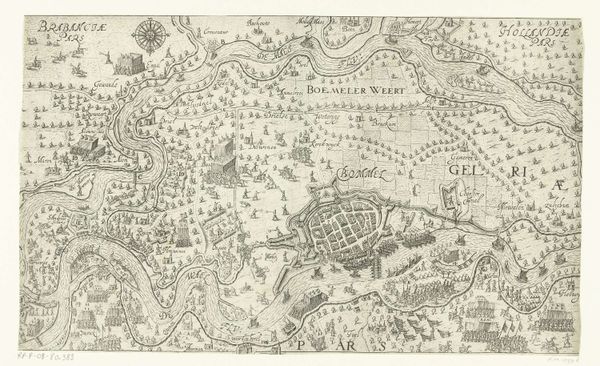
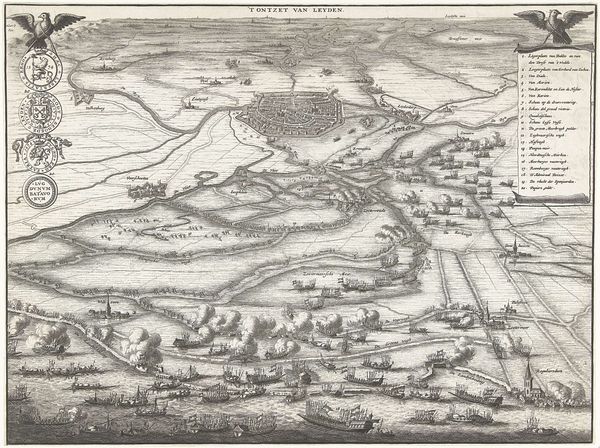
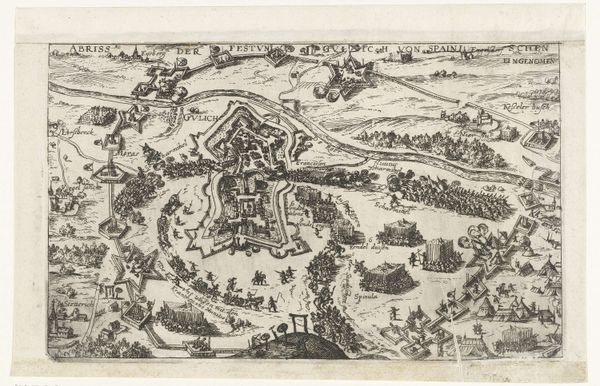
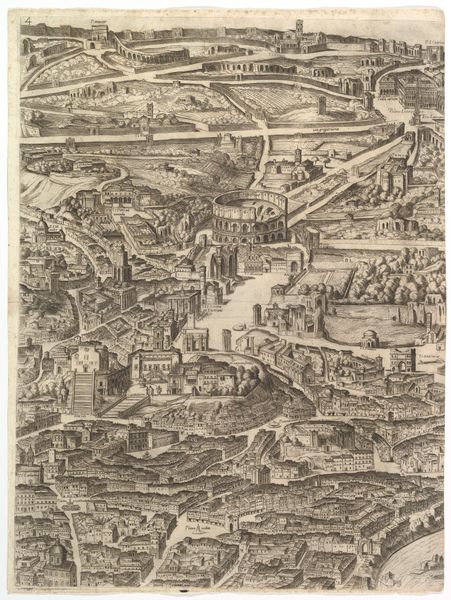
print, engraving
pen drawing
old engraving style
cityscape
italian-renaissance
engraving
Dimensions: height 320 mm, width 440 mm
Copyright: Rijks Museum: Open Domain
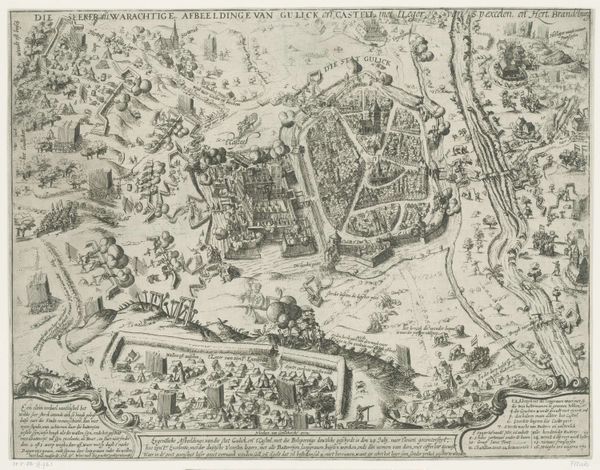
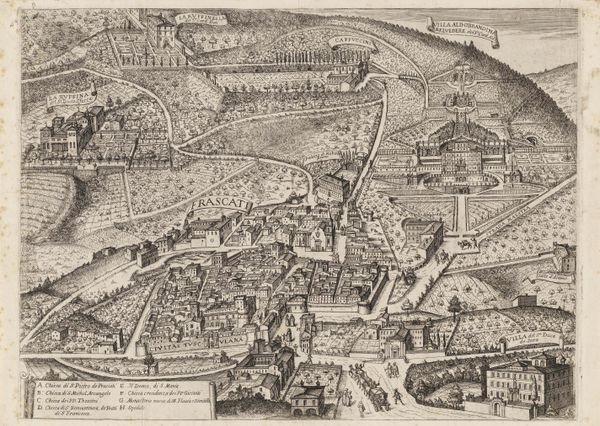
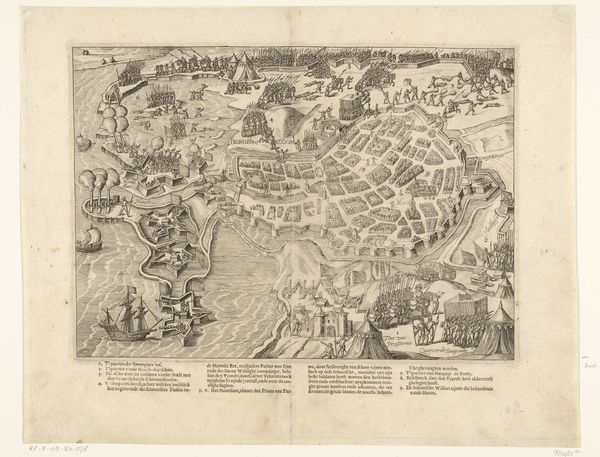
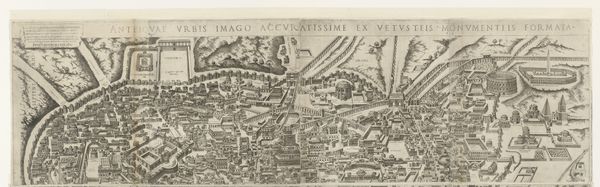
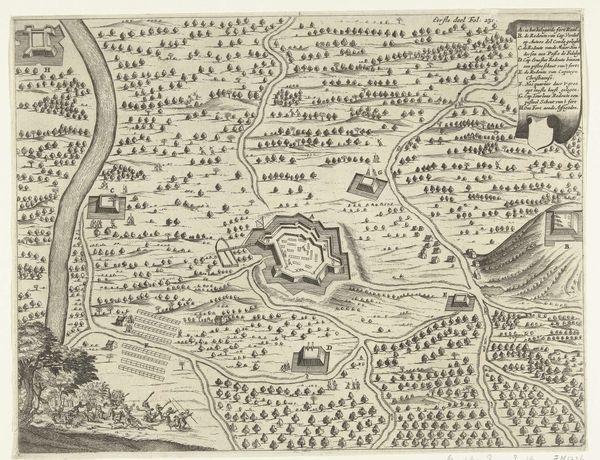
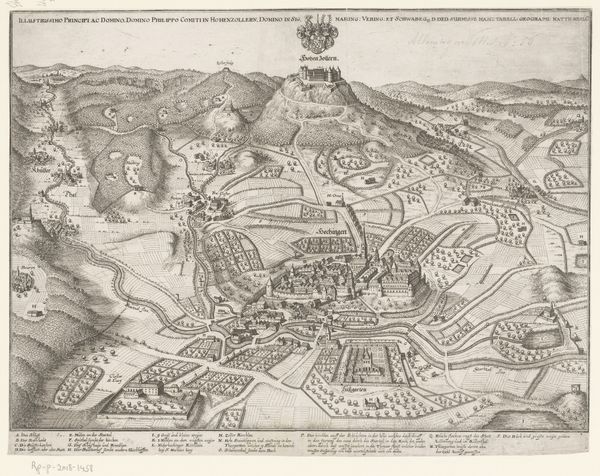
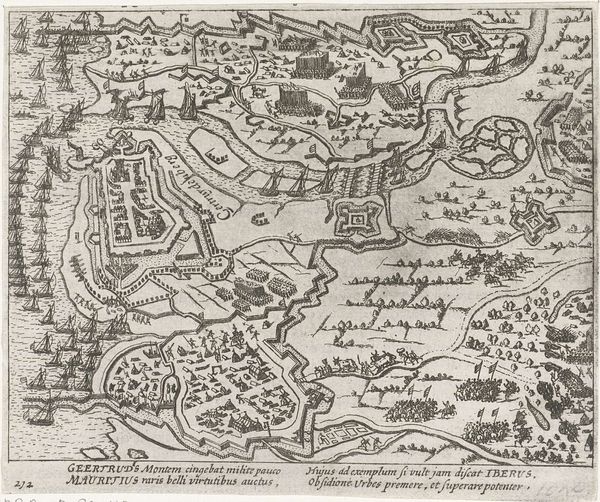
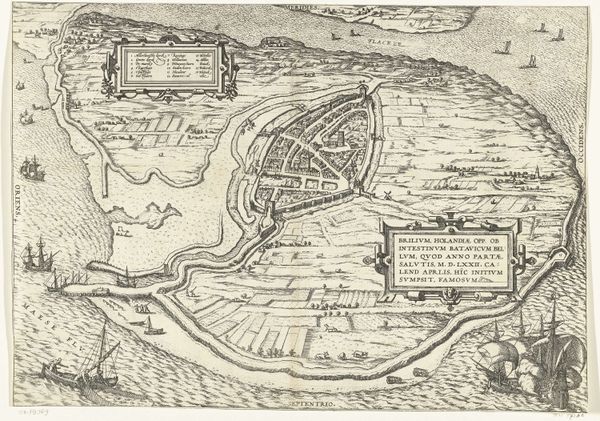
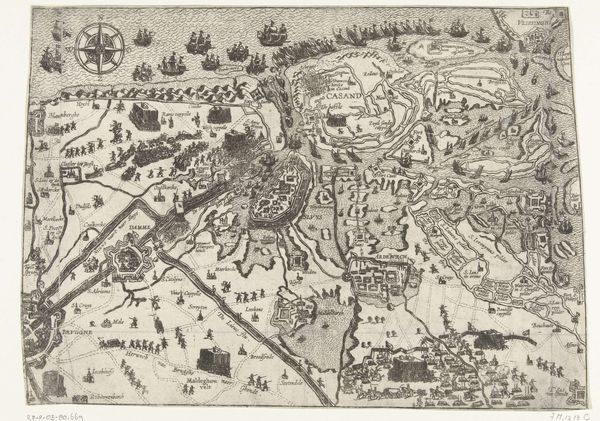
Editor: This is "Plattegrond van Siena (deel midden links)," a pen drawing by an anonymous artist created after 1597. It looks like a bird's-eye view, an engraved cityscape that’s incredibly detailed. How do you interpret this kind of meticulous rendering of urban space? Curator: It's tempting to just see a map, isn’t it? But it's much more than that. Look at the walls; they represent power, control, and exclusion, defining who's 'in' and who's 'out'. How do you think the depiction of walls in cityscapes reflects social and political anxieties of the time? Editor: I guess they provided security but also highlight division. Were there specific anxieties in Siena that this image might be addressing? Curator: Absolutely. Siena, during the Renaissance, was caught between tradition and emerging modernity. Think about how such detailed urban planning—reflected even in art— served as a tool for those in power to exert influence. How did this level of planning impact everyday lives, and who benefited most? Editor: So, the very act of mapping and displaying it serves a social and political purpose, right? It’s about imposing a specific vision. Curator: Exactly. And the artist, though anonymous, participates in shaping and reinforcing that vision. Does seeing the work this way change your initial impression? Editor: Definitely! I had only thought of the beautiful lines forming buildings. I see it as part of a power dynamic and control strategy now. Thanks! Curator: And thanks to you; it is rewarding to consider our past and present and envision new spaces through art and thought.
Comments
No comments
Be the first to comment and join the conversation on the ultimate creative platform.
 React
React Comment