engraving
#
portrait
#
baroque
#
old engraving style
#
hand drawn type
#
portrait reference
#
history-painting
#
engraving
#
realism
Dimensions: height 144 mm, width 106 mm
Copyright: Rijks Museum: Open Domain
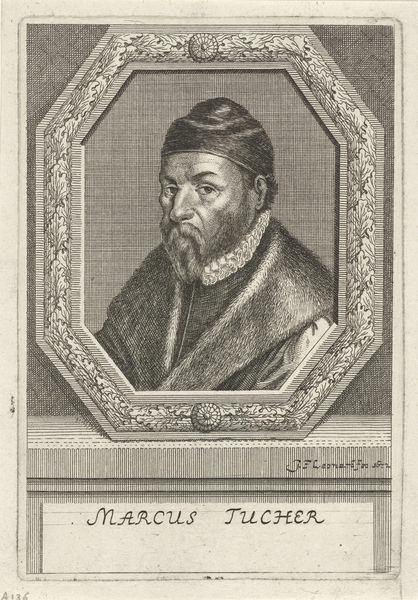
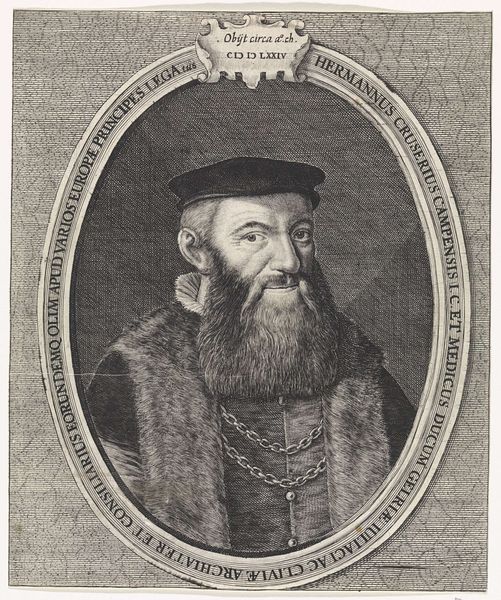
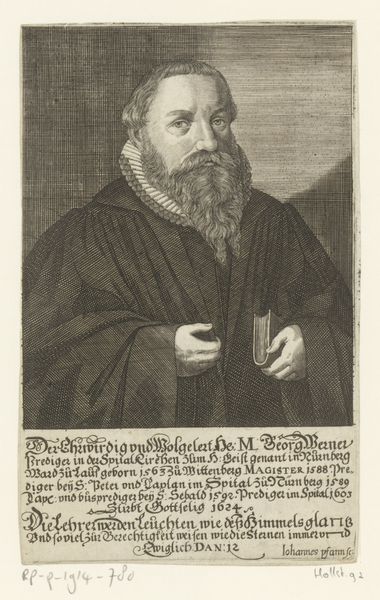
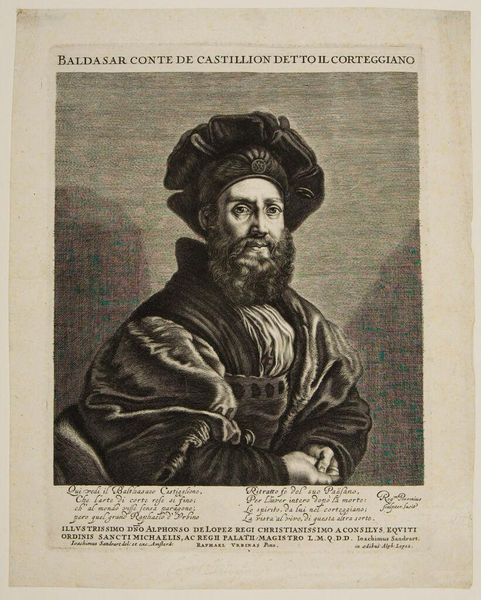
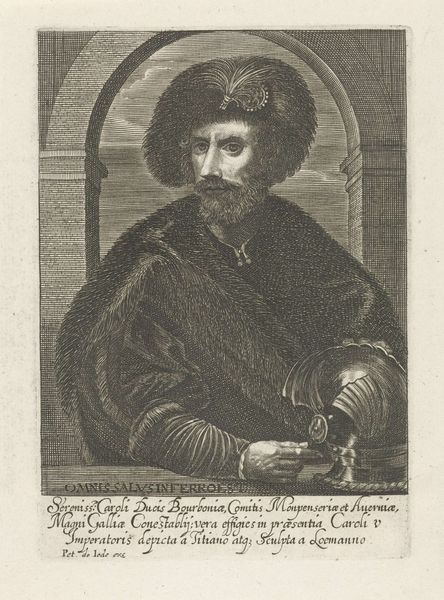
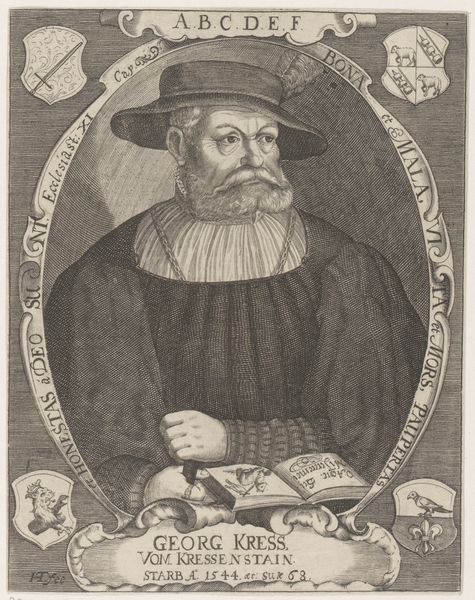
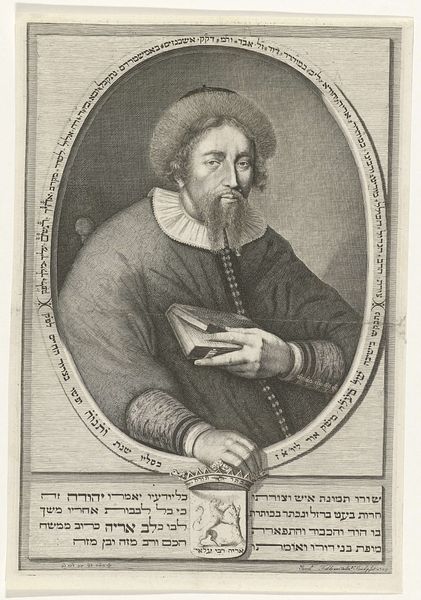
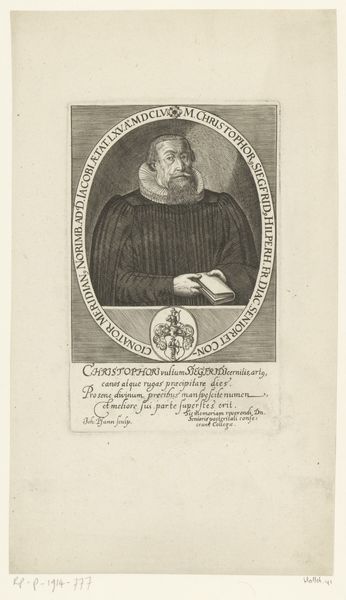
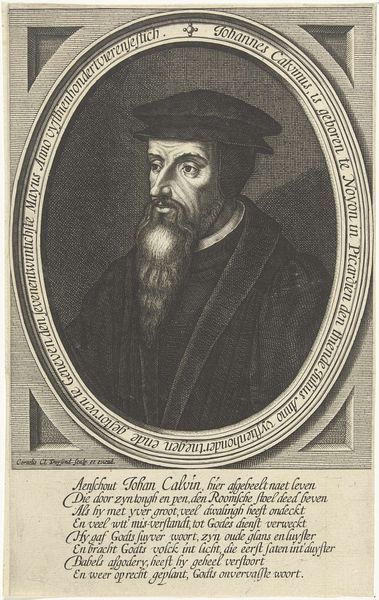
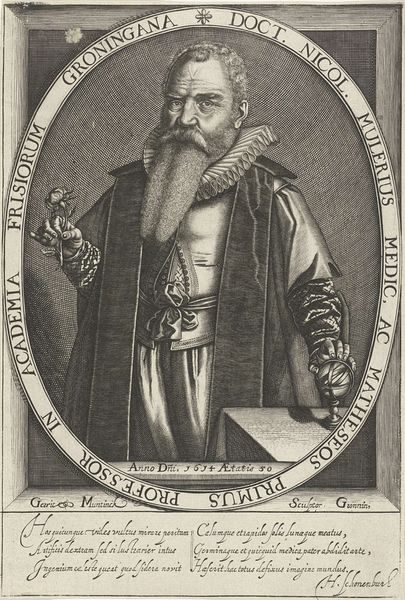
Editor: This is Johann Friedrich Leonard's "Portret van Merten Rosentaler," an engraving probably from between 1643 and 1680. It's so detailed! The man's fur hat especially looks quite striking. How would you interpret this work? Curator: Well, placing this portrait in its historical context, engraving as a medium was crucial for disseminating information and constructing social identities. The inscription below and the symbols around Merten—a scallop shell, usually associated with pilgrimage, and what looks like a star—suggest an attempt to memorialize and perhaps even idealize him. Editor: Interesting. So it's not just about showing what he looked like? Curator: Precisely! Consider the Baroque era, which saw a rise in individual portraiture that served not only as likenesses but also as statements of social status and piety. Leonard, through the precision of the engraving, participates in constructing Merten's public persona. I wonder, do you find any tension between the detail and the overall feeling evoked? Editor: Hmm, maybe a little. The realism in the face makes it seem very personal, but the text and symbols almost turn him into a type, not just an individual. Curator: Exactly! The portrait operates in the space between private commemoration and public history, showcasing the socio-political function of art in shaping memory and legacy. What do you think this says about how we view history? Editor: It really brings home how even seemingly straightforward portraits are loaded with cultural meaning. I’ll definitely look at engravings differently from now on! Curator: As will I! It's a helpful reminder that art from the past isn't a static depiction, but a dynamic record shaped by those in power.
Comments
No comments
Be the first to comment and join the conversation on the ultimate creative platform.
 Collect
 React
React Comment
More like this