

1830 - 1831
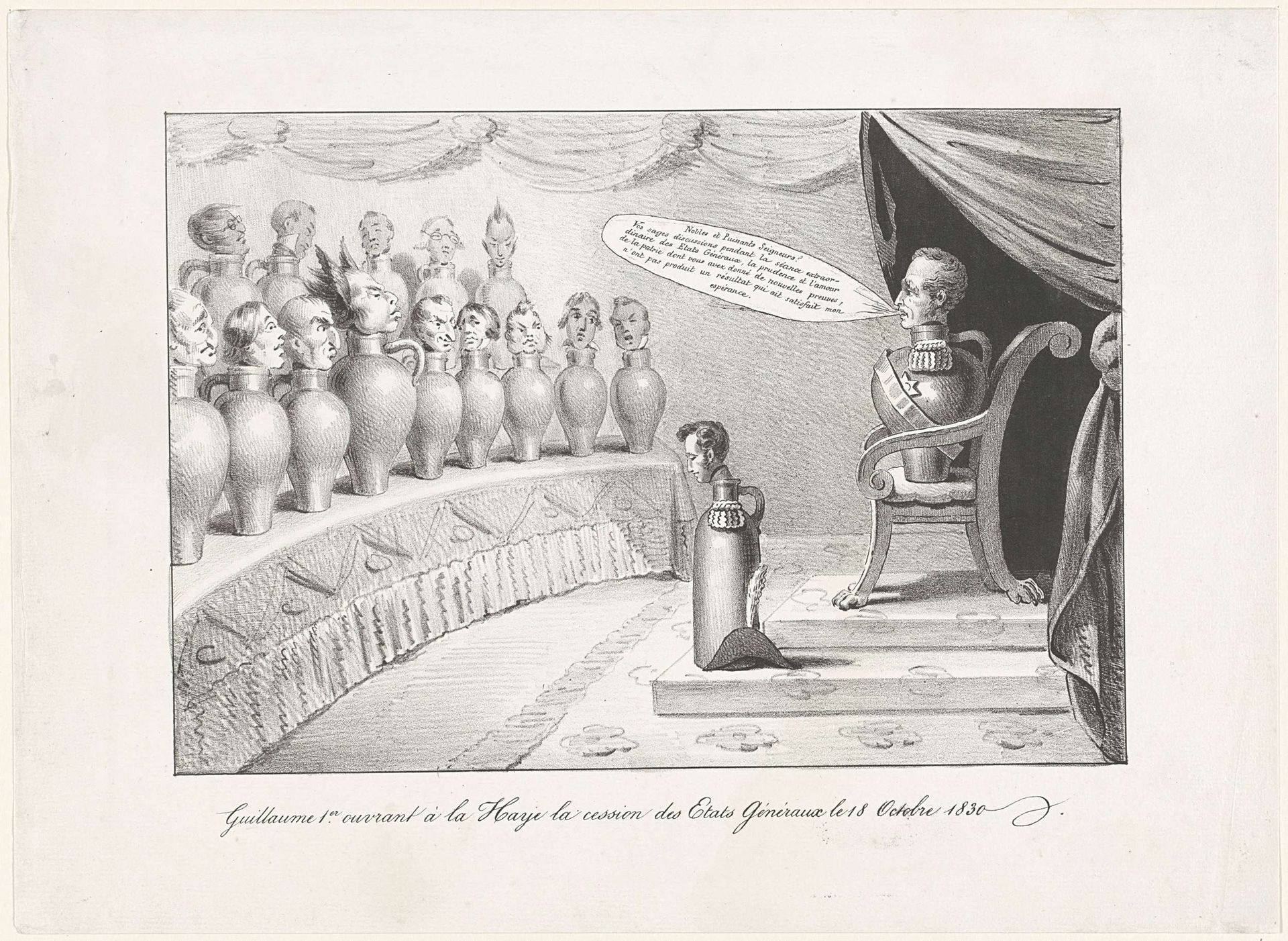
Willem I opent de zitting van de Staten-Generaal, 1830

Anonymous
@anonymousLocation
RijksmuseumListen to curator's interpretation
Curatorial notes
Editor: This print, titled "Willem I opent de zitting van de Staten-Generaal, 1830," seems to capture a historical moment through a very unusual lens. The figures have these strange, almost comical, jug-like bodies. It feels like a political caricature. What strikes you most about its visual language? Curator: What jumps out are the recurring symbolic jugs or vases. They transform human figures into objects, implying perhaps a lack of individual agency or independent thought. It resonates with older traditions where rulers are likened to vases to be filled and emptied – or perhaps it points at the fragility of the governing bodies during a time of revolution, the container being easier to break than any actual shift in power. Editor: That's a really interesting perspective, the fragility of the government itself. The King seems similarly… contained, seated but also reduced to a bust on a jug. Curator: Precisely! Notice how each jug-figure possesses a unique facial expression? It evokes a cultural memory play. Consider how traditional court portraiture idealizes the sitter, but here, each representative is individualized, and somewhat mocked, but bound to this vessel and made somewhat lifeless. It makes me wonder: Are they being honoured, or ridiculed? And what does this tell us about the Dutch perception of leadership during this period of unrest? Editor: So, the artist isn't just commenting on the King, but also on the members of the States-General. That adds another layer of meaning to the work. I guess I was too focused on just the obvious caricature. Curator: It is about so much more. Caricature as cultural artifact serves both the historical memory of political circumstances and can evoke empathy with cultural anxieties of nationhood and personal freedoms, which is one powerful message indeed.