About this artwork
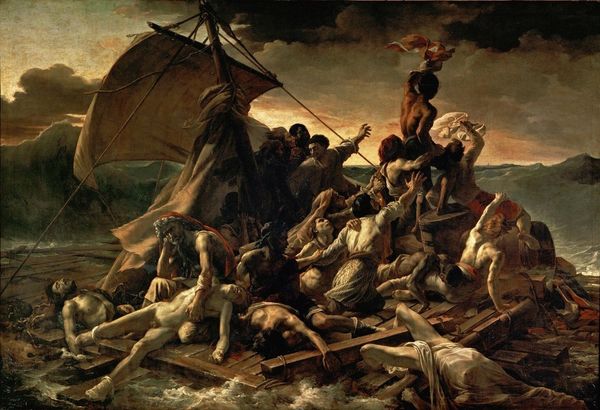
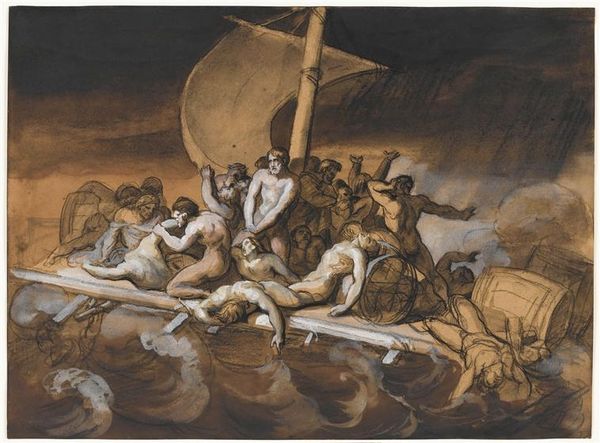
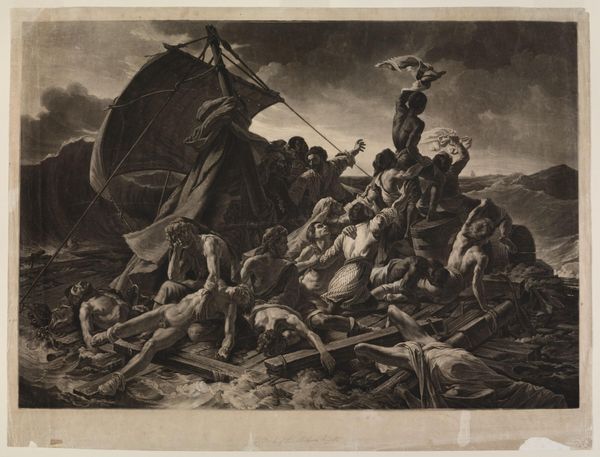
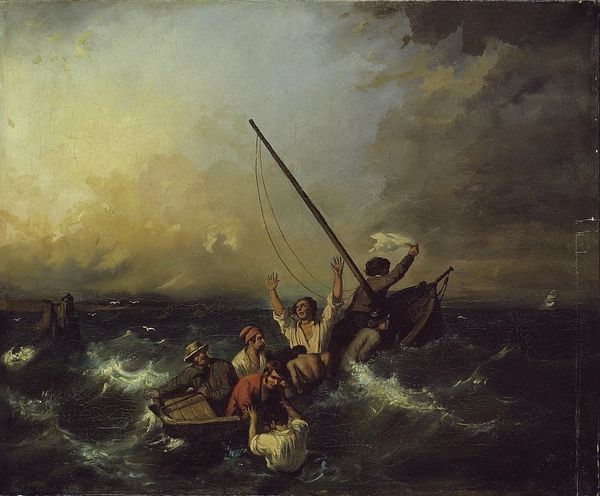
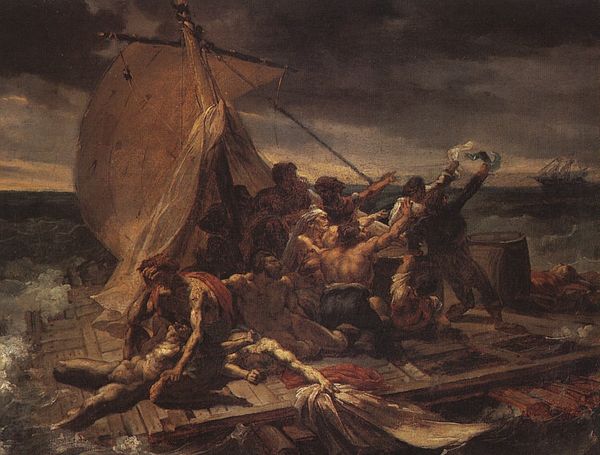
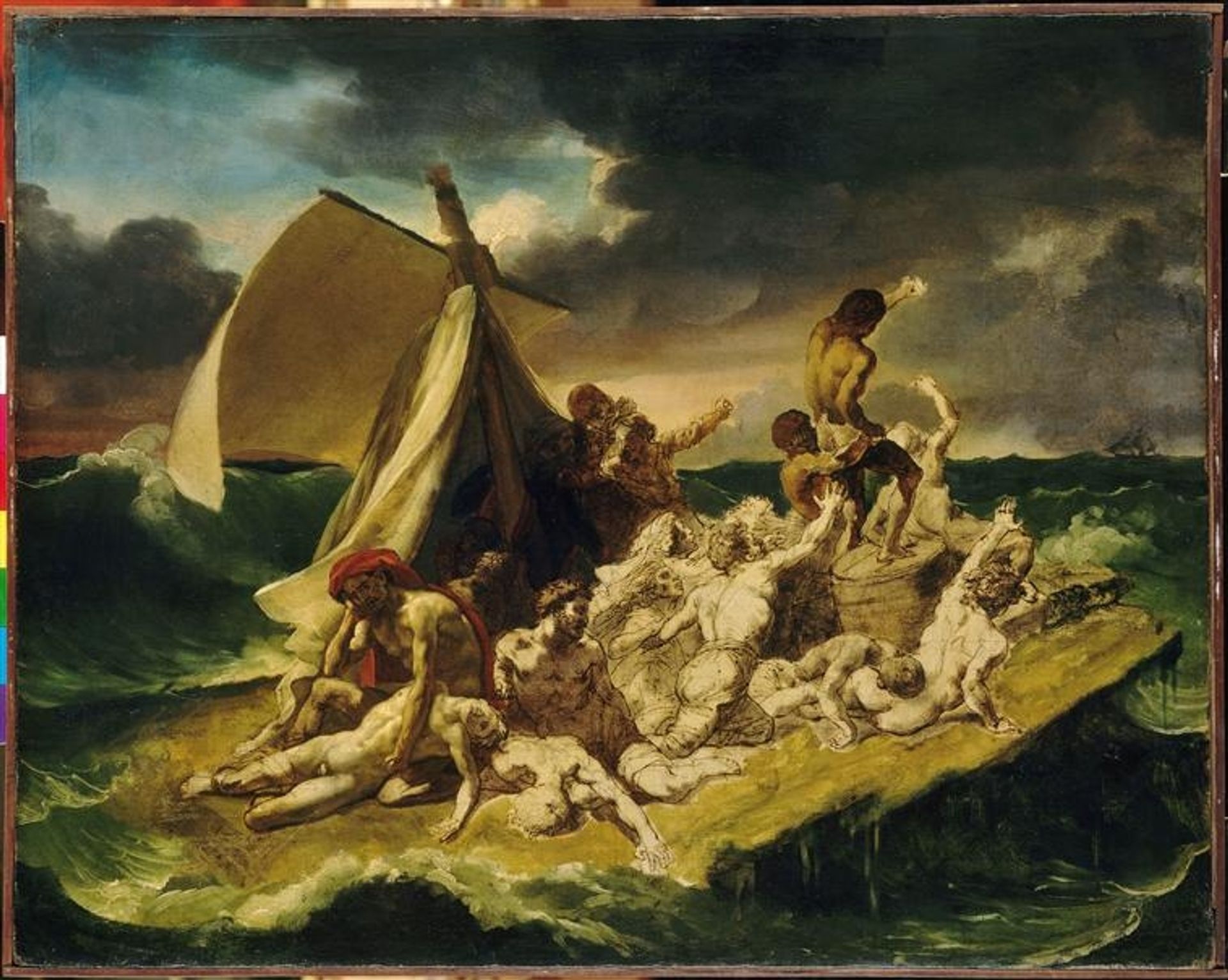
Théodore Géricault created this oil on canvas study for The Raft of the Medusa, capturing a scene of human desperation. The figures' gestures, particularly the raised arms reaching for salvation, resonate deeply with historical and cultural echoes. Consider the supplicating pose: throughout the ages, from ancient Roman orators to Renaissance depictions of saints, raised arms have signified a plea for divine intervention, a yearning for hope amidst despair. Yet, here, the gesture takes on a darker hue. It mirrors the futility of human striving against nature's indifference. One can think of the Laocoön group, where the figures writhe in agony, struggling against the crushing force of the serpents, an image of human struggle against implacable fate. The collective memory of such archetypes infuses the work with a profound psychological weight, engaging our subconscious understanding of human suffering and the enduring quest for redemption. Ultimately, this cyclical progression speaks to our primal fears and hopes, transcending time and culture.

Artwork details
- Medium
- painting, oil-paint
- Dimensions
- 65 x 83 cm
- Copyright
- Public domain
Tags
boat
narrative-art
ship
painting
oil-paint
landscape
figuration
oil painting
ocean
romanticism
history-painting
watercolor
sea
Comments
No comments
About this artwork
Théodore Géricault created this oil on canvas study for The Raft of the Medusa, capturing a scene of human desperation. The figures' gestures, particularly the raised arms reaching for salvation, resonate deeply with historical and cultural echoes. Consider the supplicating pose: throughout the ages, from ancient Roman orators to Renaissance depictions of saints, raised arms have signified a plea for divine intervention, a yearning for hope amidst despair. Yet, here, the gesture takes on a darker hue. It mirrors the futility of human striving against nature's indifference. One can think of the Laocoön group, where the figures writhe in agony, struggling against the crushing force of the serpents, an image of human struggle against implacable fate. The collective memory of such archetypes infuses the work with a profound psychological weight, engaging our subconscious understanding of human suffering and the enduring quest for redemption. Ultimately, this cyclical progression speaks to our primal fears and hopes, transcending time and culture.
Comments
No comments