About this artwork
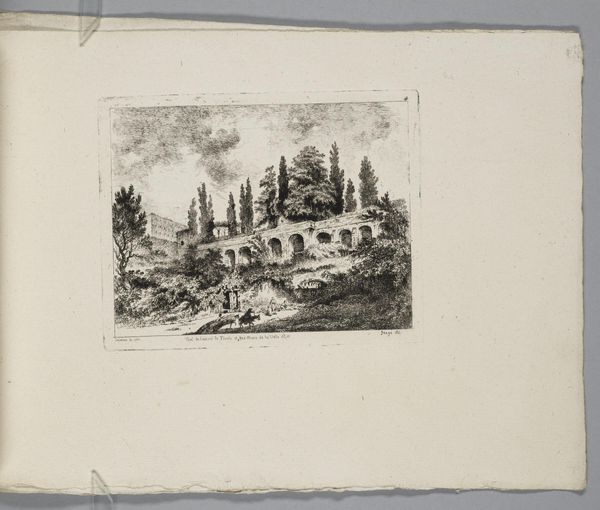
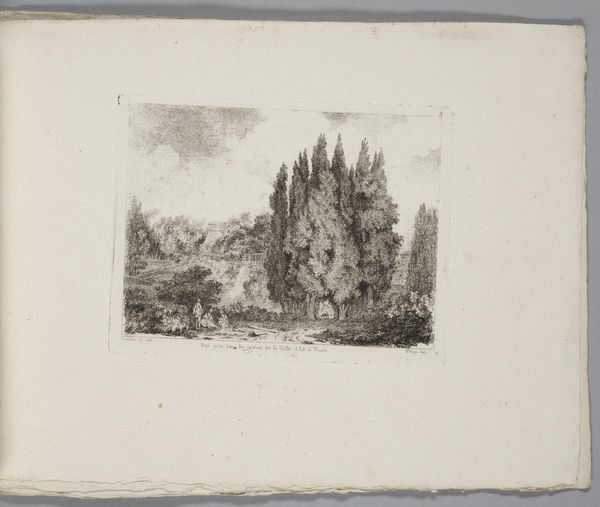
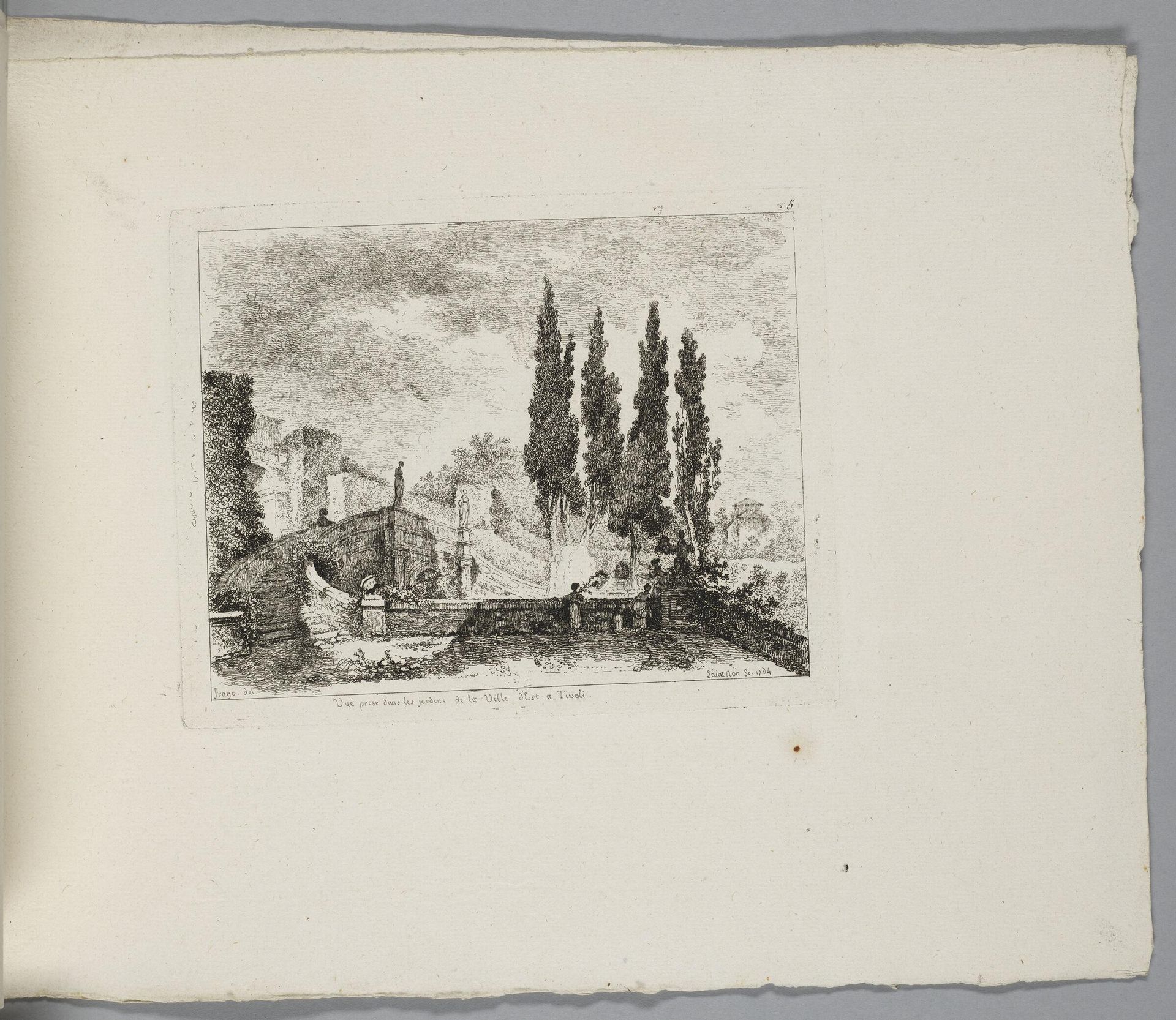
Curator: This is Jean-Claude Richard, Abbé de Saint-Non’s print, "View of the Gardens of the Villa d'Este in Tivoli," housed here at the Harvard Art Museums. Editor: Immediately, I'm struck by how the artist uses stark, almost skeletal lines to convey the lushness of the gardens. It feels both elegant and slightly haunting. Curator: The Villa d'Este gardens were a popular subject, representing aristocratic power and control over nature. This print would have circulated amongst elite collectors, reinforcing those ideas. Editor: Yes, the cypresses, almost like dark exclamation points, punctuate the scene. They act as symbols of mourning and remembrance, casting a shadow over this manicured paradise. Curator: It's interesting you see that. The Villa was indeed a site of both pleasure and political maneuvering. This print served as a reminder of both. Editor: Ultimately, this image speaks to the transient nature of beauty and power, doesn't it? It is captured in ink, yet it embodies ephemerality. Curator: I agree. It prompts us to consider the enduring legacy of these gardens and the historical forces that shaped them.
View of the Gardens of the Villa d'Este in Tivoli
1765
Jean-Claude Richard, Abbé de Saint-Non
@jeanclauderichardabbadesaintnon
Harvard Art Museums
Harvard Art MuseumsArtwork details
- Dimensions
- image: 13.3 Ã 17 cm (5 1/4 Ã 6 11/16 in.) plate: 14.8 Ã 18.7 cm (5 13/16 Ã 7 3/8 in.) sheet: 26.1 Ã 35 cm (10 1/4 Ã 13 3/4 in.)
- Location
- Harvard Art Museums
- Copyright
- CC0 1.0
Comments
Share your thoughts
About this artwork
Curator: This is Jean-Claude Richard, Abbé de Saint-Non’s print, "View of the Gardens of the Villa d'Este in Tivoli," housed here at the Harvard Art Museums. Editor: Immediately, I'm struck by how the artist uses stark, almost skeletal lines to convey the lushness of the gardens. It feels both elegant and slightly haunting. Curator: The Villa d'Este gardens were a popular subject, representing aristocratic power and control over nature. This print would have circulated amongst elite collectors, reinforcing those ideas. Editor: Yes, the cypresses, almost like dark exclamation points, punctuate the scene. They act as symbols of mourning and remembrance, casting a shadow over this manicured paradise. Curator: It's interesting you see that. The Villa was indeed a site of both pleasure and political maneuvering. This print served as a reminder of both. Editor: Ultimately, this image speaks to the transient nature of beauty and power, doesn't it? It is captured in ink, yet it embodies ephemerality. Curator: I agree. It prompts us to consider the enduring legacy of these gardens and the historical forces that shaped them.
Comments
Share your thoughts