About this artwork
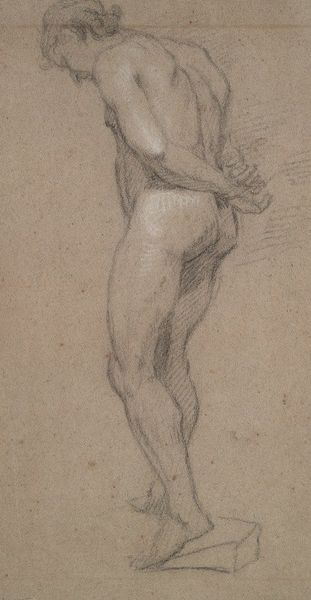
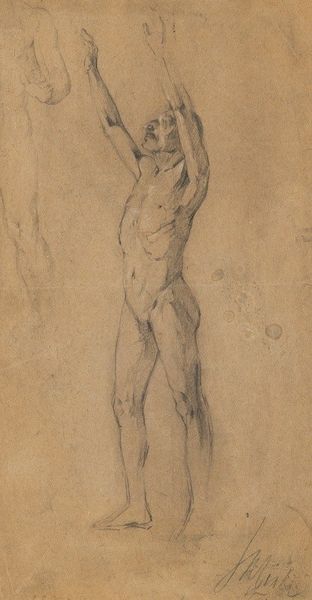
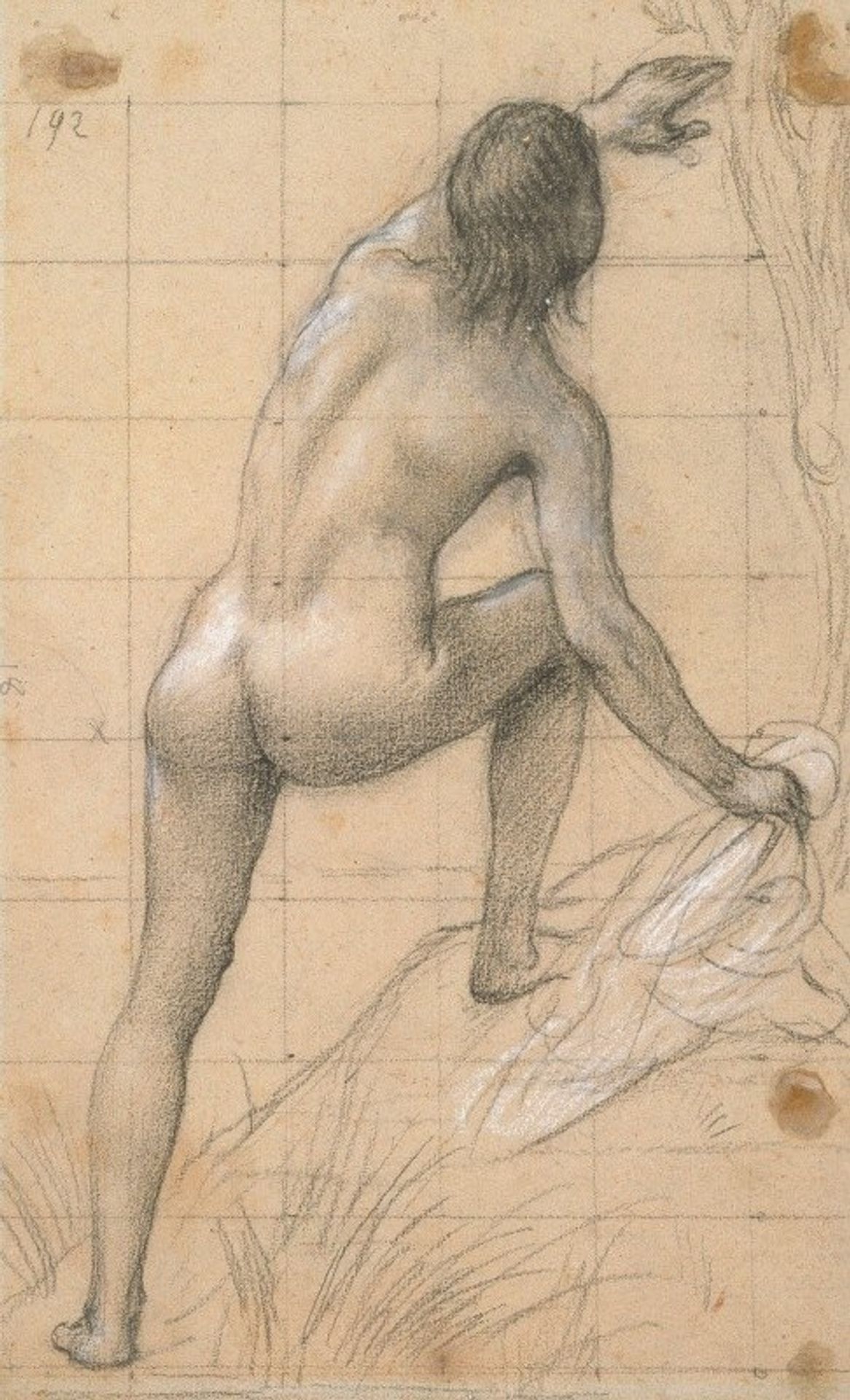
This is a nude figure study by Pierre Puvis de Chavannes, rendered in graphite, likely made in France sometime in the mid-to-late 19th century. It represents a male nude from behind, arm outstretched, climbing a rocky incline. Chavannes was a prominent figure in the French Salon system, an institution that dictated artistic taste and rewarded academic styles. He became known for his murals, often classical or allegorical in subject matter. While this sketch seems to align with the academic tradition of idealized nudes, we should consider how it might operate within, or against, that system. The grid faintly visible beneath the drawing suggests it was a study for a larger composition, perhaps a figure within a mural. To understand its role, we can look to surviving letters or exhibition reviews. We can also study the artist’s place within the French academy to better understand how his art reflects the social and institutional forces of his time. By exploring the archives, we might discover how this study was meant to challenge or uphold the artistic conventions of its day.
Figure nue de dos, bras gauche tendu vers le haut
1887 - 1892

Artwork details
- Medium
- drawing, pencil
- Copyright
- Public Domain: Artvee
Tags
Comments
Share your thoughts
About this artwork
This is a nude figure study by Pierre Puvis de Chavannes, rendered in graphite, likely made in France sometime in the mid-to-late 19th century. It represents a male nude from behind, arm outstretched, climbing a rocky incline. Chavannes was a prominent figure in the French Salon system, an institution that dictated artistic taste and rewarded academic styles. He became known for his murals, often classical or allegorical in subject matter. While this sketch seems to align with the academic tradition of idealized nudes, we should consider how it might operate within, or against, that system. The grid faintly visible beneath the drawing suggests it was a study for a larger composition, perhaps a figure within a mural. To understand its role, we can look to surviving letters or exhibition reviews. We can also study the artist’s place within the French academy to better understand how his art reflects the social and institutional forces of his time. By exploring the archives, we might discover how this study was meant to challenge or uphold the artistic conventions of its day.
Comments
Share your thoughts