1949
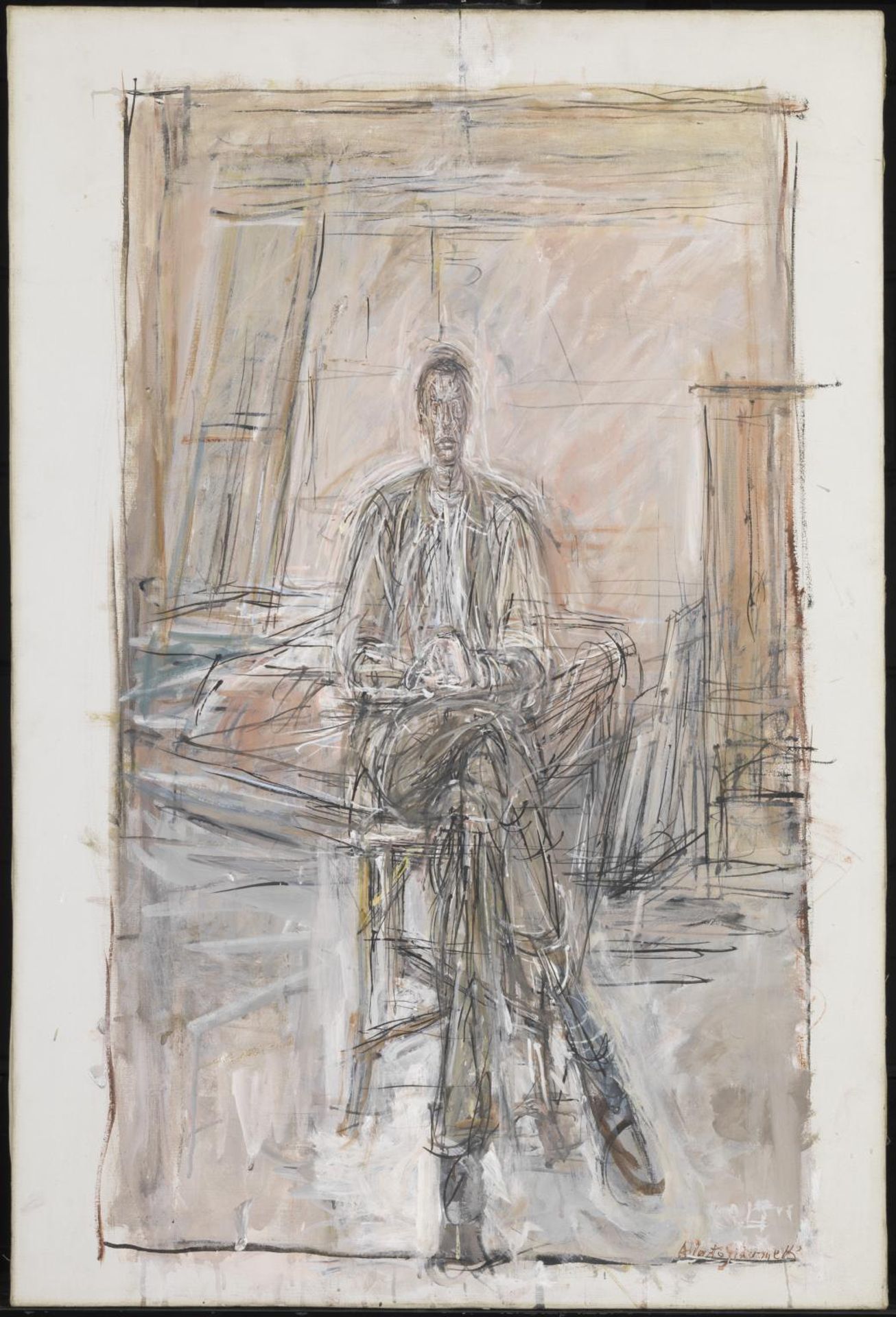
Seated Man


Listen to curator's interpretation
Curatorial notes
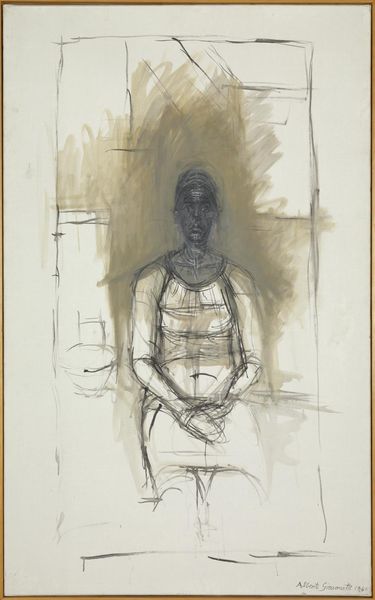
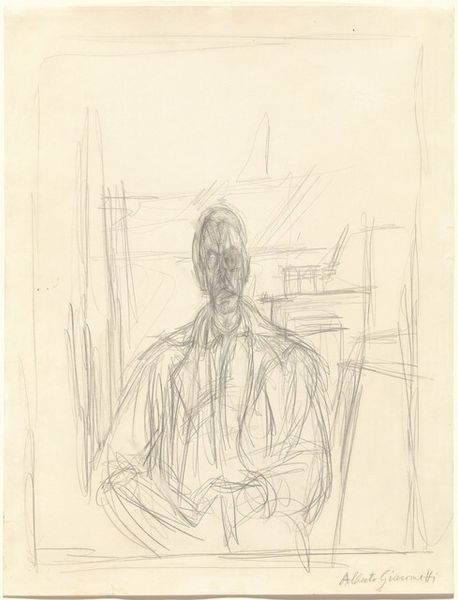
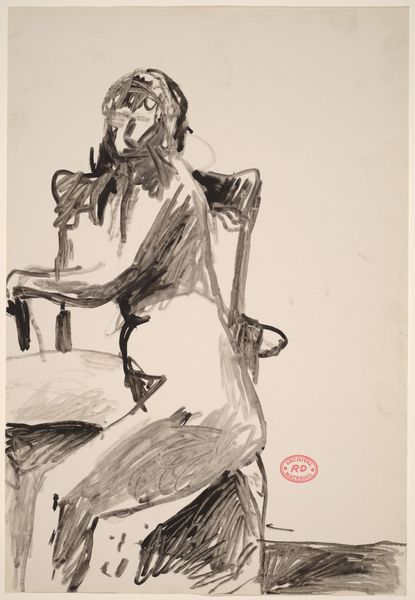
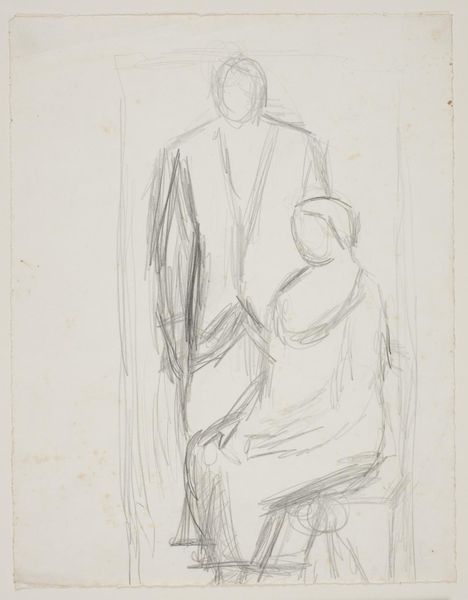
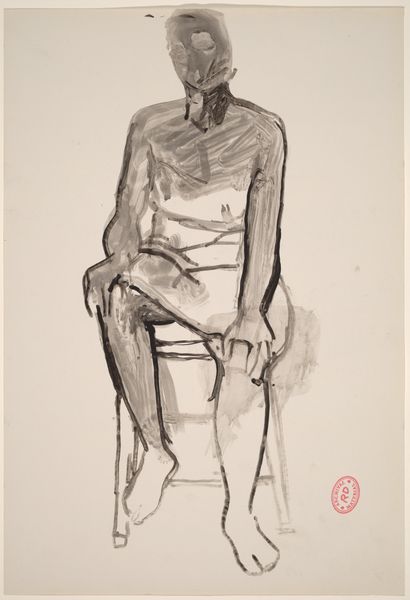
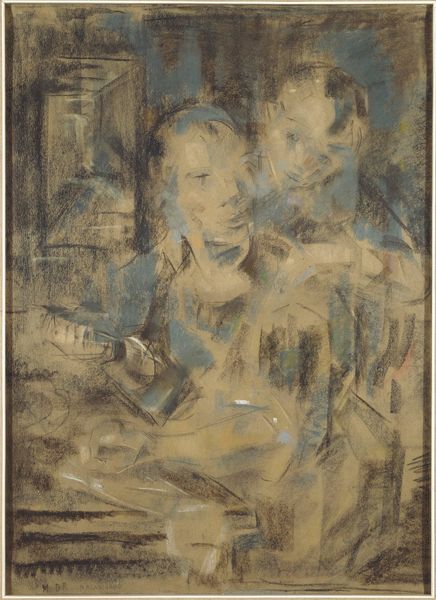
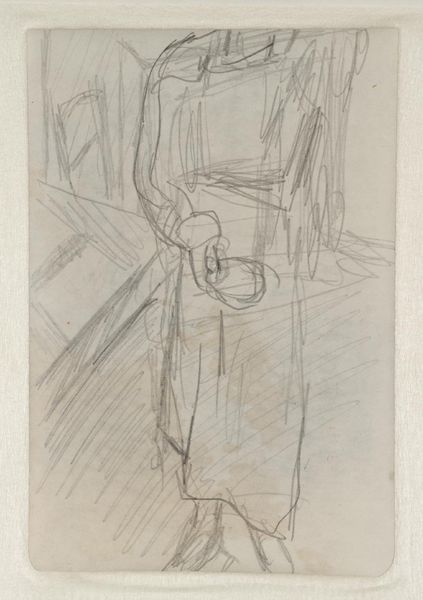
Curator: Alberto Giacometti's "Seated Man," residing here at the Tate Modern, presents us with a figure captured in ink and wash on paper. Editor: The immediate effect is of a ghostly presence, almost dissolving into the pale ground. The nervous, searching lines really convey a sense of fragility. Curator: Giacometti often returned to the motif of the isolated figure. The seated posture, with hands clasped, suggests contemplation, perhaps even a silent vigil. It resonates with archetypal images of introspection and stoicism. Editor: Yes, and the open composition emphasizes this isolation; the figure is surrounded by empty space. The lack of distinct modeling gives the work an ethereal quality, further distancing him. Curator: He's like a shadow, an echo. Giacometti was deeply affected by the Second World War and, later in life, was quoted as saying his sculptures were an attempt to “defend the last pieces” of our humanity. I wonder if that explains the rawness of the image. Editor: Perhaps. Whatever the reason, it's compelling to observe how, through his choice of lines and color, Giacometti has conveyed a powerful mood. Curator: Indeed. A testament to art's ability to evoke deep emotion with minimal means.