About this artwork
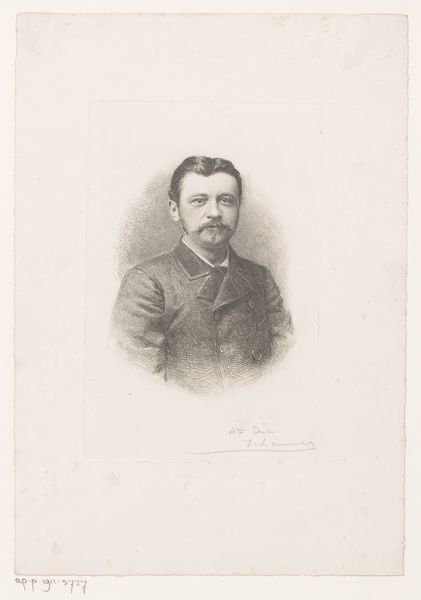
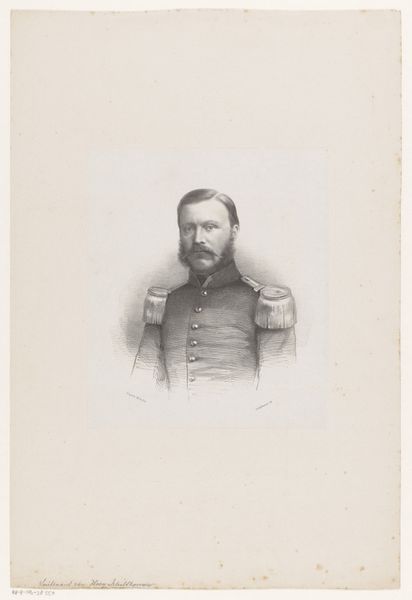
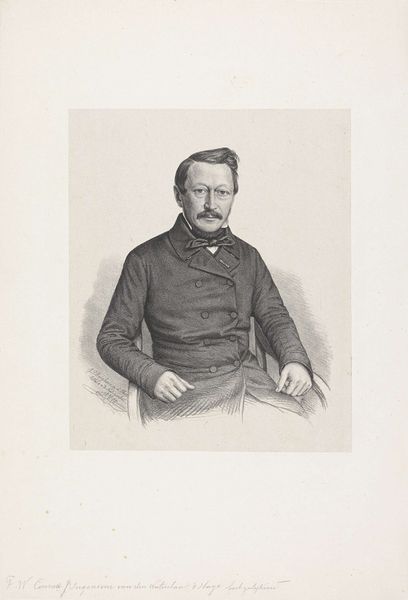
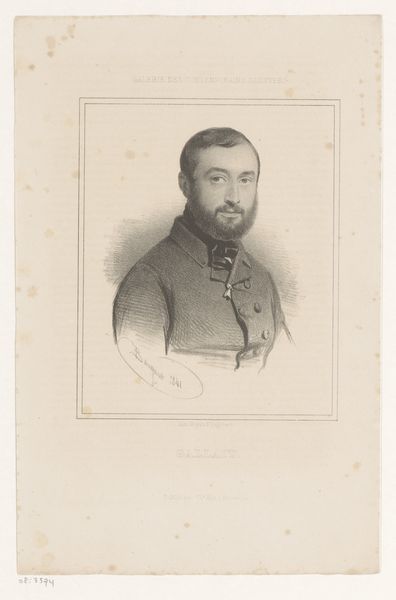
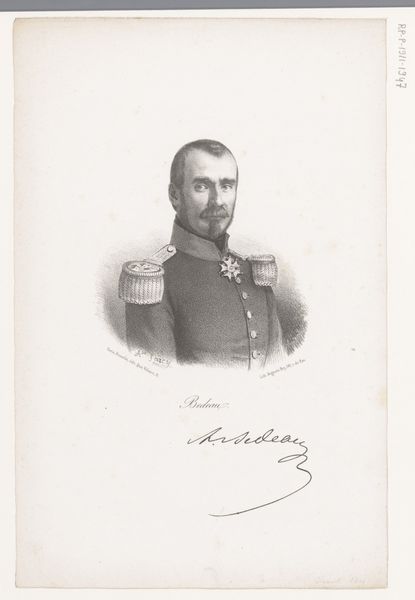
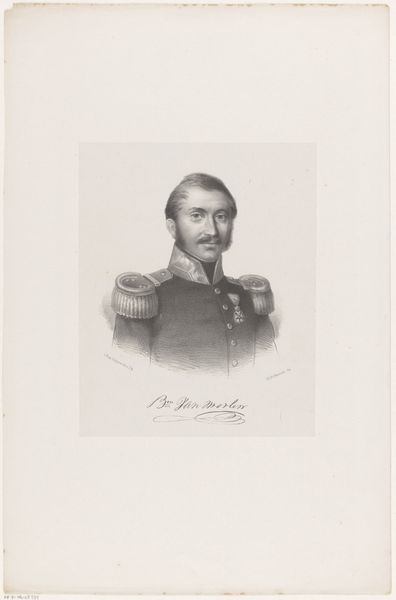
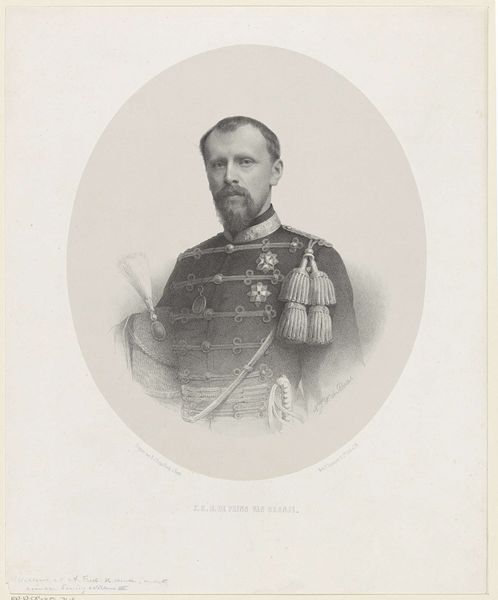
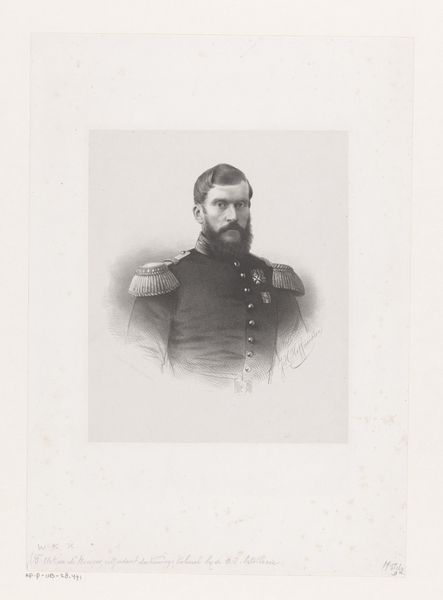
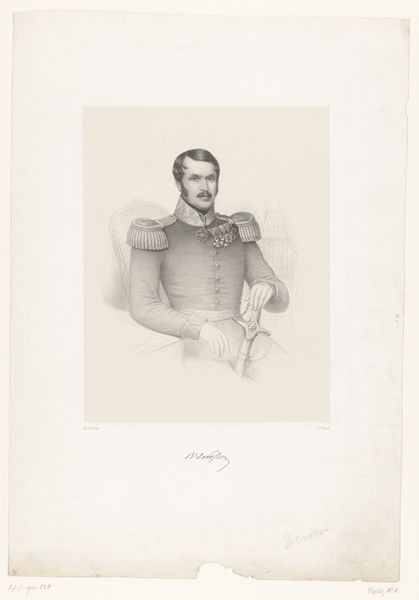
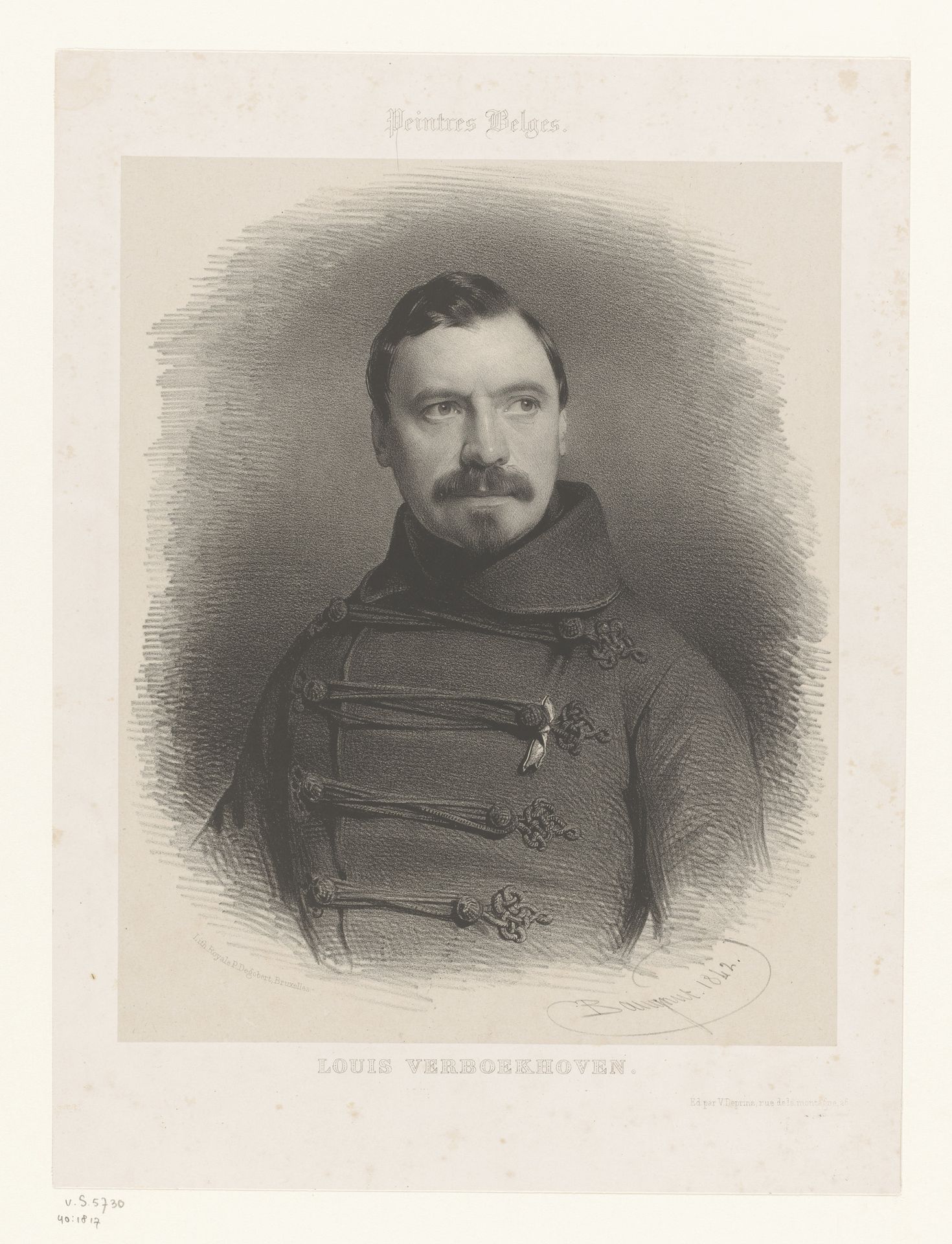
Charles Baugniet made this portrait of Charles Louis Verboeckhoven using lithography, a printmaking process that allows for detailed, tonal images. Lithography involves drawing on a flat stone or metal plate with a greasy crayon, then treating the surface so that ink adheres only to the drawn areas. This print captures the likeness of Verboeckhoven through the skilled application of line and tone. The process itself, born from industrial needs, allowed for the mass production of images, democratizing art and information. Consider the labor involved: from quarrying the stone to the skilled hand of the artist creating the image. The lithograph, as a multiple, speaks to broader social issues of labor, politics, and consumption. Recognizing the value in the making, the materials, and the context of production allows us to see beyond the surface of the image.

Artwork details
- Medium
- drawing, print, etching, pencil
- Dimensions
- height 361 mm, width 270 mm
- Location
- Rijksmuseum
- Copyright
- Rijks Museum: Open Domain
Tags
Comments
Share your thoughts
About this artwork
Charles Baugniet made this portrait of Charles Louis Verboeckhoven using lithography, a printmaking process that allows for detailed, tonal images. Lithography involves drawing on a flat stone or metal plate with a greasy crayon, then treating the surface so that ink adheres only to the drawn areas. This print captures the likeness of Verboeckhoven through the skilled application of line and tone. The process itself, born from industrial needs, allowed for the mass production of images, democratizing art and information. Consider the labor involved: from quarrying the stone to the skilled hand of the artist creating the image. The lithograph, as a multiple, speaks to broader social issues of labor, politics, and consumption. Recognizing the value in the making, the materials, and the context of production allows us to see beyond the surface of the image.
Comments
Share your thoughts