About this artwork
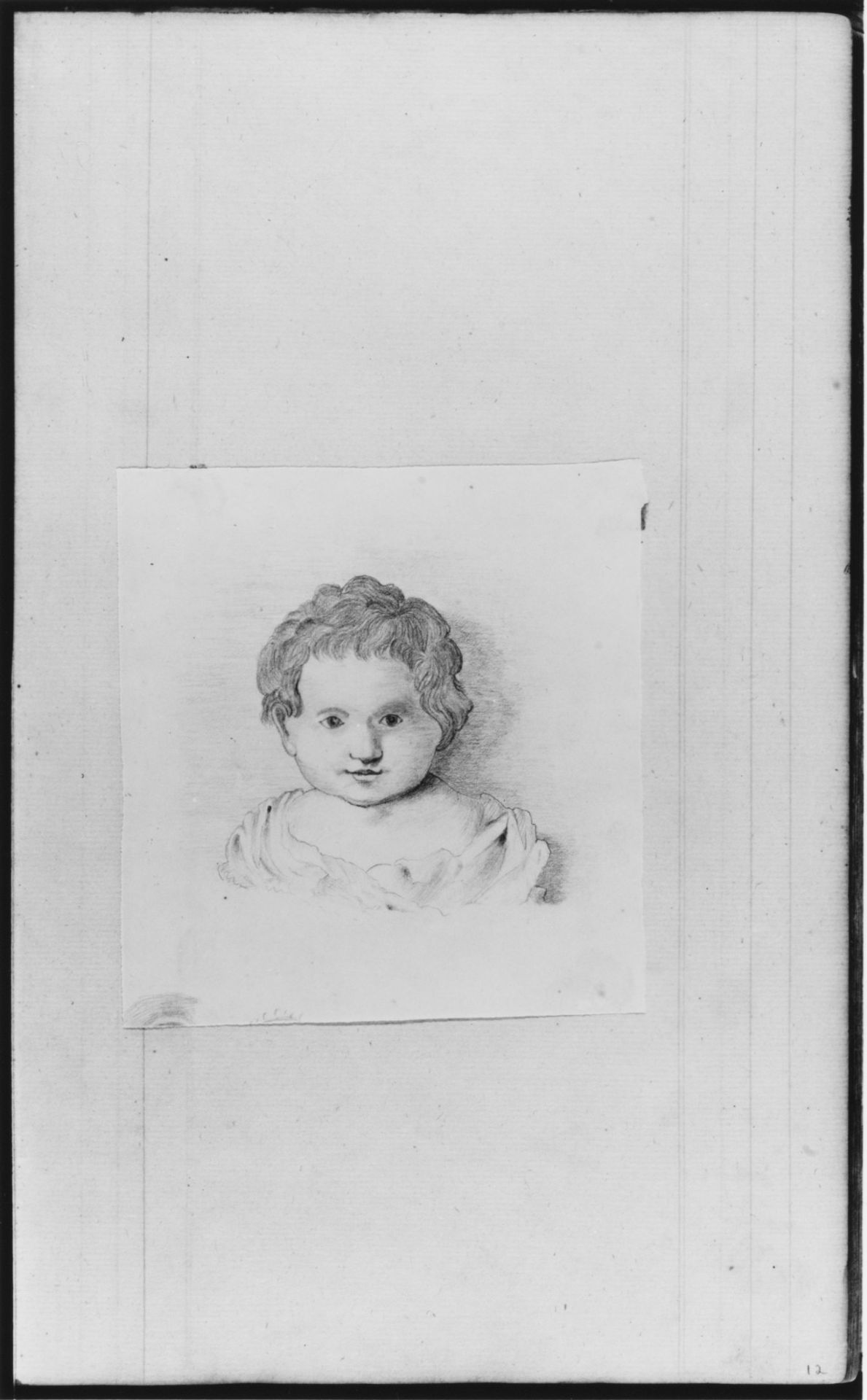
John William Casilear rendered this ‘Head of a Child’ with graphite on paper. It is a tightly cropped portrait, capturing the child's face and upper torso. The composition is strikingly simple. Casilear uses soft, delicate lines to define the child's features and hair, creating a sense of gentleness. The sketch reveals Casilear’s skill in capturing subtle variations in tone and texture with a limited medium. The visible page from the sketchbook is a reminder of the artwork's process. The texture of the paper and the slight imperfections, such as smudges and uneven edges, contrast the idealized image of childhood and introduce an element of reality. This interplay between the idealized and the real invites a deeper reading. Casilear’s choice to present the child within the raw context of the sketchbook challenges fixed notions of portraiture. It emphasizes the provisional nature of the work, suggesting the fluidity of identity and representation.
Head of a Child (from Sketchbook)
1811 - 1893

John William Casilear
1811 - 1893
The Metropolitan Museum of Art
Metropolitan Museum of Art, New York, NYArtwork details
- Medium
- drawing, pencil, graphite
- Dimensions
- Dimensions unavailable
- Location
- Metropolitan Museum of Art, New York, NY
- Copyright
- Public Domain
Tags
Comments
Share your thoughts
About this artwork
John William Casilear rendered this ‘Head of a Child’ with graphite on paper. It is a tightly cropped portrait, capturing the child's face and upper torso. The composition is strikingly simple. Casilear uses soft, delicate lines to define the child's features and hair, creating a sense of gentleness. The sketch reveals Casilear’s skill in capturing subtle variations in tone and texture with a limited medium. The visible page from the sketchbook is a reminder of the artwork's process. The texture of the paper and the slight imperfections, such as smudges and uneven edges, contrast the idealized image of childhood and introduce an element of reality. This interplay between the idealized and the real invites a deeper reading. Casilear’s choice to present the child within the raw context of the sketchbook challenges fixed notions of portraiture. It emphasizes the provisional nature of the work, suggesting the fluidity of identity and representation.
Comments
Share your thoughts