#
underwear fashion design
#
imaginative character sketch
#
fashion mockup
#
personal sketchbook
#
historical fashion
#
sketchbook drawing
#
character design for animation
#
storyboard and sketchbook work
#
fashion sketch
#
sketchbook art
Dimensions: height 274 mm, width 360 mm
Copyright: Rijks Museum: Open Domain
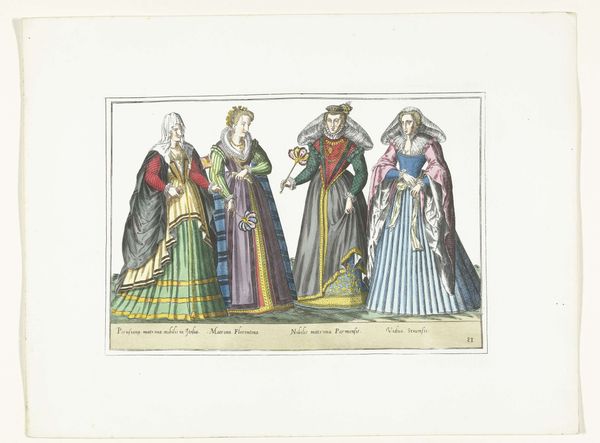
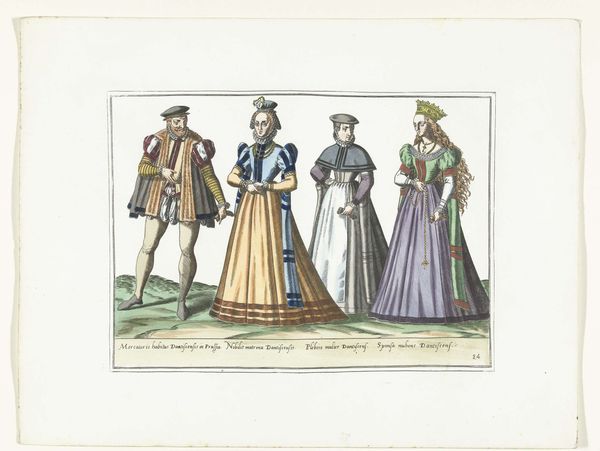
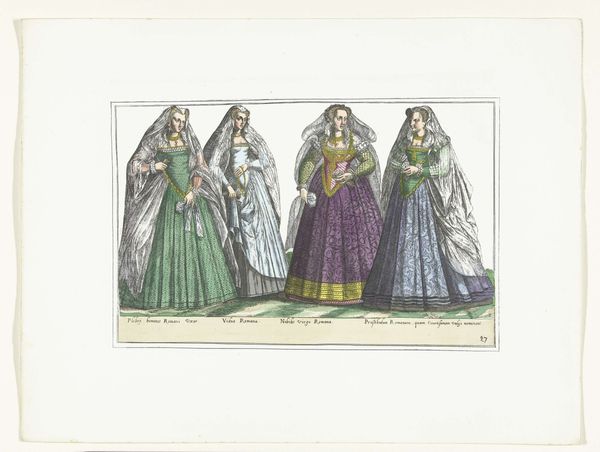
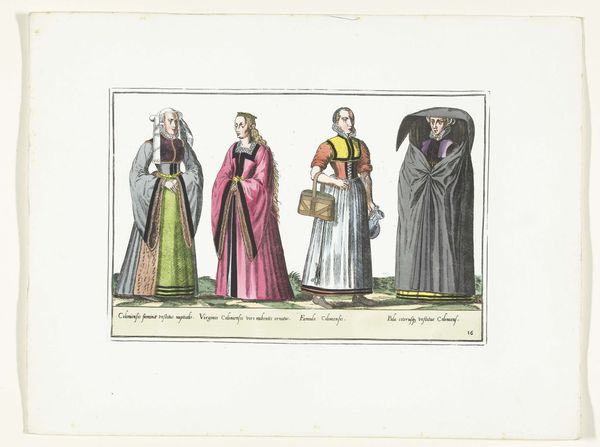
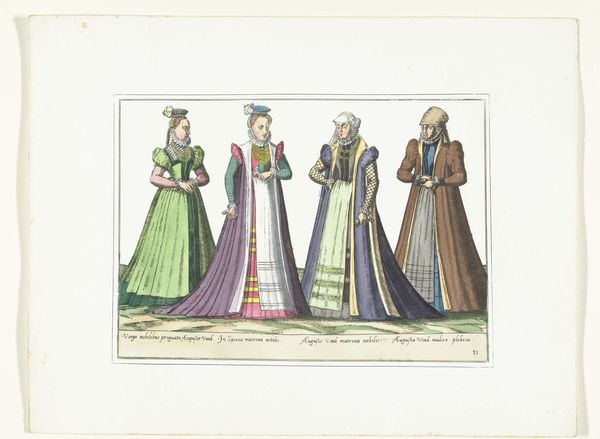
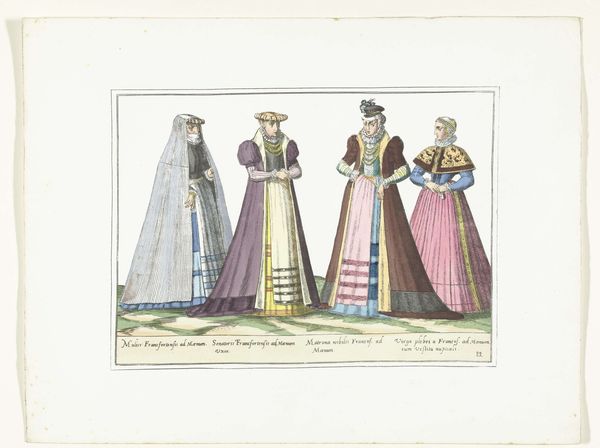
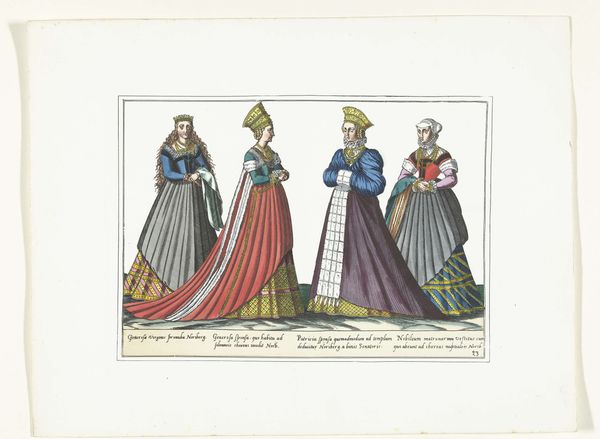
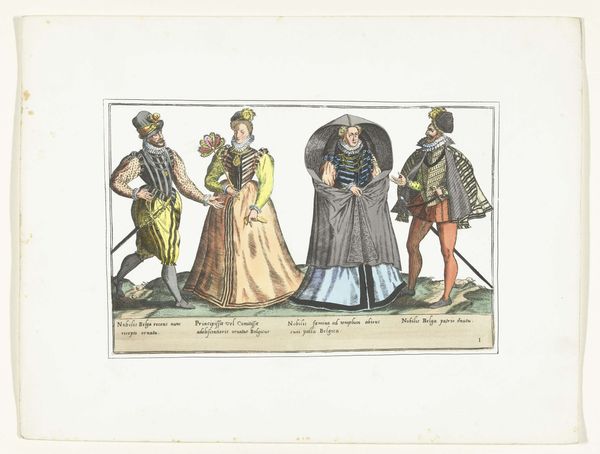
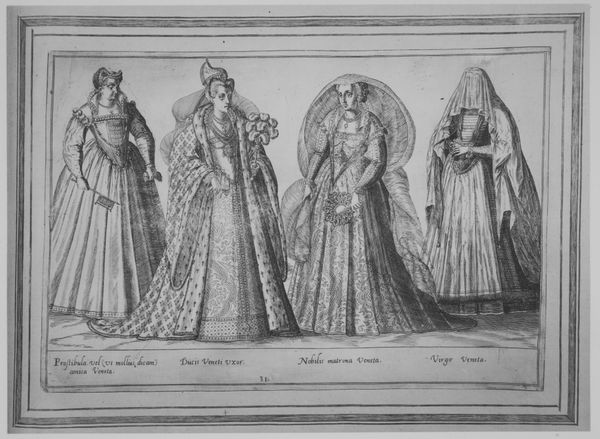
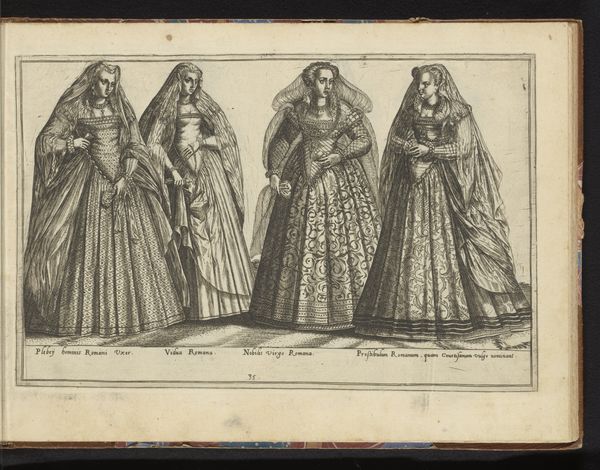
Editor: So, here we have "Four Women Dressed in the Venetian Fashion, around 1580," dating from 1872-1875. It’s currently held at the Rijksmuseum, and created by an anonymous artist. What I find striking is how it portrays this… careful documentation of social status through clothing. What's your interpretation of this piece? Curator: It’s fascinating how these images reflect the social codification embedded within Venetian society during the Renaissance. Clothing wasn't just functional; it was a visual language. Consider how sumptuary laws dictated who could wear what fabrics and colors. Do you notice anything about the specific garments depicted? Editor: Definitely. The details – the layering, the fabrics, the embellishments – all point towards the wealth and status of these women. Is this just a reflection of their affluence, or something more complex? Curator: It's definitely more complex. Think about the political implications. The Venetians were incredibly astute in projecting power, and clothing played a pivotal role in constructing and broadcasting that image, both internally and to other European powers. The attire was also a visual representation of the patriarchal control of women, specifically regarding women of certain classes, right? Editor: Ah, so the fashion served as a tool for controlling their presentation in the public eye and communicating wealth and class at the same time. How might contemporary audiences have received these images? Curator: Likely as a glimpse into a highly stratified society with very specific sartorial rules. But let's also remember, these kinds of prints often served as models for contemporary fashion, influencing tastes and aspirations, though, perhaps to a much lesser extent across other lower classes. Editor: It’s amazing to see how something as seemingly superficial as fashion can be such a rich source of historical information and reflect how those who controlled cultural institutions impacted how information spread to those who would consume it. Curator: Absolutely. This piece reminds us that art, even seemingly straightforward fashion depictions, is always interwoven with the complex tapestry of social, cultural, and political power structures.
Comments
No comments
Be the first to comment and join the conversation on the ultimate creative platform.
 Collect
 React
React Comment
More like this