drawing, print, etching, paper
#
drawing
# print
#
etching
#
landscape
#
etching
#
paper
#
cityscape
#
realism
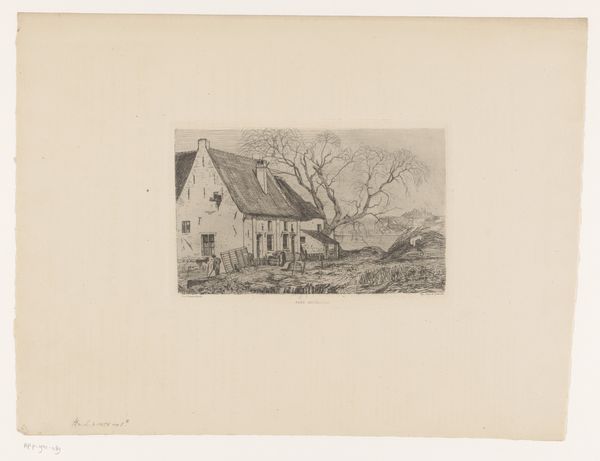
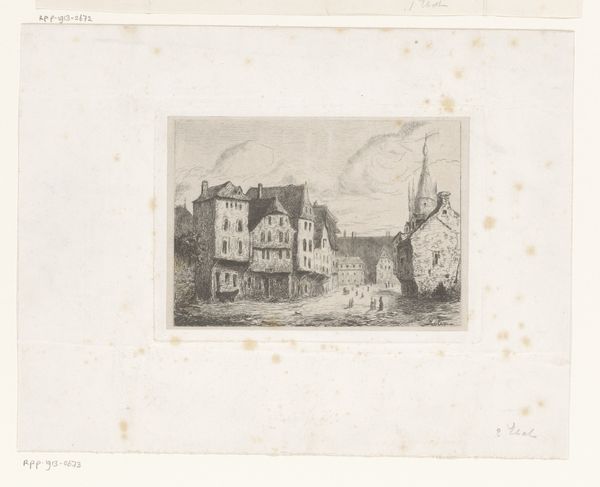
Dimensions: 77 × 119 mm (image/plate); 145 × 195 mm (sheet)
Copyright: Public Domain
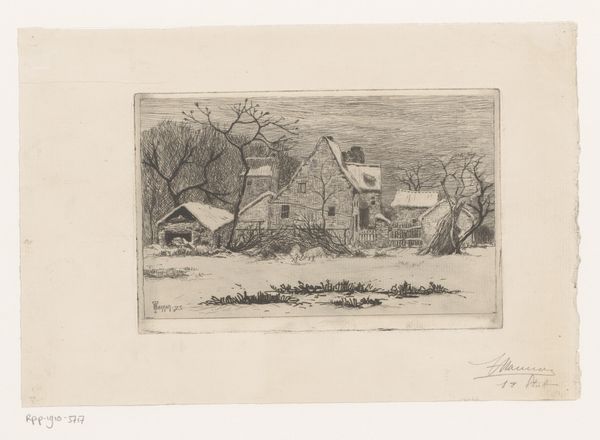
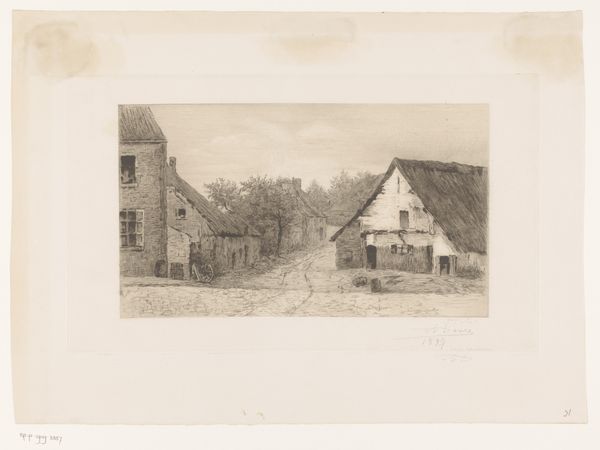
Editor: This is "Street Corner in a Village," an etching by Henri-Emile Lessore. The date is unknown. It’s interesting, almost dreamlike, because of its soft lines and delicate shading. What stands out to you? Curator: The cluster of buildings and bare trees creates a dense network of lines. The cultural memory embedded in depictions of 'home' is fascinating. This scene isn’t just buildings; it's a visual embodiment of shelter and community. Consider the chimney stacks – phallic symbols that often suggest domestic warmth, virility, or industry, their association evolving with changes in industrial practices and architecture. Do you notice their subtle dominance? Editor: I do, now that you mention it. They are like the apex of each building and rise beyond the rooftop lines, especially the pair in the back. What's their symbolic effect in a landscape? Curator: Well, even in landscape, we still look for centers. Here, the chimneys compete as focal points, dividing the architectural mass in unusual ways. Lessore isn't giving us a clear single entity, it is almost a village within a village. A grouping of families rather than a single source of hearth, heat and activity. Does that make you question if one building is more important than the rest? Editor: Yes, I see what you mean. I hadn't considered how much a chimney could communicate. It feels much more considered now, even though the piece still has a delicate, casual feeling. Curator: Indeed. The deceptively simple drawing becomes rich with these silent assertions, building up emotional associations linked to fundamental aspects of human existence.
Comments
No comments
Be the first to comment and join the conversation on the ultimate creative platform.
 Collect
 React
React Comment
More like this