About this artwork
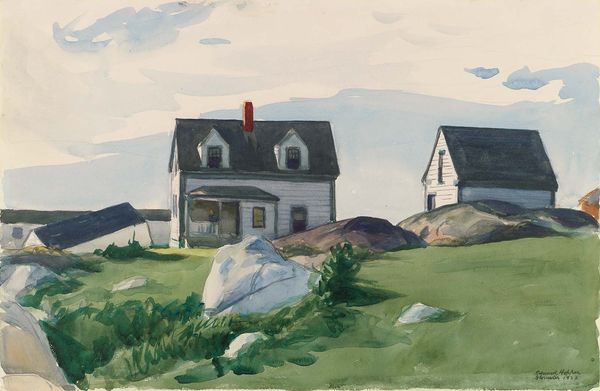
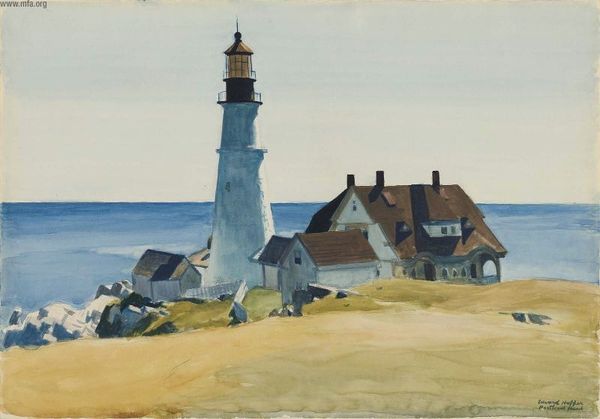
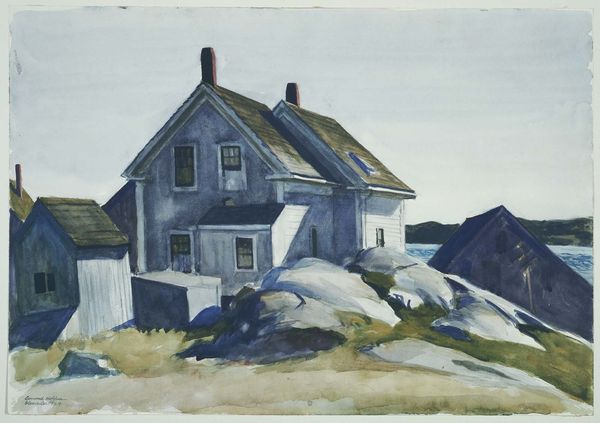
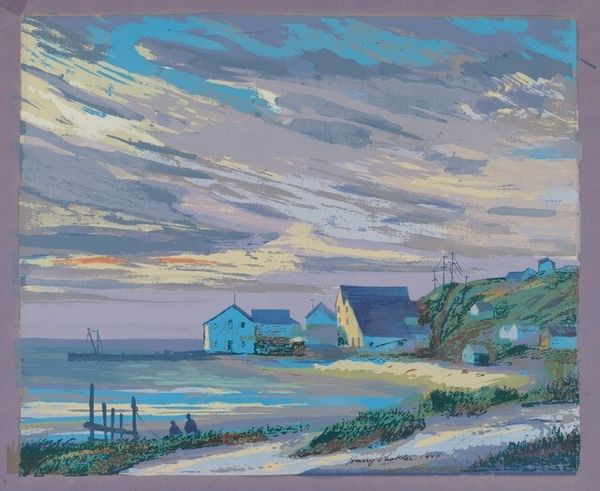
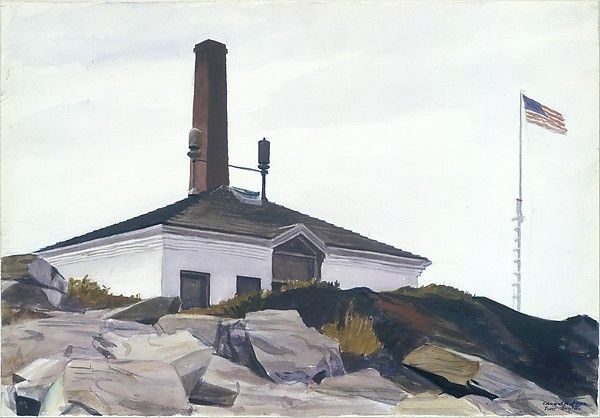
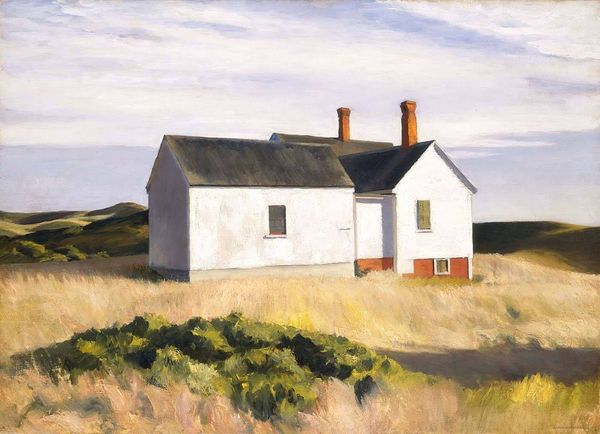
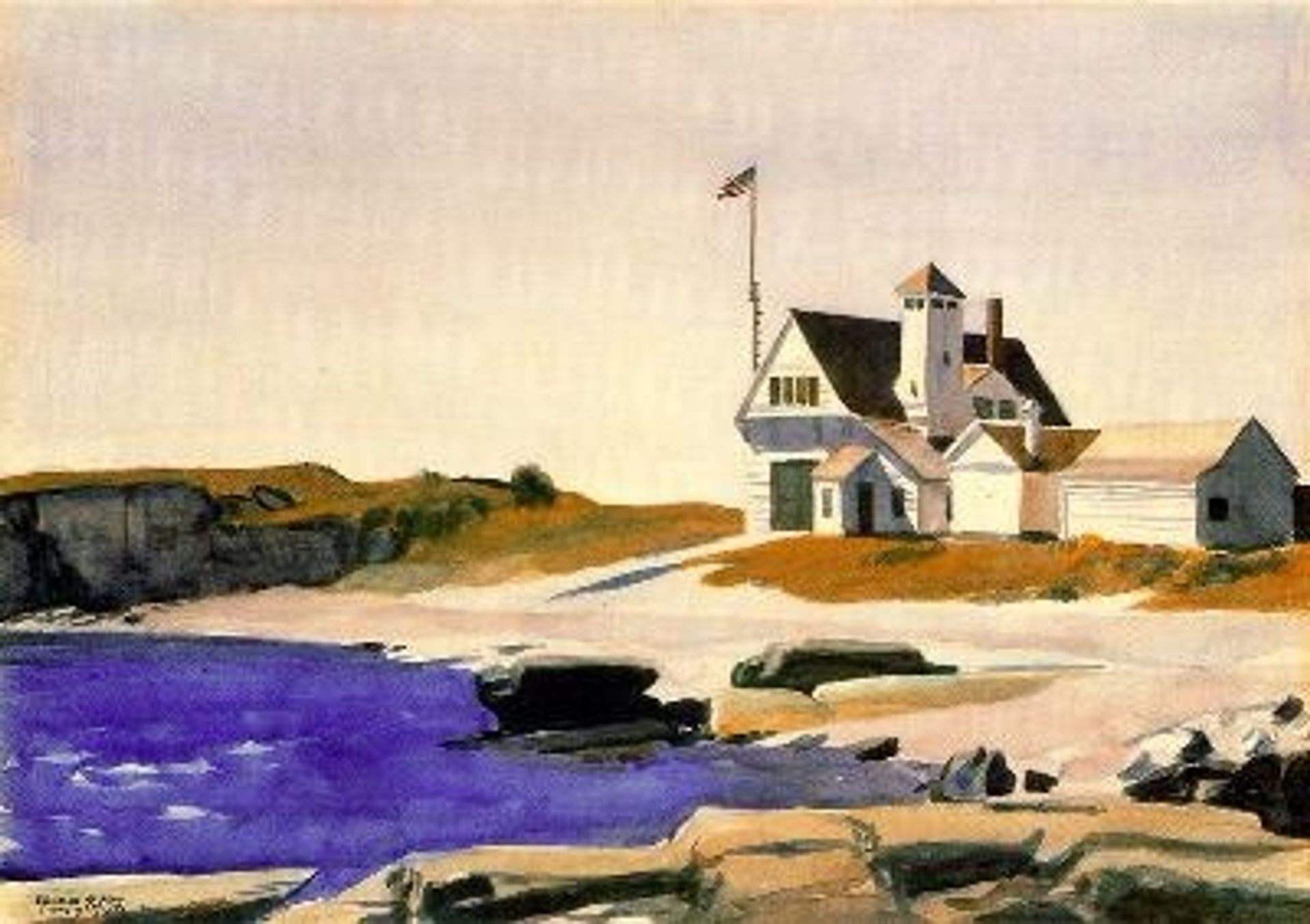
Edward Hopper made this watercolor, Coast Guard Station, Two Lights, Maine, most likely in the 1920s, and I find it fascinating how he approaches the architecture. The way he balances loose brushwork with precision creates a visual dialogue that's so engaging. Look at how Hopper renders the building with these simple, confident strokes. There's a palpable sense of the artist's hand in every mark, a testament to the physicality of painting. And the color palette! Muted tones punctuated by the occasional pop of color - like the almost iridescent violet of the sea - evoke a specific mood, one of quiet contemplation, and it contributes to the painting’s conceptual resonance. Now, focus on the flag; it’s a simple shape, yet it adds so much weight to the overall composition, and it's something of a signature; a lonely flag reappears throughout his work. It’s as if he’s always thinking about similar compositions and how to make them ever more precise, and ever more full of quietness. It puts me in mind of Fairfield Porter; both artists see something special in the everyday. For Hopper, art is about capturing a specific feeling, a moment in time. It's all there, waiting for us to discover.

Artwork details
- Medium
- painting, watercolor
- Copyright
- Edward Hopper,Fair Use
Tags
painting
landscape
oil painting
watercolor
cityscape
modernism
watercolor
building
Comments
No comments
About this artwork
Edward Hopper made this watercolor, Coast Guard Station, Two Lights, Maine, most likely in the 1920s, and I find it fascinating how he approaches the architecture. The way he balances loose brushwork with precision creates a visual dialogue that's so engaging. Look at how Hopper renders the building with these simple, confident strokes. There's a palpable sense of the artist's hand in every mark, a testament to the physicality of painting. And the color palette! Muted tones punctuated by the occasional pop of color - like the almost iridescent violet of the sea - evoke a specific mood, one of quiet contemplation, and it contributes to the painting’s conceptual resonance. Now, focus on the flag; it’s a simple shape, yet it adds so much weight to the overall composition, and it's something of a signature; a lonely flag reappears throughout his work. It’s as if he’s always thinking about similar compositions and how to make them ever more precise, and ever more full of quietness. It puts me in mind of Fairfield Porter; both artists see something special in the everyday. For Hopper, art is about capturing a specific feeling, a moment in time. It's all there, waiting for us to discover.
Comments
No comments