


Curatorial notes
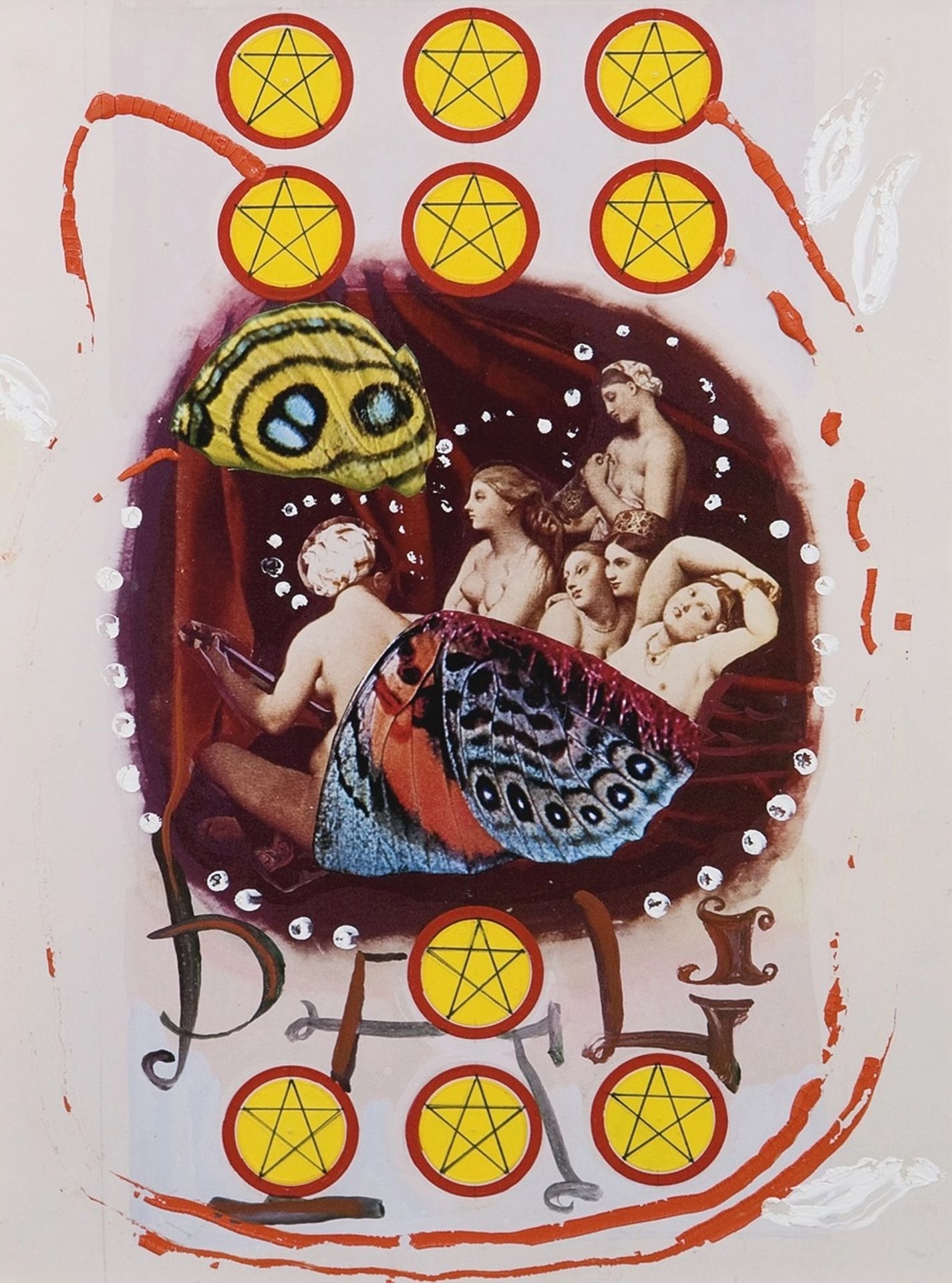
Ten of Pentacles, by Salvador Dalí, is from an undated tarot card series. Dalí, working in the latter half of the 20th century, was a complicated figure whose art challenged conventions, yet sometimes reflected the conservative values of his time. Here, we see the surrealist lens applied to traditional tarot imagery. The card typically symbolizes family, inheritance, and long-term wealth. Dalí disrupts these themes through his signature style, which intermixes classical figures with motifs of metamorphosis. Note the cluster of women that seem to represent a bloodline, watched over by the 'evil eye' of a moth. A second butterfly wing obscures a man. Consider how Dalí plays with ideas of identity, particularly gender and lineage, within the context of wealth and legacy. The imagery prompts us to reflect on the traditional roles assigned to women in the preservation of family wealth. Dalí himself once said, "The only difference between me and a madman is that I'm not mad." His art encourages us to question the very nature of reality, sanity, and societal norms.