About this artwork
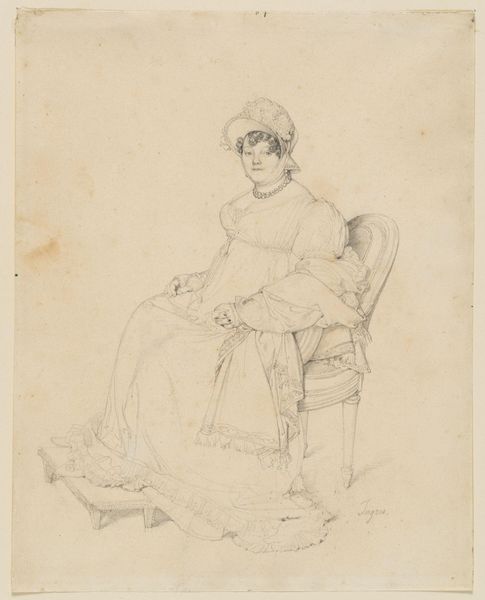
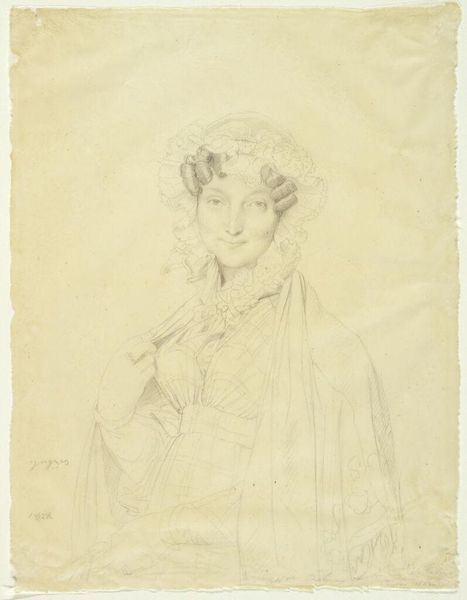
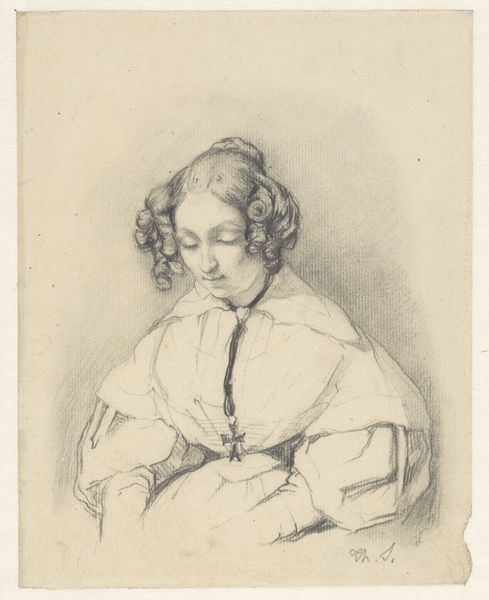
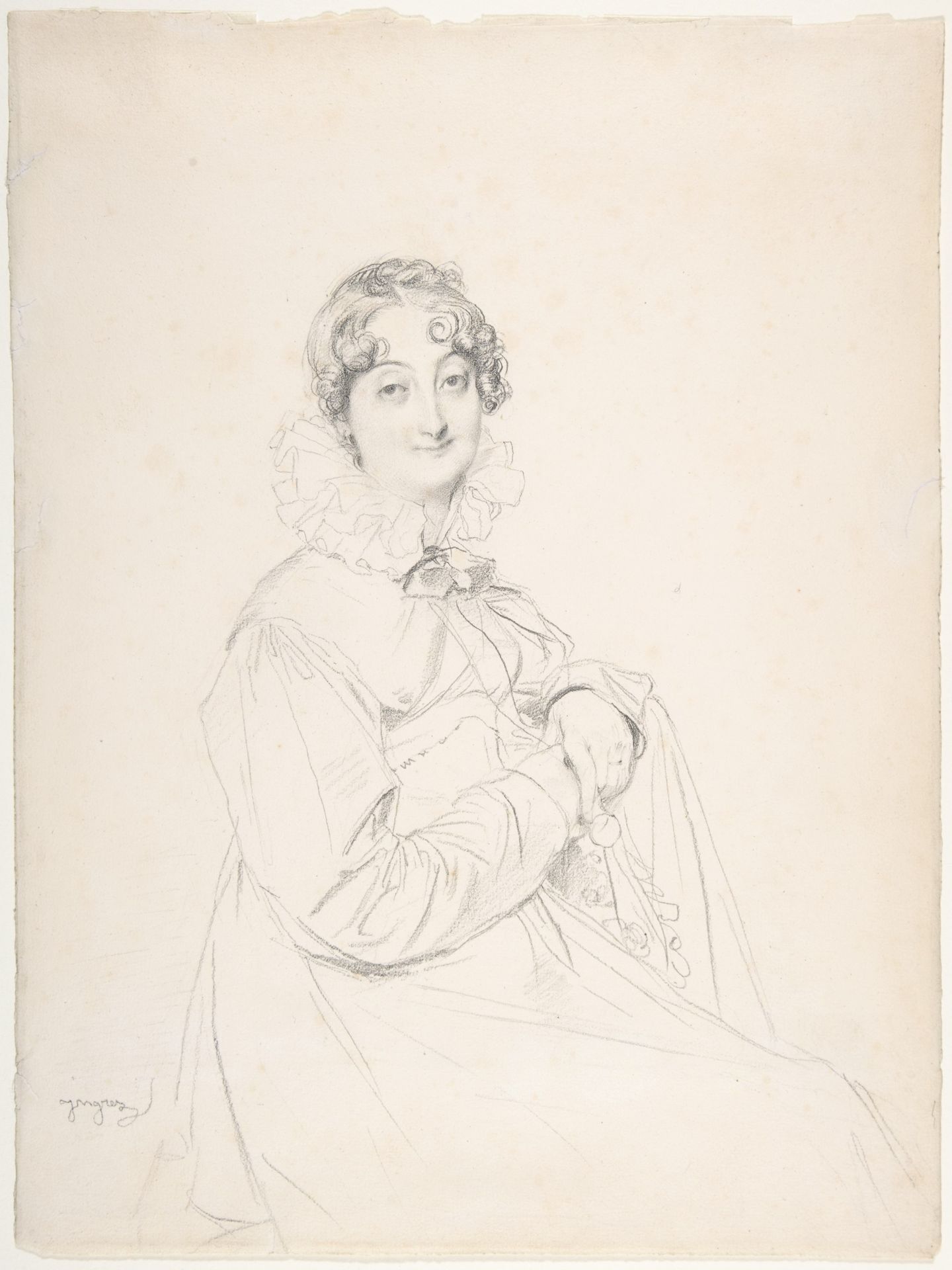
This delicate portrait of Comtesse Turpin de Crissé was rendered in graphite on paper by Jean Auguste Dominique Ingres. It may seem simple, but the effect hinges on the artist’s complete mastery of the pencil. Ingres’s approach to this drawing is far removed from quick sketching. Look closely and you’ll see a finely wrought surface, with layer upon layer of graphite creating subtle gradations of tone. This was a time when graphite was becoming more readily available, but it still required skill to manage the material’s reflective surface and avoid a metallic look. Ingres was a master of the medium. The Comtesse's features and the fabric of her dress are so meticulously described that they verge on photorealism. This effect, of course, speaks to broader social trends: the rise of industrialization and a new emphasis on precision and efficiency. Ingres presents us with a vision of aristocratic refinement perfectly in keeping with these values. So even a simple pencil drawing can be seen to embody the spirit of its age.
Comtesse Turpin de Crissé 1795 - 1867

Jean Auguste Dominique Ingres
1780 - 1867
The Metropolitan Museum of Art
Metropolitan Museum of Art, New York, NYArtwork details
- Medium
- drawing, pencil
- Dimensions
- 11 1/4 x 8 7/16 in. (28.6 x 21.5 cm)
- Location
- Metropolitan Museum of Art, New York, NY
- Copyright
- Public Domain
Tags
portrait
drawing
neoclacissism
pencil drawing
pencil
academic-art
Comments
No comments
About this artwork
This delicate portrait of Comtesse Turpin de Crissé was rendered in graphite on paper by Jean Auguste Dominique Ingres. It may seem simple, but the effect hinges on the artist’s complete mastery of the pencil. Ingres’s approach to this drawing is far removed from quick sketching. Look closely and you’ll see a finely wrought surface, with layer upon layer of graphite creating subtle gradations of tone. This was a time when graphite was becoming more readily available, but it still required skill to manage the material’s reflective surface and avoid a metallic look. Ingres was a master of the medium. The Comtesse's features and the fabric of her dress are so meticulously described that they verge on photorealism. This effect, of course, speaks to broader social trends: the rise of industrialization and a new emphasis on precision and efficiency. Ingres presents us with a vision of aristocratic refinement perfectly in keeping with these values. So even a simple pencil drawing can be seen to embody the spirit of its age.
Comments
No comments