

19th century
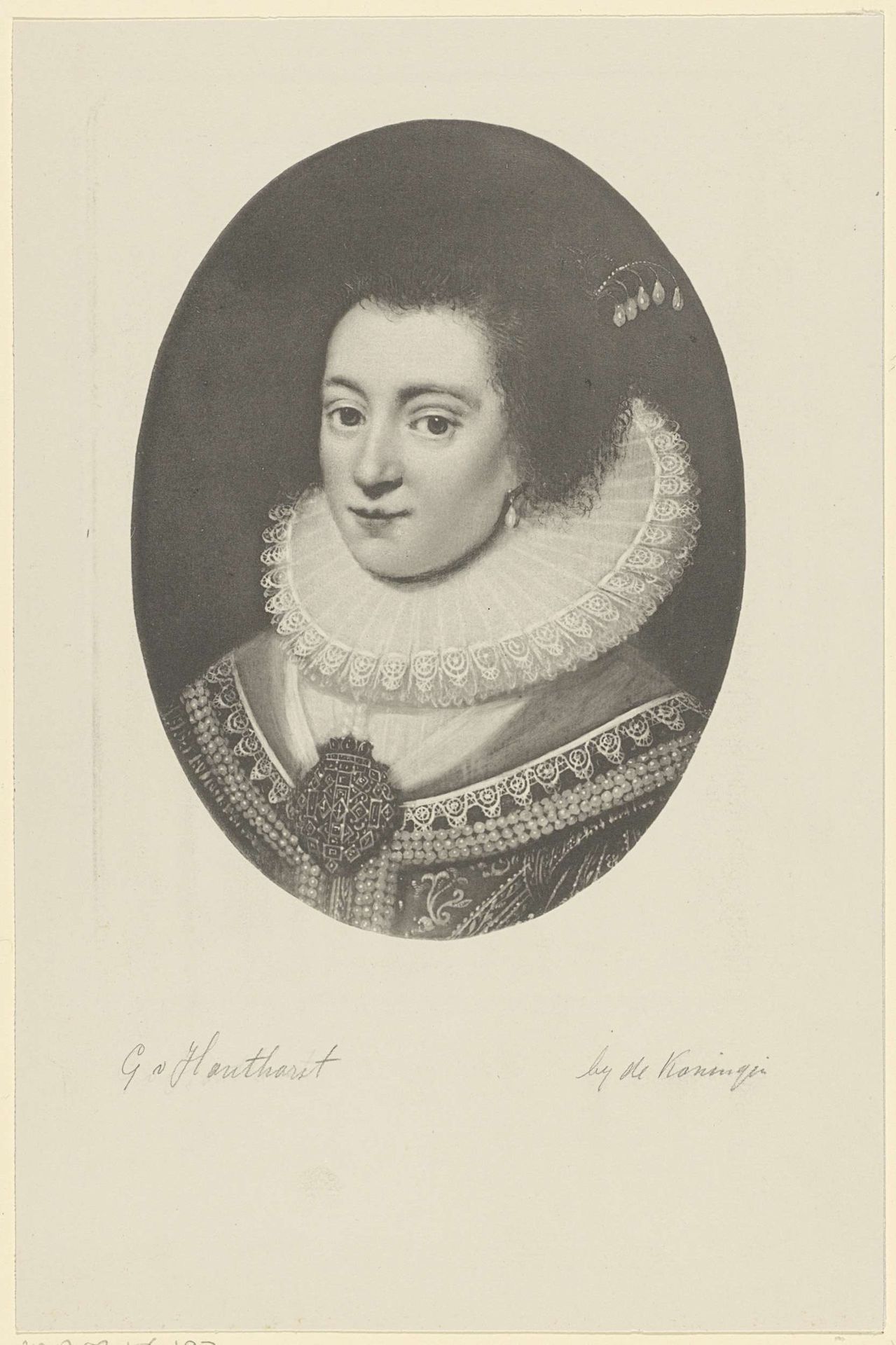
Portret van Amalia van Solms

Anonymous
@anonymousLocation
RijksmuseumListen to curator's interpretation
Curatorial notes
Curator: Before us, we have a 19th-century print titled "Portret van Amalia van Solms," currently held in the Rijksmuseum collection. Editor: My first impression is the elaborate detail! It feels like a glimpse into another world. There's such stillness to the image, a certain formality held within that delicate line work. I'm strangely drawn to it. Curator: Indeed. Amalia van Solms was a significant figure. As the wife of Frederik Hendrik, Prince of Orange, she played a crucial role in the Dutch court, shaping its cultural and political landscape. Portraits like this were vital in constructing and disseminating images of power and nobility. Editor: Power through lace! Seriously, look at that collar; it's a fortification! But beyond the symbol of status, there's a subtle vulnerability in her eyes. Makes me wonder about the pressures she faced navigating those political waters. Curator: It's fascinating how printmaking democratized portraiture. Previously, only the wealthiest could afford painted portraits. Engravings allowed for wider distribution, solidifying Amalia’s image in the public consciousness and contributing to the Orange dynasty's legitimacy. Editor: And that legitimacy is all about carefully crafted appearances, isn't it? I can't help but see her as both powerful and constrained. It is a trick of artists to portray people within an expectation that they can fulfill. This is no social media post! I get this weird sense of how public and yet very private her life might have been. That gaze doesn't give anything away. Curator: The Baroque influence is evident in the ornamentation and the carefully staged presentation. The intricate details in her dress, the pearls, everything speaks to the family's wealth and her own elevated status, broadcasting her influence, of course. Editor: She seems weighed down by those ornaments, beautiful but...burdensome. It’s a contradiction. You almost feel for her. Anyway, these kinds of formal pieces like this have that effect on me! It is all just very human! Curator: Examining "Portret van Amalia van Solms" through the lens of history provides invaluable insight into the construction of identity and power during the Dutch Golden Age. Editor: Absolutely! And letting ourselves connect with the human element, the imagined interior life of Amalia, makes that history even more compelling, in a bizarre way. A face staring across a few centuries. Pretty intense when you really sit with it, huh?