About this artwork
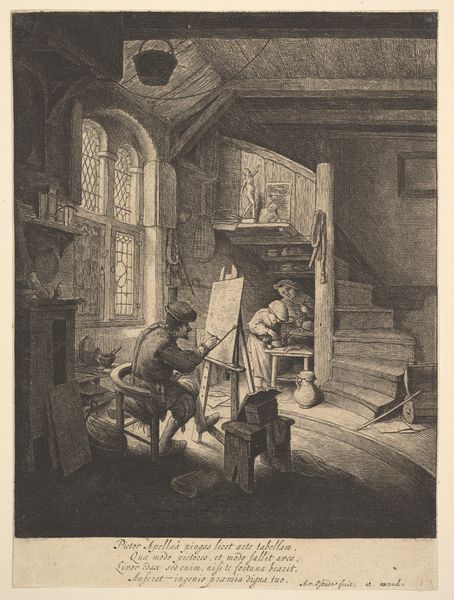
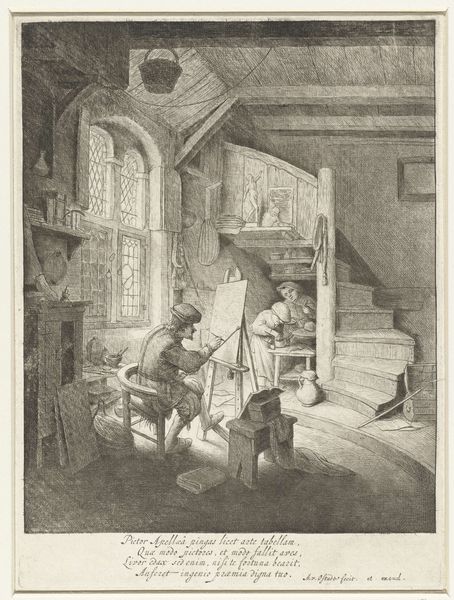
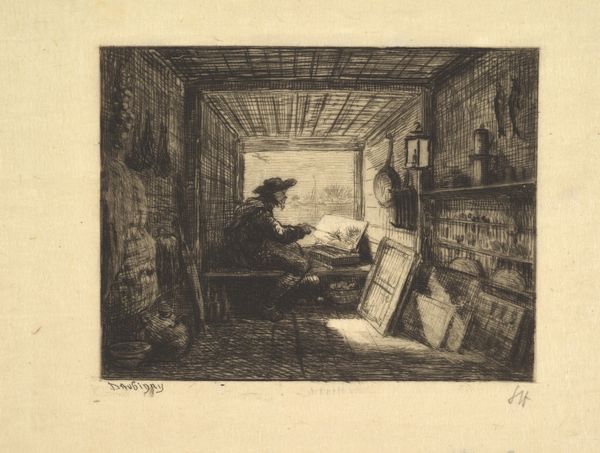
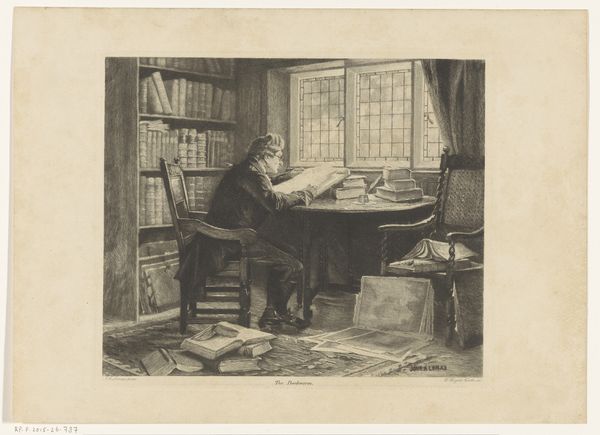
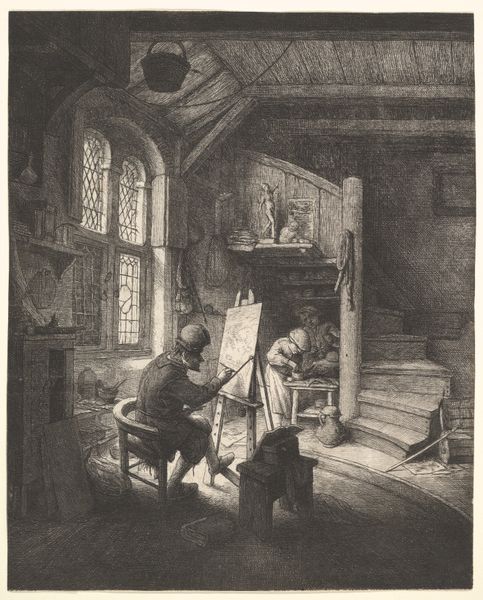
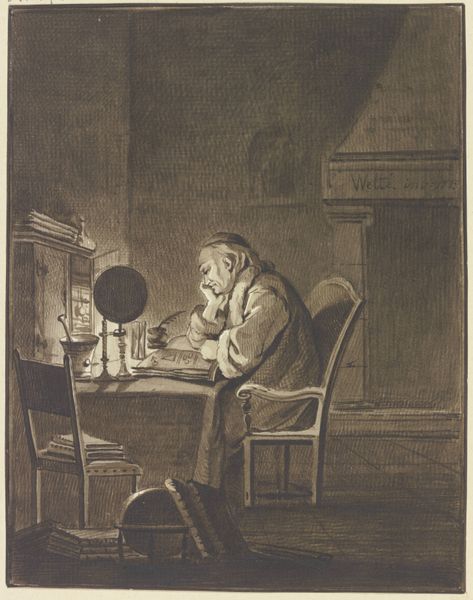
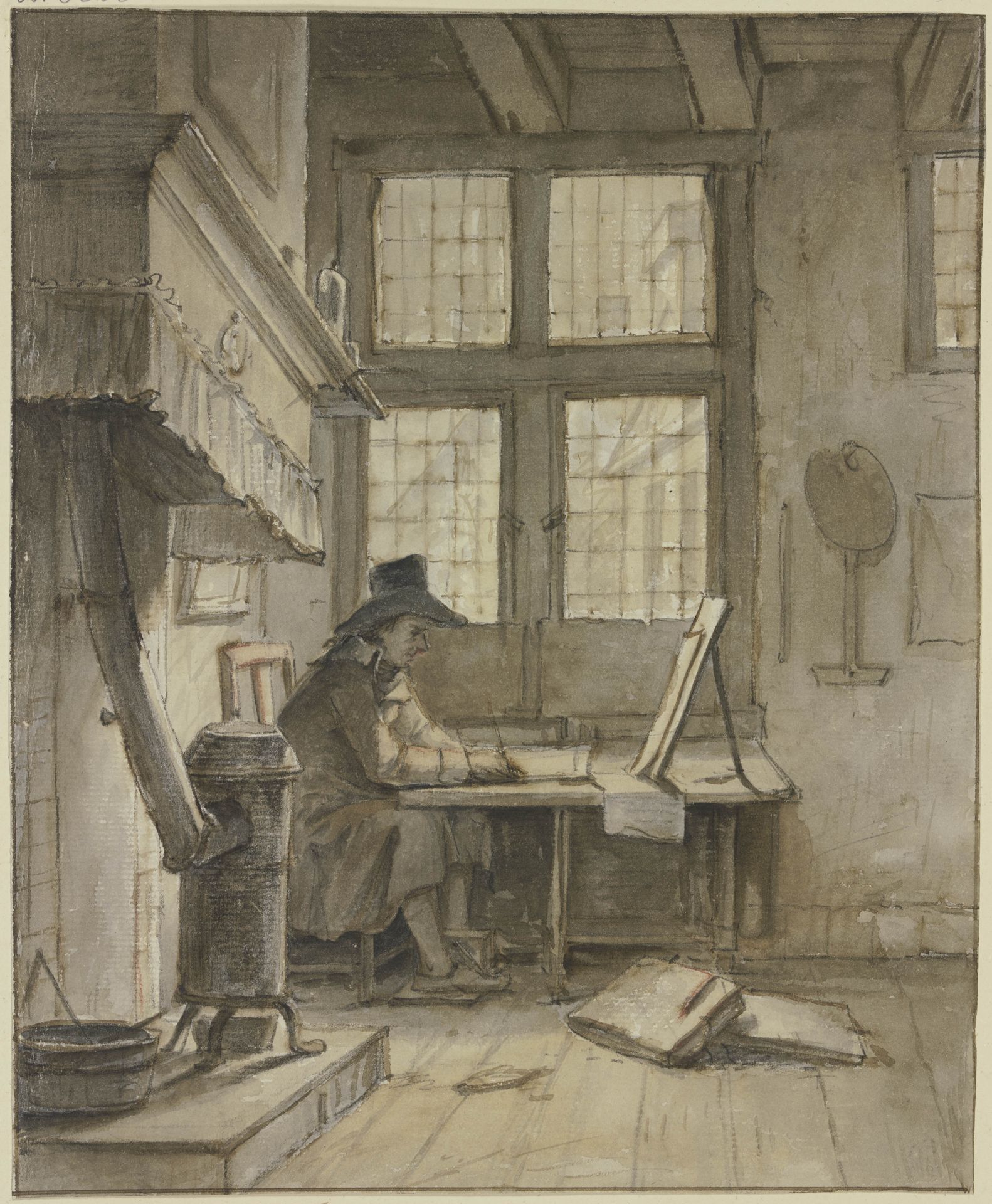
Editor: Here we have a drawing called *Ein Maler in seinem Atelier (Selbstbildnis)*, or *A Painter in his Studio (Self-Portrait)* by Jan Hulswit. It looks like it’s made with ink, chalk, and graphite. There’s a quiet, almost contemplative mood about the piece. What strikes you most about it? Curator: The most striking thing to me is not just that it's a self-portrait, but what that act meant then, and what the accoutrements tell us now. Consider the mirror behind him; its presence isn’t just about capturing his likeness. It evokes a deep, self-reflective state, almost like he's pondering his own existence and role as an artist. Editor: That's a fascinating point. The mirror as a symbol of introspection, a representation of identity and profession through tools of trade. Curator: Precisely. Think about the prominent window: how does the external light shape our understanding of his internal world, both literally in artistic rendering and metaphorically in self-perception? And what about the presence of scholarly instruments, such as a globe and books, which reflect the breadth of intellectual curiosity, a crucial quality for artists? How might the image's resonance shift through history, depending on changing views of the role of artists? Editor: It’s incredible how one drawing can encapsulate so many layers of meaning. I'm now considering his sense of place in history, not just capturing a physical image but something much more profound. Thanks for your interpretation! Curator: Indeed. The symbols in art act as vessels of cultural memory. They allow us to trace shifting ideas about artmaking and personhood itself over centuries. Food for thought.


Artwork details
- Medium
- drawing, ink, indian-ink, chalk, graphite
- Location
- Städel Museum
- Copyright
- Public Domain
Tags
Comments
Share your thoughts
About this artwork
Editor: Here we have a drawing called *Ein Maler in seinem Atelier (Selbstbildnis)*, or *A Painter in his Studio (Self-Portrait)* by Jan Hulswit. It looks like it’s made with ink, chalk, and graphite. There’s a quiet, almost contemplative mood about the piece. What strikes you most about it? Curator: The most striking thing to me is not just that it's a self-portrait, but what that act meant then, and what the accoutrements tell us now. Consider the mirror behind him; its presence isn’t just about capturing his likeness. It evokes a deep, self-reflective state, almost like he's pondering his own existence and role as an artist. Editor: That's a fascinating point. The mirror as a symbol of introspection, a representation of identity and profession through tools of trade. Curator: Precisely. Think about the prominent window: how does the external light shape our understanding of his internal world, both literally in artistic rendering and metaphorically in self-perception? And what about the presence of scholarly instruments, such as a globe and books, which reflect the breadth of intellectual curiosity, a crucial quality for artists? How might the image's resonance shift through history, depending on changing views of the role of artists? Editor: It’s incredible how one drawing can encapsulate so many layers of meaning. I'm now considering his sense of place in history, not just capturing a physical image but something much more profound. Thanks for your interpretation! Curator: Indeed. The symbols in art act as vessels of cultural memory. They allow us to trace shifting ideas about artmaking and personhood itself over centuries. Food for thought.
Comments
Share your thoughts