1880
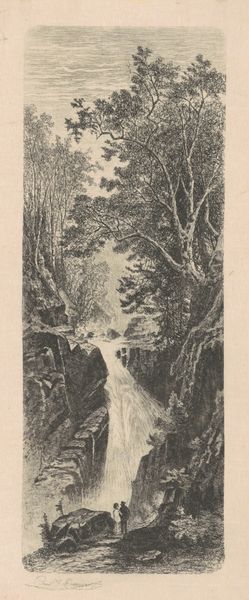
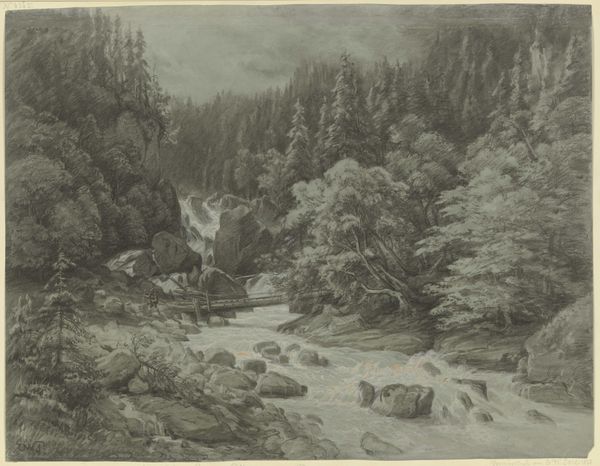
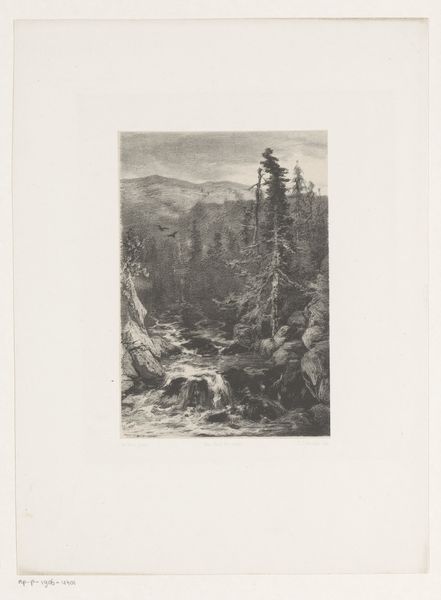
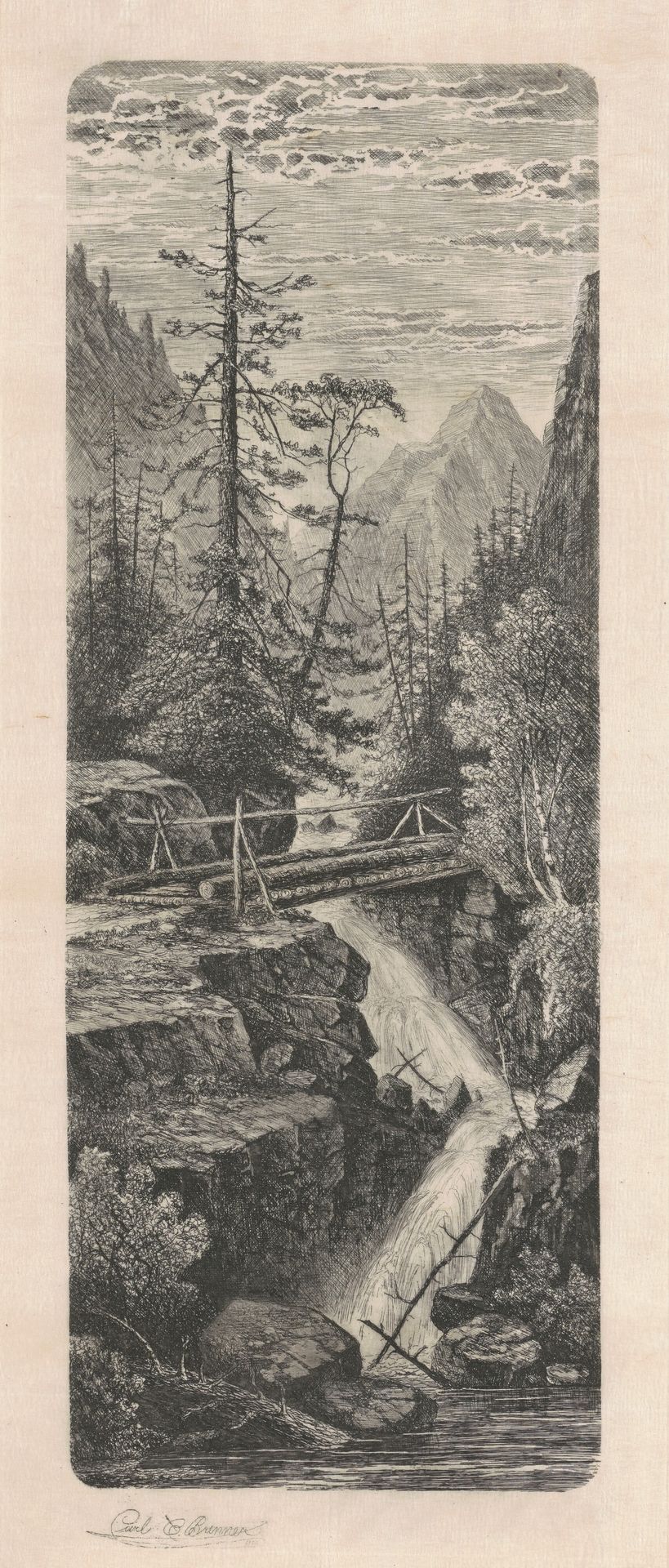
Waterfall, Rocky Mountains


Listen to curator's interpretation
Curatorial notes
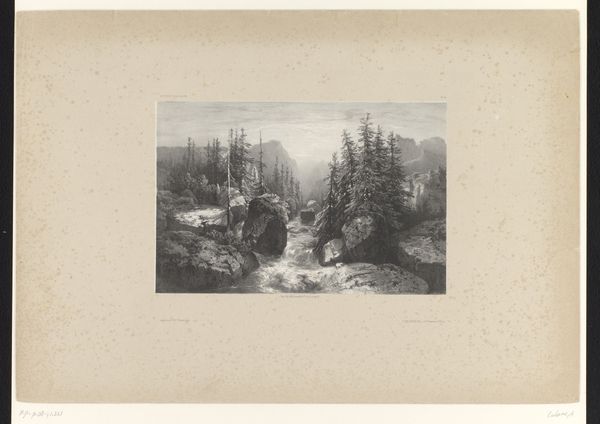
Editor: Here we have Carl Brenner's woodcut from 1880, "Waterfall, Rocky Mountains". It's a rather stark, vertical composition dominated by sharp angles and strong contrasts. The bridge and plunging water especially caught my attention. How do you interpret this work? Curator: The enduring fascination with wilderness is definitely present. But look closer at the bridge. It's not just a functional object; it’s a carefully constructed element juxtaposed against the untamed power of the waterfall. What does this meeting of the constructed and the natural evoke for you? Editor: I see… it's a contrast, a negotiation between humans and nature. It feels like an assertion of control, maybe even a slight defiance of the landscape. Curator: Exactly. The bridge symbolizes human intervention. In the late 19th century, there was a growing sentiment of dominating nature, yet a simultaneous romanticizing of the untouched wilderness, wasn't there? And waterfalls were popular symbols for the sublime – awe and terror combined. The cultural memory of untamed nature and taming it at the same time. Editor: So, the artist is perhaps commenting on this changing relationship? Showing both the allure and the manipulation of the natural world? Curator: Precisely. It serves as a powerful emblem of the evolving relationship between humanity and the environment. It reflects that pivotal point in time. Editor: That’s a perspective I hadn't fully considered. The print really speaks volumes about its time, even without figures. I'll definitely remember that human-nature interplay next time. Curator: Wonderful! It’s the lasting symbols within these visual narratives that provide deeper insight, isn't it?