1855
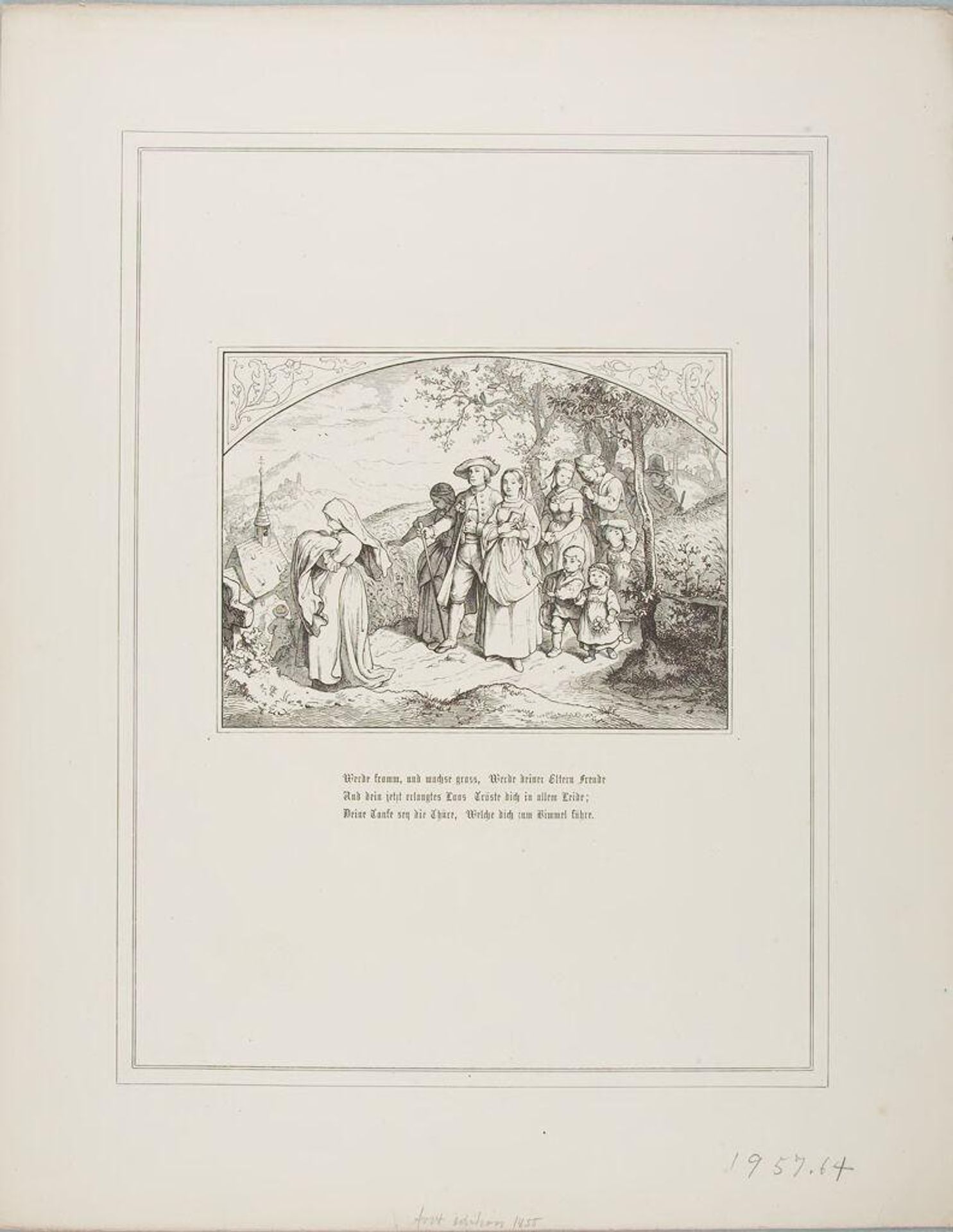
Be Pious and Grow


Listen to curator's interpretation
Curatorial notes
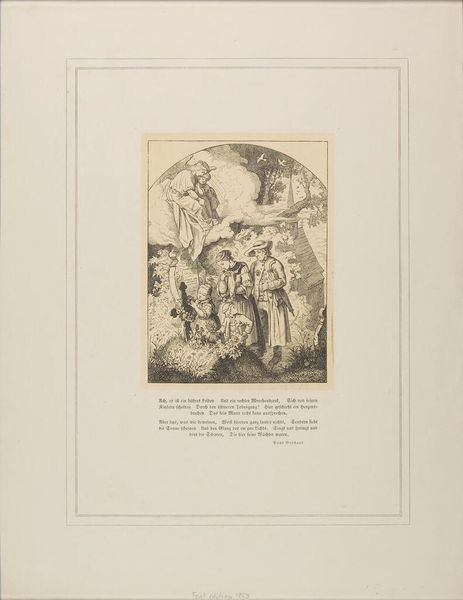
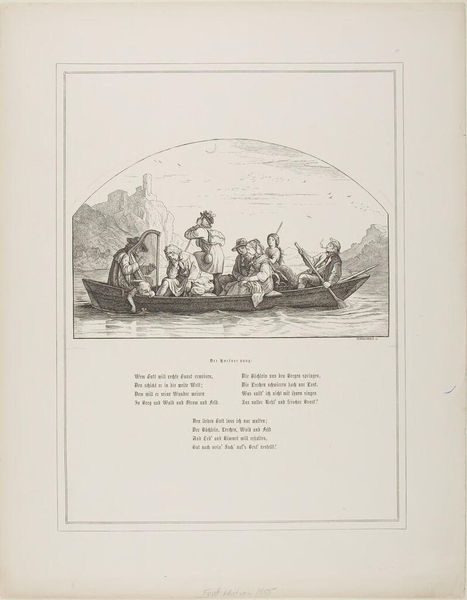
Editor: Here we have Adrian Ludwig Richter's "Be Pious and Grow." It looks like an engraving, and it depicts a large family. It seems to me like a sentimental scene, celebrating the values of family and faith. How do you interpret this work in light of its historical context? Curator: Well, think about the rising middle class in 19th-century Europe. Richter created images that promoted domesticity and traditional values. Notice the framing and the textual inscription; how do these elements contribute to the work's public role? Editor: It almost feels like a moral lesson being presented through a carefully constructed image. It’s interesting how the artwork acts as a tool for social instruction. Curator: Precisely. Richter's art served as a visual representation of societal ideals, reinforcing certain behaviors and values within the growing middle class. Editor: I hadn't thought about it that way before. Now I see the political power an image can possess! Curator: Indeed! Considering the political implications enriches our understanding and brings us closer to the artist's motivations, wouldn't you agree?