

1872
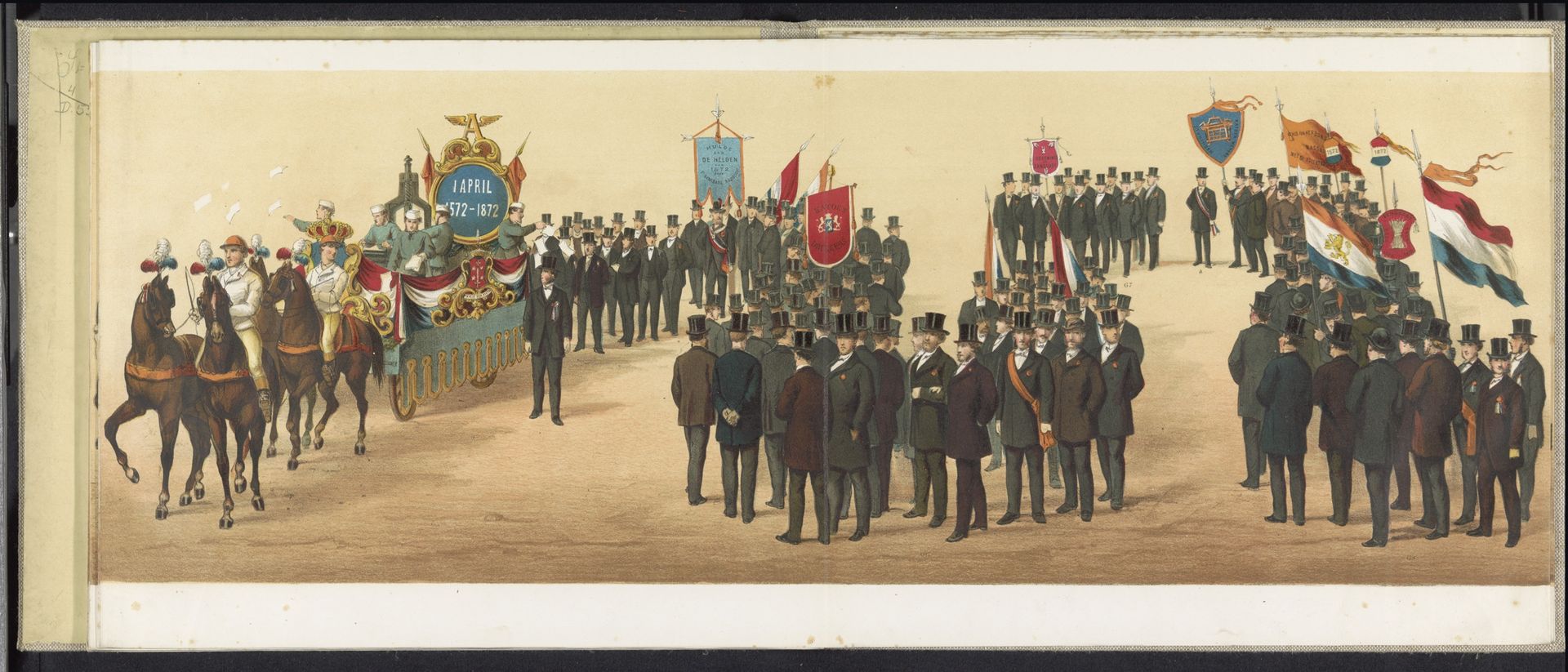
Optocht te Haarlem, 1872 (plaat 10)

Listen to curator's interpretation
Curatorial notes
Curator: This watercolor print by Emrik & Binger is titled "Optocht te Haarlem, 1872 (plaat 10)". It depicts a grand procession in the city of Haarlem. What’s your initial response? Editor: Well, the first thing that strikes me is the rather muted palette. It’s a festive scene, I assume, but the somber tones and tightly packed figures convey a sense of… formality, maybe even constraint. Curator: Indeed. This image resonates with visual echoes of Romanticism. Looking closely, we observe rigid social protocols on display, symbolic of power and allegiance during that period. The limited roles and expectations imposed on much of the populace are palpable through this almost performative, regimented gathering. Editor: It's fascinating how the visual language speaks to that. I see banners with crests, almost hieroglyphic in their symbolism, clustered tightly like declarations. And these ubiquitous top hats. They function as this strange, visual symbol here of almost suffocating uniformity, don't they? Curator: Precisely. The symbolism woven into every element – the banners, the attire, the very structure of the procession – emphasizes themes of nationalism and civic identity. The question, of course, is whose identity and which narratives are privileged within this visual representation. It provokes inquiry into socio-political power dynamics from the 1870s in the Netherlands. Who are represented and, importantly, who are not. Editor: You know, looking at it again, I'm drawn to that central float, almost like a ceremonial carriage. The "April 1572-1872" inscription clearly signifies some anniversary. It anchors this whole scene in a specific historical narrative, framing the present procession within a much longer timeline. Curator: That is indeed the crux of this work. Commemorative celebrations are inherently ideological; in their act of honoring some aspects of the past, they necessarily omit, downplay, or outright erase others. Who defines these events, and why? Which events gain monumental status in a culture? These are the questions this seemingly innocuous print compels us to address. Editor: That makes this piece more unsettling than it first appeared. All the visible grandeur and historical pageantry seem designed to eclipse anything discordant. Well, I see that watercolor prints offer more than meets the eye! Curator: They often do, precisely by seeming benign at first glance. They urge us to constantly question whose stories become history, and at what cost.