About this artwork
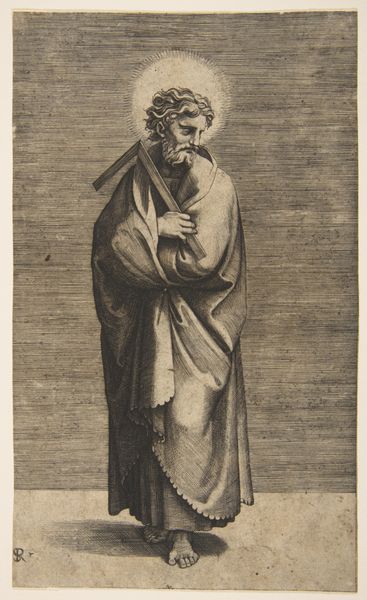
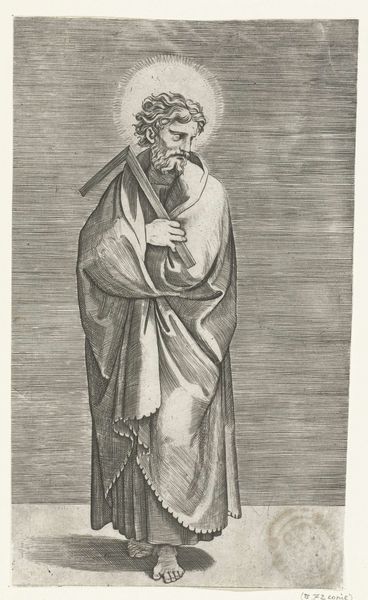
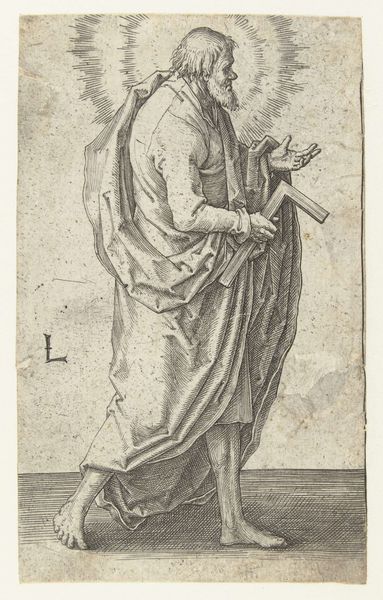
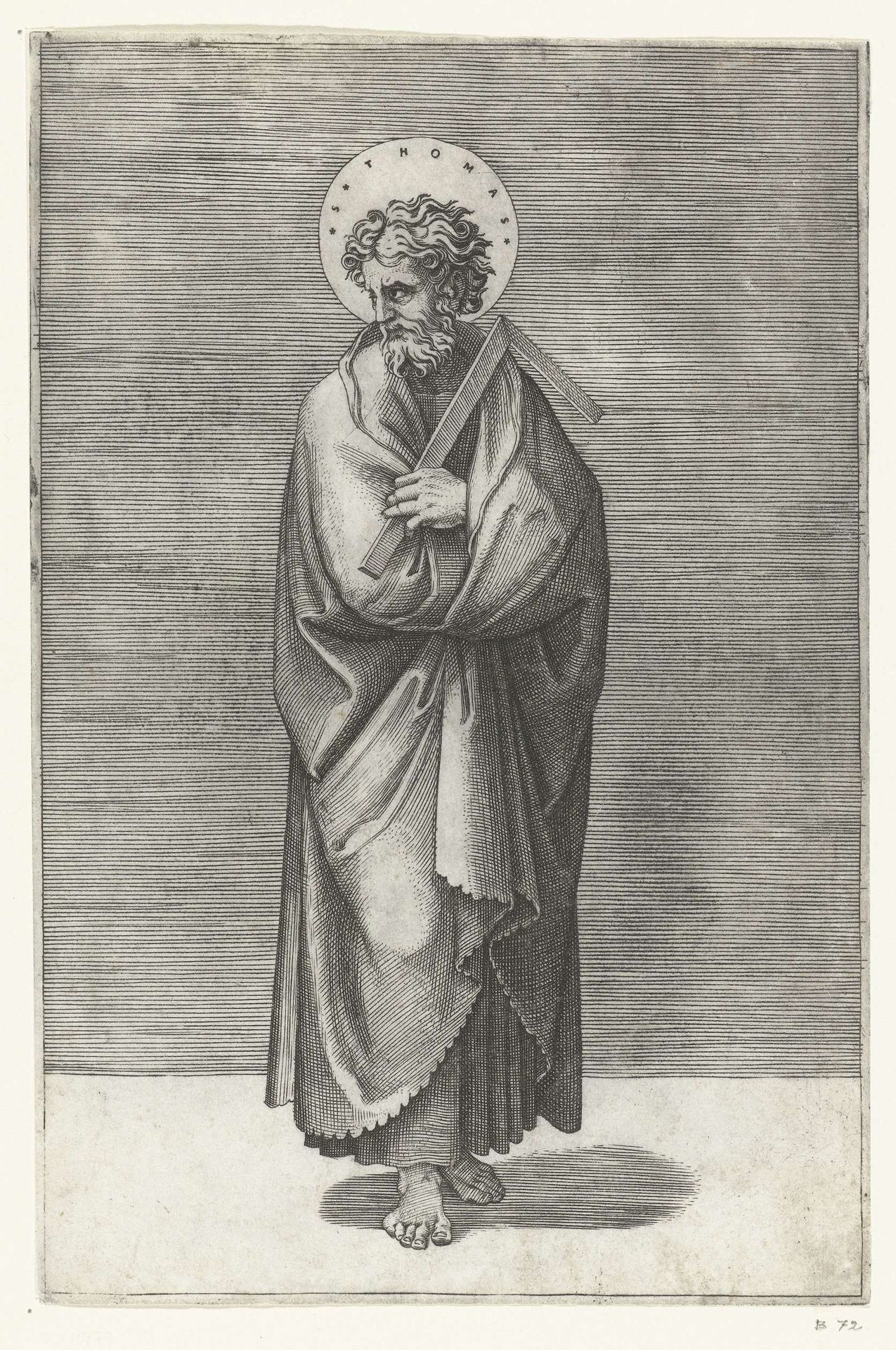
Marcantonio Raimondi made this engraving of the Apostle Thomas in the early sixteenth century in Italy. The image presents us with an idealized, almost god-like, figure holding a simple carpenter's square. In its time, printmaking was a relatively new technology, so the mass distribution of images was more possible than ever before. Religious imagery in particular was affected by this shift. Raimondi’s prints would have reached a wide audience, beyond the walls of churches or the halls of wealthy patrons. This Apostle Thomas isn't just a figure of religious veneration, but also a model of human dignity. Notice the bare feet. To understand images like this, we need to consider their place in the broader culture, looking at everything from the economics of printmaking to the evolving understanding of religious figures. Exploring these resources allows us to understand the rich and complex meanings that art carried in its own time.

Artwork details
- Medium
- print, engraving
- Dimensions
- height 211 mm, width 140 mm
- Location
- Rijksmuseum
- Copyright
- Rijks Museum: Open Domain
Tags
Comments
Share your thoughts
About this artwork
Marcantonio Raimondi made this engraving of the Apostle Thomas in the early sixteenth century in Italy. The image presents us with an idealized, almost god-like, figure holding a simple carpenter's square. In its time, printmaking was a relatively new technology, so the mass distribution of images was more possible than ever before. Religious imagery in particular was affected by this shift. Raimondi’s prints would have reached a wide audience, beyond the walls of churches or the halls of wealthy patrons. This Apostle Thomas isn't just a figure of religious veneration, but also a model of human dignity. Notice the bare feet. To understand images like this, we need to consider their place in the broader culture, looking at everything from the economics of printmaking to the evolving understanding of religious figures. Exploring these resources allows us to understand the rich and complex meanings that art carried in its own time.
Comments
Share your thoughts