About this artwork
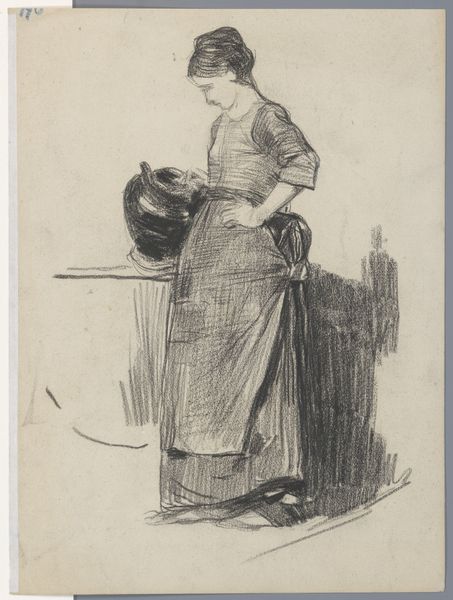
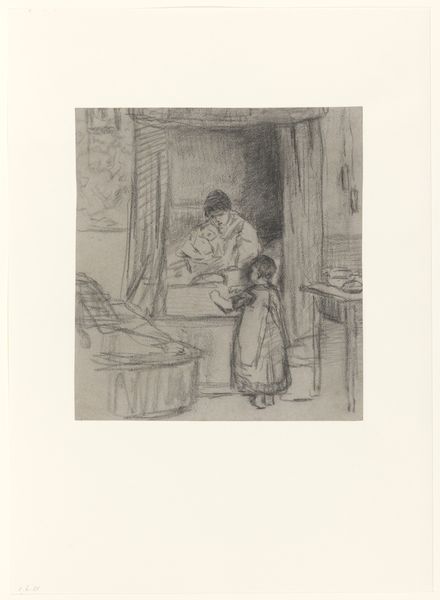
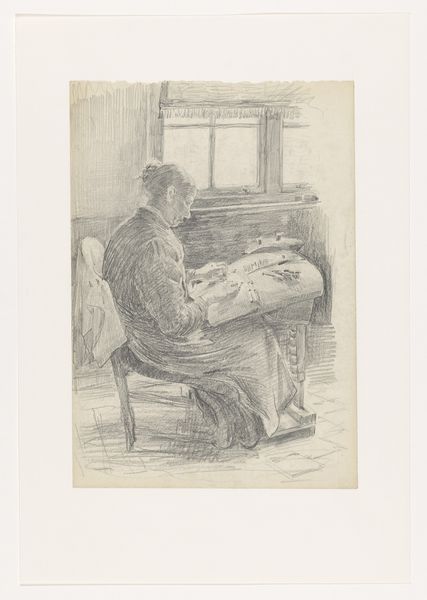
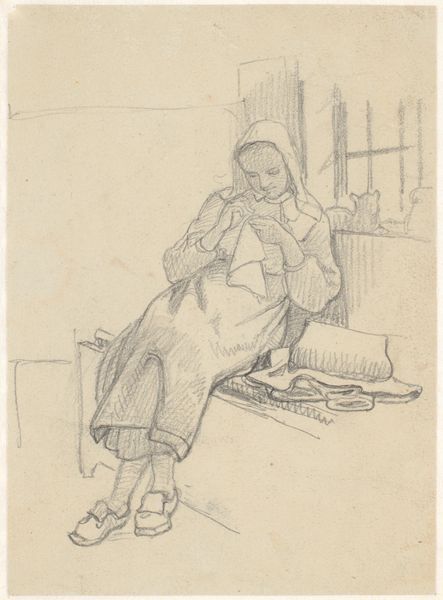
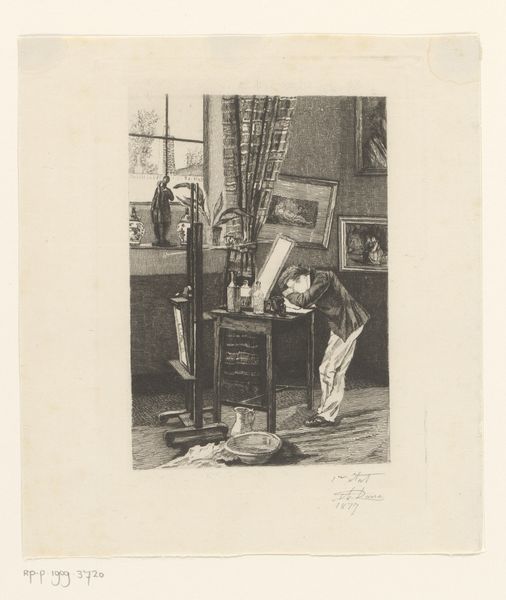
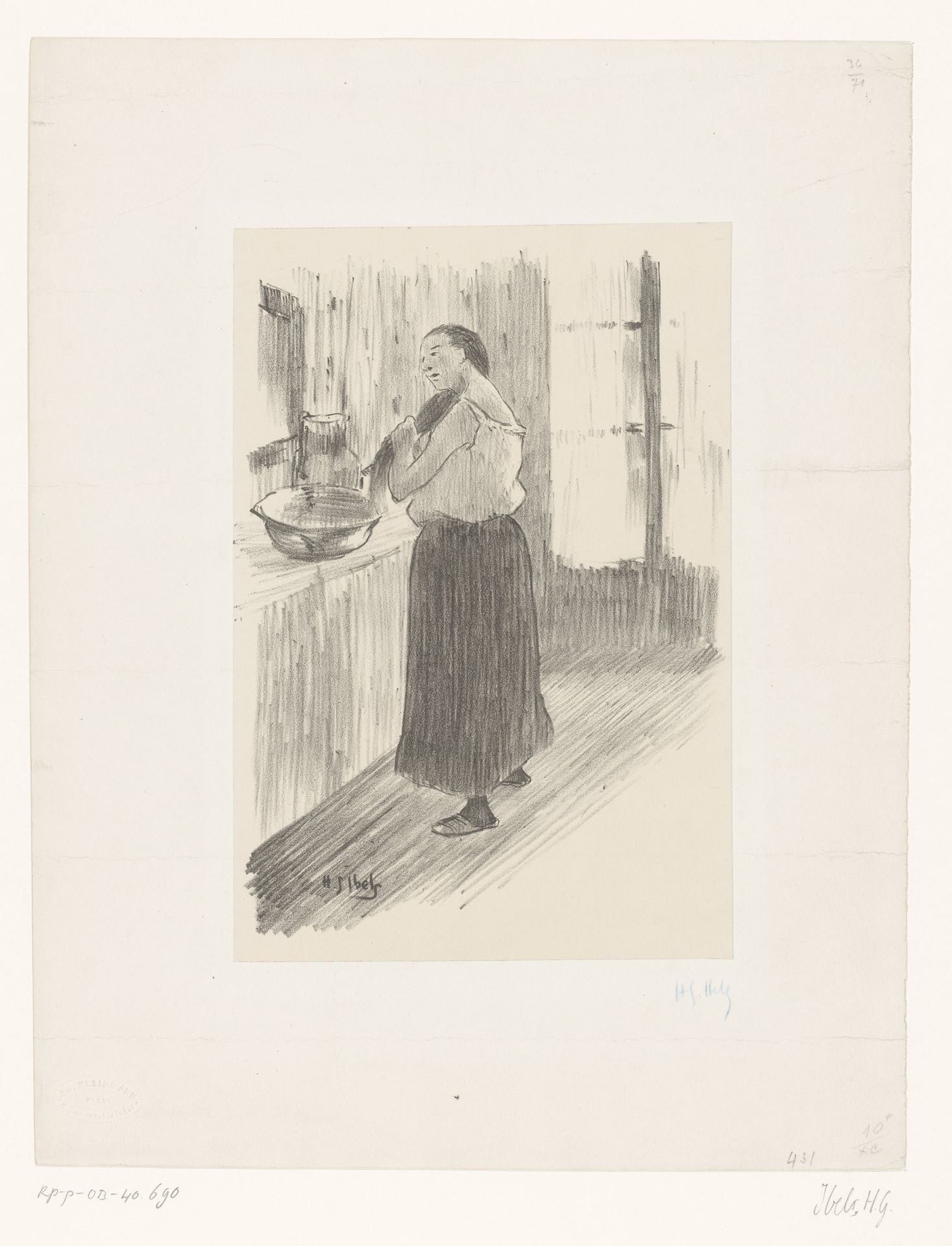
Henri-Gabriel Ibels created this drawing, "Woman Combing Her Hair in Front of the Mirror," using graphite. The composition is structured around a play of vertical lines which create a sense of depth in this intimate, domestic scene. The woman, positioned slightly off-center, is framed by the linear structures of the wall paneling and window frame. The drawing's texture is crucial; Ibels uses hatching to build form and shadow, giving the scene a subtle vibrancy despite the limited tonal range. Ibels destabilizes the conventional male gaze often found in depictions of women. Rather than presenting a voyeuristic image, he captures a moment of private self-care. We see Ibels engaging with the broader artistic concerns of his time, particularly the exploration of modern life and the representation of women. Ibels emphasizes the geometric rigor in the composition by using linear structures. This approach challenges us to consider how everyday moments are structured by form and perspective. This encourages continuous dialogue and reevaluation.
Vrouw kamt het haar voor de spiegel
c. 1893 - 1900

Henri-Gabriel Ibels
@henrigabrielibelsLocation
RijksmuseumArtwork details
- Dimensions
- height 360 mm, width 282 mm
- Location
- Rijksmuseum
- Copyright
- Rijks Museum: Open Domain
Comments
Share your thoughts
About this artwork
Henri-Gabriel Ibels created this drawing, "Woman Combing Her Hair in Front of the Mirror," using graphite. The composition is structured around a play of vertical lines which create a sense of depth in this intimate, domestic scene. The woman, positioned slightly off-center, is framed by the linear structures of the wall paneling and window frame. The drawing's texture is crucial; Ibels uses hatching to build form and shadow, giving the scene a subtle vibrancy despite the limited tonal range. Ibels destabilizes the conventional male gaze often found in depictions of women. Rather than presenting a voyeuristic image, he captures a moment of private self-care. We see Ibels engaging with the broader artistic concerns of his time, particularly the exploration of modern life and the representation of women. Ibels emphasizes the geometric rigor in the composition by using linear structures. This approach challenges us to consider how everyday moments are structured by form and perspective. This encourages continuous dialogue and reevaluation.
Comments
Share your thoughts