Dimensions: 148 × 199 mm (image/plate); 191 × 224 mm (sheet)
Copyright: Public Domain
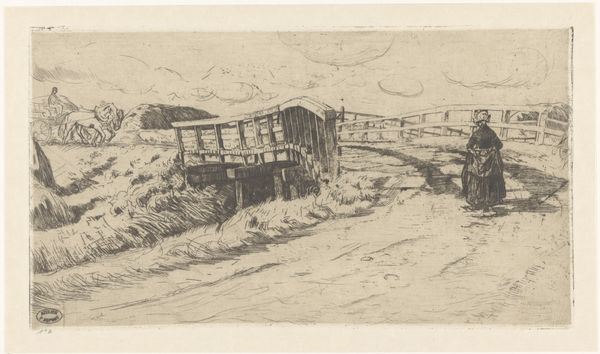
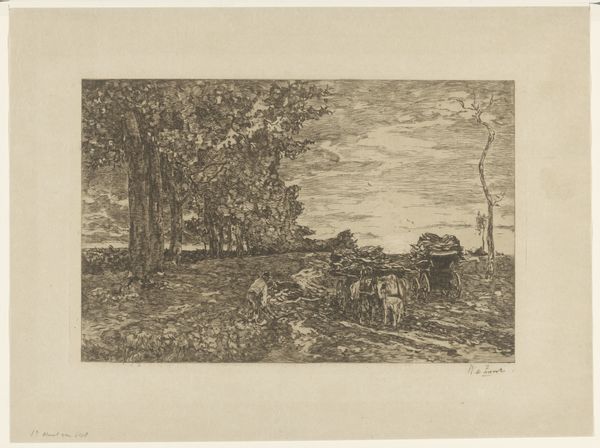
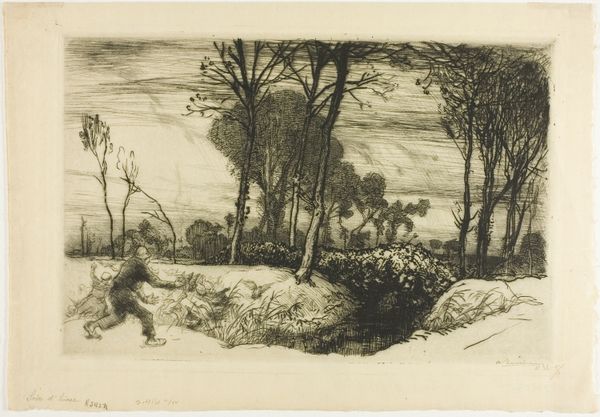
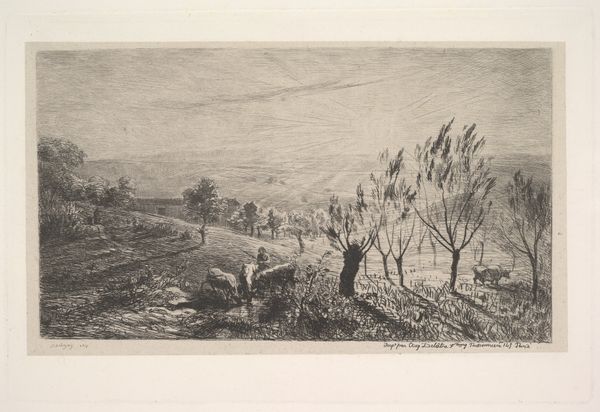
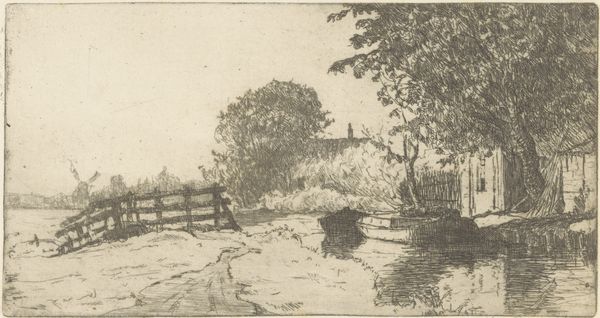
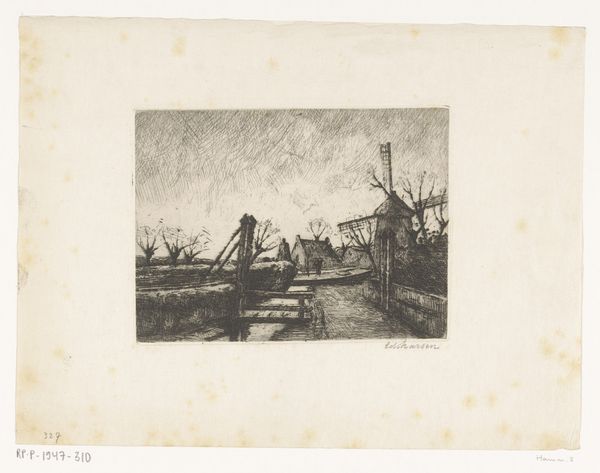
Editor: So, this is "Road in the Marais, Vendée," an etching by Auguste-Louis Lepère from 1892. The landscape is so detailed, but it still has this raw, almost melancholic feel. It’s not overtly picturesque; the road seems worn, and the scenery is quite stark. What do you see in this piece? Curator: I see a visual commentary on the lived experiences of rural communities in late 19th-century France, particularly concerning the often-idealized portrayal of rural life. Lepère avoids romanticizing the scene, highlighting instead the toil and the simplicity. Look at how the landscape and its inhabitants seem burdened by a subtle sense of isolation. Editor: Isolation… Yes, that resonates. The lone animal grazing, the sparse figures in the distance. But is it necessarily a critique, or just an observation? Curator: Perhaps it's both. Consider the artistic climate of the time – post-impressionism wrestling with realism. Lepère, in his choice to depict a mundane road, disrupts the expectations of idyllic pastoral scenes that were common. He's making a statement, implicitly asking the viewer to consider the realities behind those romanticized images. Editor: That makes me think about how class and labor often disappear in landscape paintings. This feels more grounded. Curator: Precisely. What effect do you think the artist intended by making it a print? Editor: Well, prints are more accessible than paintings… Was he trying to reach a wider audience? Curator: Absolutely. Etchings allowed for broader dissemination, aligning with a potentially activist impulse to depict the true face of rural life for the urban, often bourgeois, art consumer. This print becomes a tool to disrupt a certain societal blindness. It’s a potent, subtle form of resistance. Editor: I never would have considered the choice of medium in that way. Thank you; that really changes how I view the work. Curator: And for me, reflecting on Lepère's work reminds us to question whose stories are told, and how, in art historical narratives. There are always undercurrents waiting to be discovered.
Comments
No comments
Be the first to comment and join the conversation on the ultimate creative platform.
 Collect
 React
React Comment
More like this