About this artwork
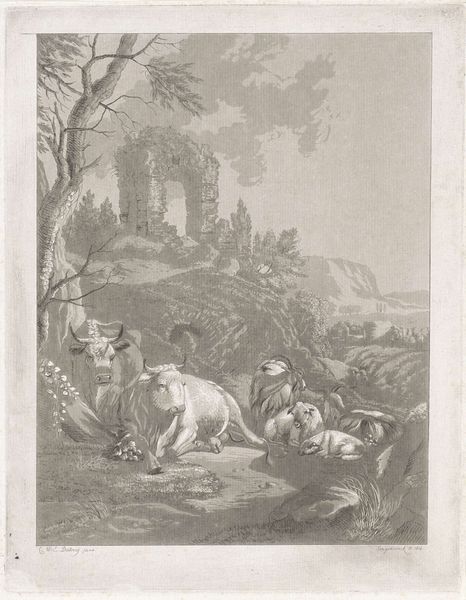
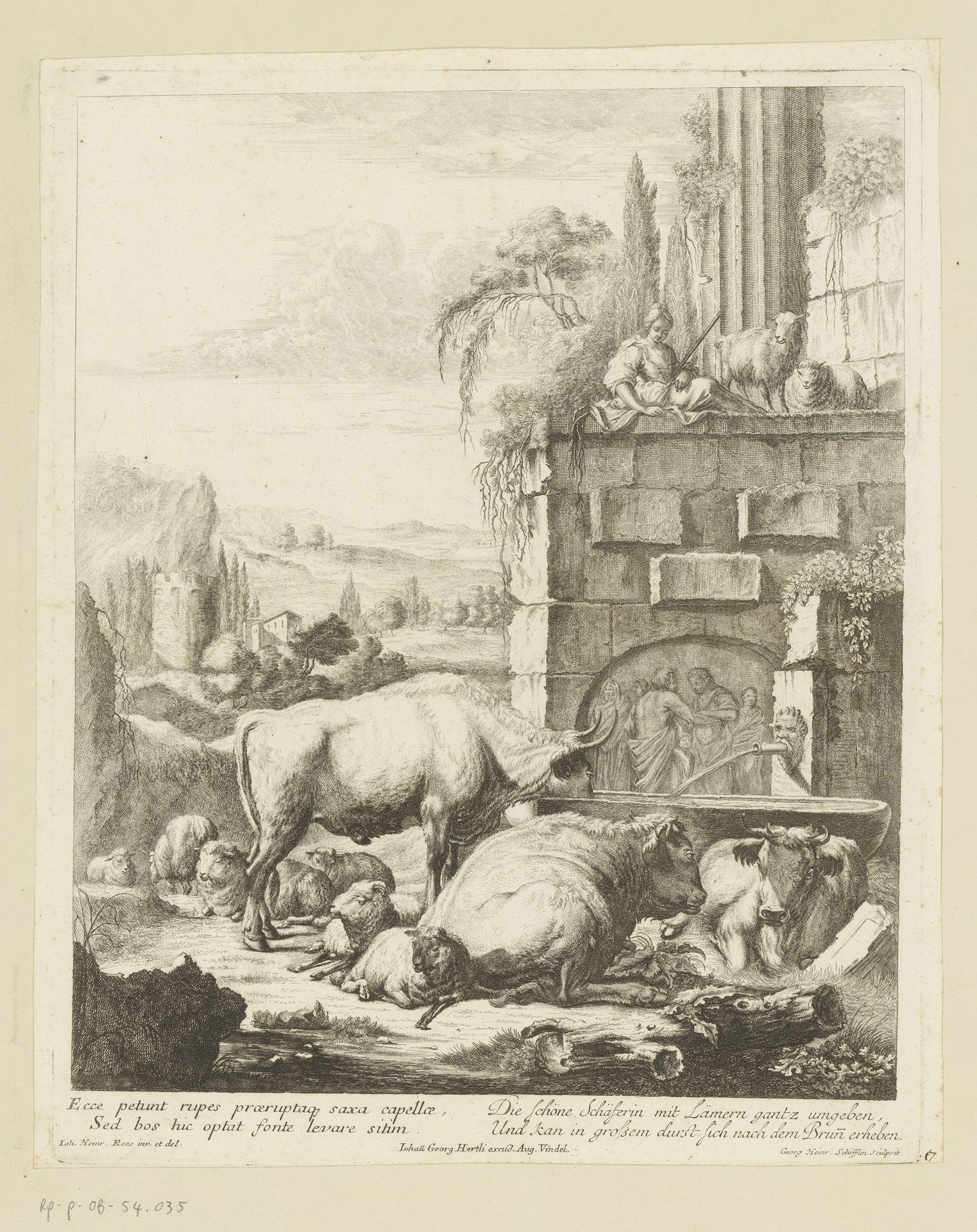
Georg Heinrich Schifflin created this etching, titled ‘Herderin met kudde runderen en schapen bij een antieke bron’, roughly translated as ‘Shepherdess with cattle and sheep at an ancient well’, sometime between the late 17th and early 18th century. The visual language of classicism is invoked here, complete with what looks to be a bucolic scene and the ruins of antiquity. Yet, while appearing to simply represent a landscape with animals and a shepherdess, the piece engages with the complex relationships between humans, animals, and the land. Consider how the shepherdess, often romanticized in art, embodies the labor and the social hierarchy of rural life. How does Schifflin’s work either perpetuate or challenge these historical representations? This piece invites us to reflect on the cultural meanings we attach to nature and labor, and how these meanings are intertwined with social identities.
Herderin met kudde runderen en schapen bij een antieke bron
1666 - 1745

Artwork details
- Medium
- print, etching, engraving
- Dimensions
- height 421 mm, width 336 mm
- Copyright
- Rijks Museum: Open Domain
Tags
Comments
Share your thoughts
About this artwork
Georg Heinrich Schifflin created this etching, titled ‘Herderin met kudde runderen en schapen bij een antieke bron’, roughly translated as ‘Shepherdess with cattle and sheep at an ancient well’, sometime between the late 17th and early 18th century. The visual language of classicism is invoked here, complete with what looks to be a bucolic scene and the ruins of antiquity. Yet, while appearing to simply represent a landscape with animals and a shepherdess, the piece engages with the complex relationships between humans, animals, and the land. Consider how the shepherdess, often romanticized in art, embodies the labor and the social hierarchy of rural life. How does Schifflin’s work either perpetuate or challenge these historical representations? This piece invites us to reflect on the cultural meanings we attach to nature and labor, and how these meanings are intertwined with social identities.
Comments
Share your thoughts