
Curatorial notes
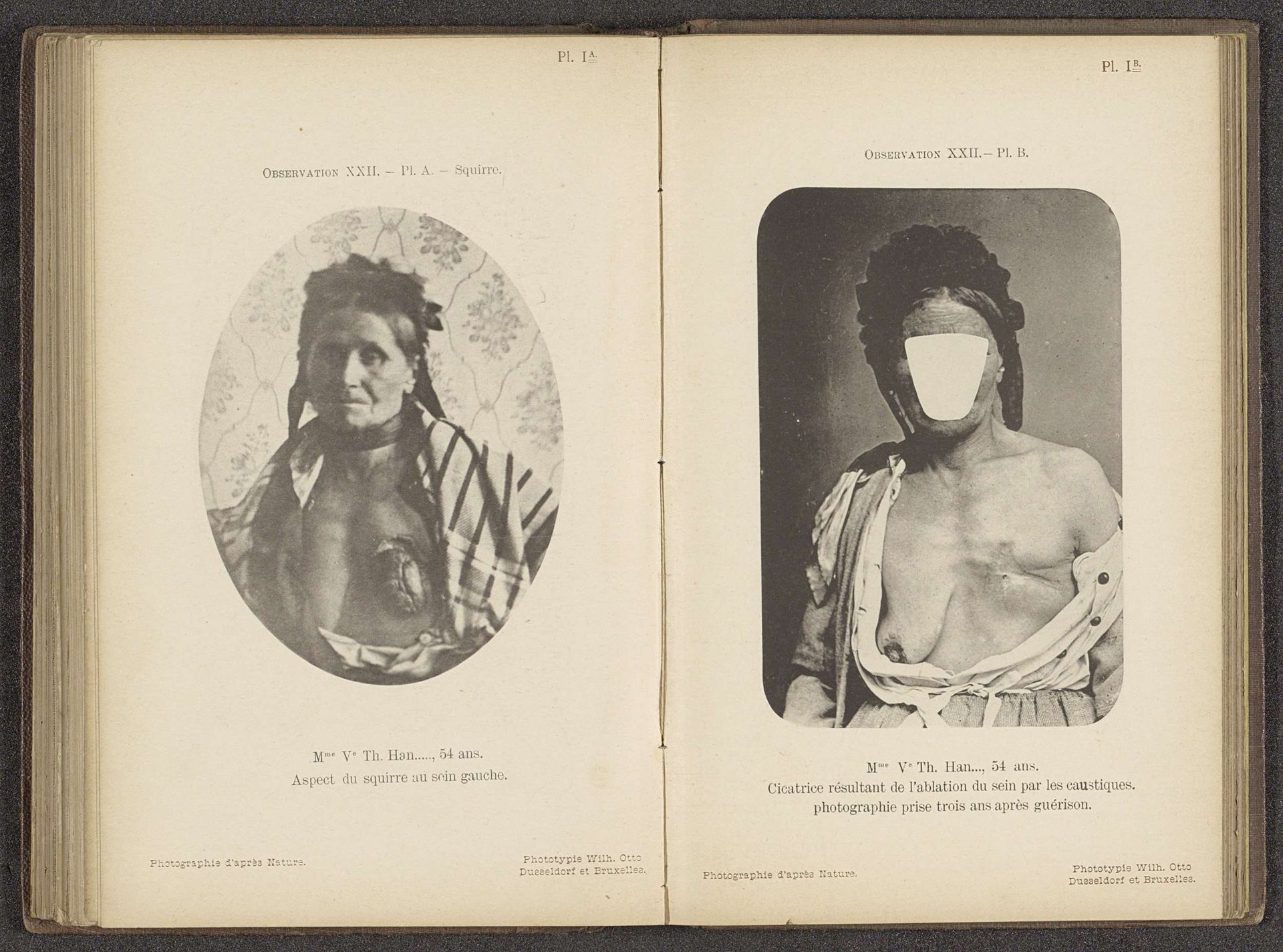
Curator: Oh, this makes me feel strangely uneasy… almost like witnessing something I shouldn’t see. Editor: What we're looking at is an albumen print from before 1884 titled "Vrouw met een borsttumor," which translates to "Woman with a Breast Tumor." This image, presented in the academic style typical of its time, is a part of a larger photographic series. Curator: "Academic" is such a sterile word for what is, essentially, a very raw, very human image. It captures so much suffering. You know, the first thing I noticed, besides, of course, the visible tumor, is the pattern on the wall behind her. It makes the picture feel both intimate and strangely staged, like an uncomfortable play. Editor: Yes, that’s interesting. I see a deliberate compositional choice here. Note the oval frame isolating the woman on the left page, contrasting with the stark square framing of the image on the right. This juxtaposition encourages a comparative analysis, foregrounding the medical before-and-after narrative. Curator: Narrative is the key here, don't you think? The photograph isn't just about documenting; it is also about the human experience. I wonder about her life, what her family thought… what she thought. Did she ever imagine someone centuries later would be contemplating her like this? I feel a connection to this woman; an almost immediate wave of empathy hits me. Editor: Precisely! Semiotically, the stark contrast in lighting, the subject's stoic gaze, it all signifies a kind of clinical observation elevated to historical record. Also, notice the deliberate blanking-out of the woman's face in the photo to the right. The procedure has masked the woman further – which, if anything, gives the woman to the left further potency. Curator: Right. It depersonalizes her in a way. Taking it all in, the contrast really hits me in the gut; that photograph holds within it pain, but it equally sings the courage and dignity that even medical study can't remove. It makes one meditate about vulnerability and, weirdly, immortality; to be here for such reflection far beyond the camera flash seems like triumph against mortality, even a victory. Editor: Agreed. The photograph prompts crucial conversations about medical representation, and, at a deeper level, raises interesting insights into visual language during the 19th century, showing the dynamic interplay of image, history, and meaning.