About this artwork
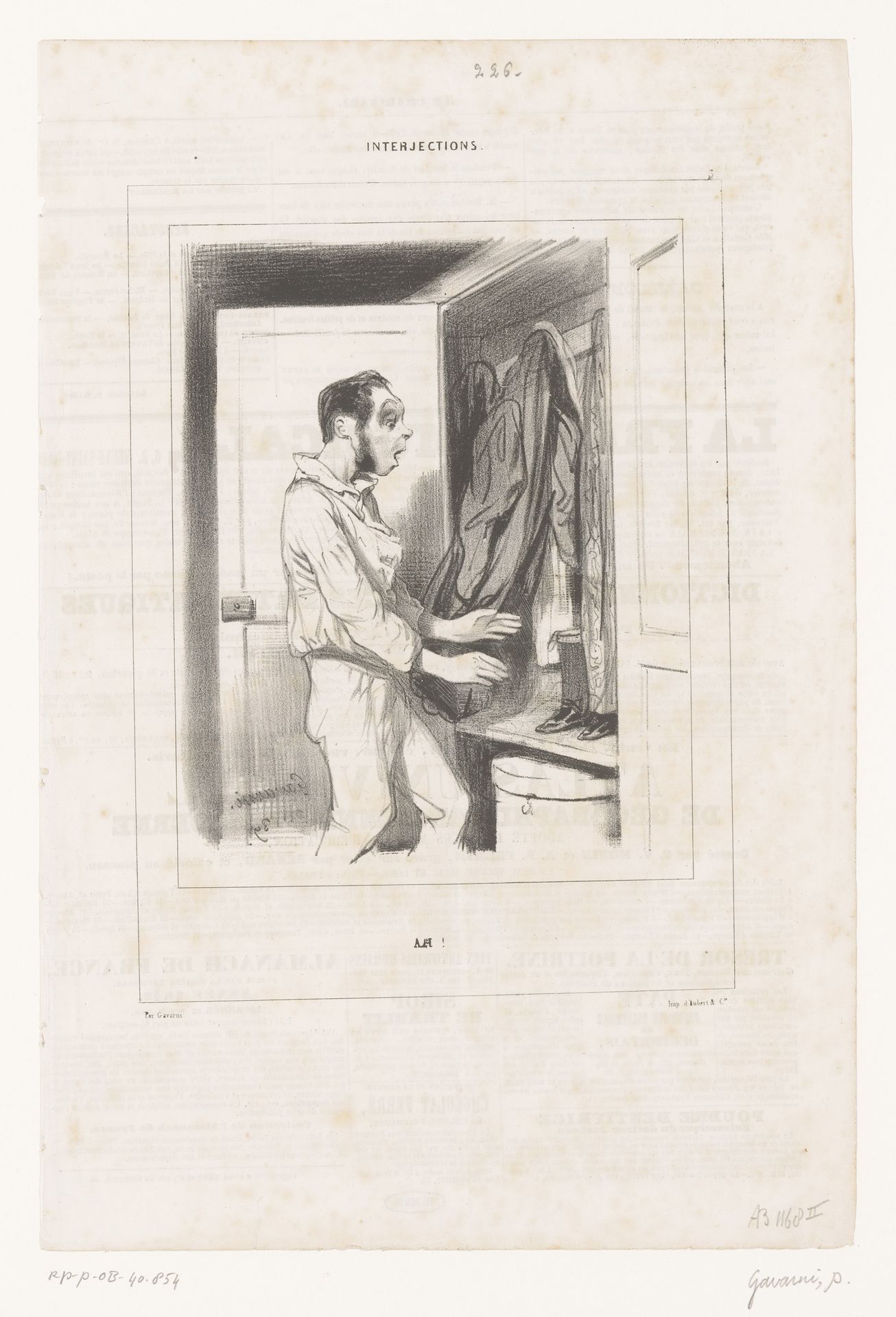
Paul Gavarni created this drawing, "Echtgenoot vindt een paar laarzen in de kast van zijn vrouw," sometime in the 19th century. A man, rendered with sharp, wiry lines, stands aghast before an open closet. The composition is structured by contrasting light and shadow, which serve to heighten the dramatic tension of the scene. Gavarni uses a semiotic system to convey narrative information. The boots, discreetly placed on a shelf, act as a signifier, suggesting a hidden narrative. The man’s exaggerated expression, marked by his wide eyes and gaping mouth, operates as a visual exclamation point, emphasizing his shock or disbelief. The choice of lithography, with its capacity for detailed shading and tonal variation, allows Gavarni to explore themes of bourgeois life and social critique. The closet, an intimate space, becomes a stage for a moment of revelation. The image is not merely a depiction of infidelity but also an exploration of the precarious nature of social roles and expectations within 19th-century Parisian society.
Echtgenoot vindt een paar laarzen in de kast van zijn vrouw
1841

Paul Gavarni
1804 - 1866Location
RijksmuseumArtwork details
- Medium
- drawing, lithograph, print
- Dimensions
- height 363 mm, width 244 mm
- Location
- Rijksmuseum
- Copyright
- Rijks Museum: Open Domain
Tags
Comments
Share your thoughts
About this artwork
Paul Gavarni created this drawing, "Echtgenoot vindt een paar laarzen in de kast van zijn vrouw," sometime in the 19th century. A man, rendered with sharp, wiry lines, stands aghast before an open closet. The composition is structured by contrasting light and shadow, which serve to heighten the dramatic tension of the scene. Gavarni uses a semiotic system to convey narrative information. The boots, discreetly placed on a shelf, act as a signifier, suggesting a hidden narrative. The man’s exaggerated expression, marked by his wide eyes and gaping mouth, operates as a visual exclamation point, emphasizing his shock or disbelief. The choice of lithography, with its capacity for detailed shading and tonal variation, allows Gavarni to explore themes of bourgeois life and social critique. The closet, an intimate space, becomes a stage for a moment of revelation. The image is not merely a depiction of infidelity but also an exploration of the precarious nature of social roles and expectations within 19th-century Parisian society.
Comments
Share your thoughts