About this artwork
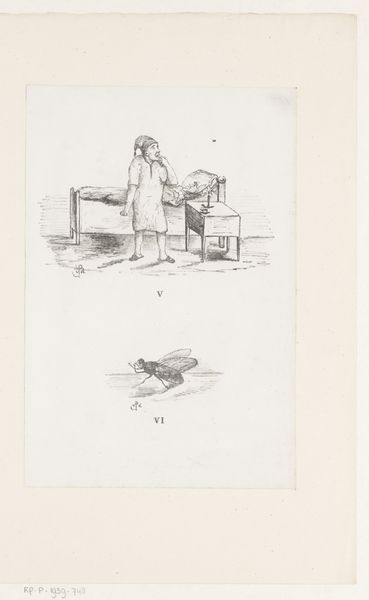
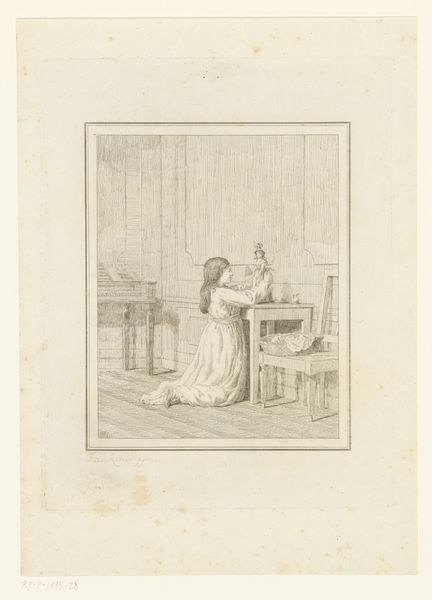
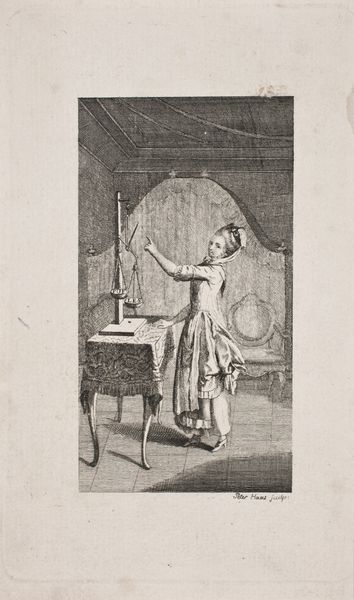
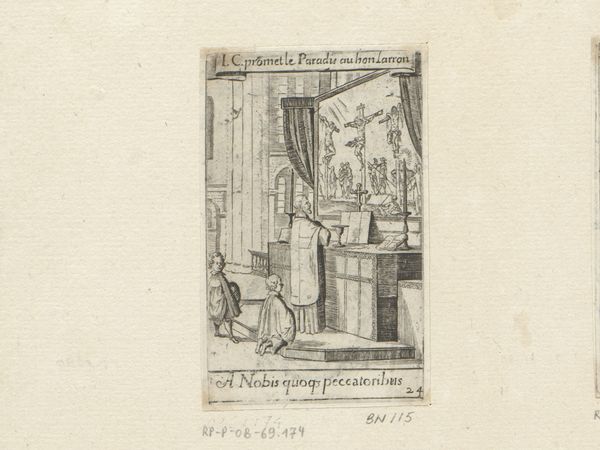
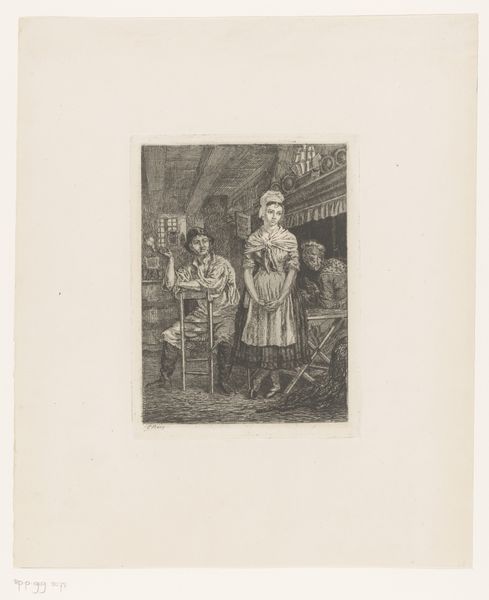
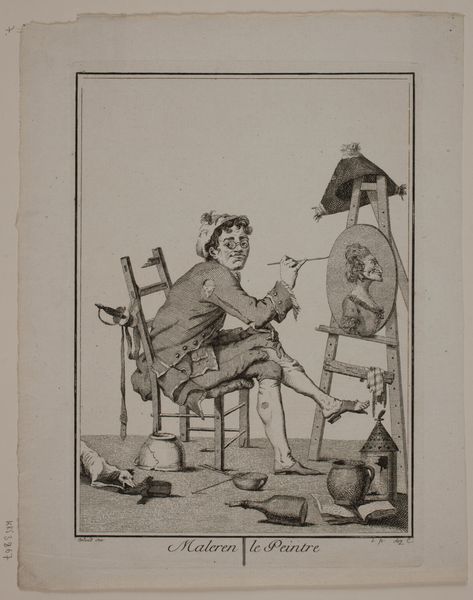
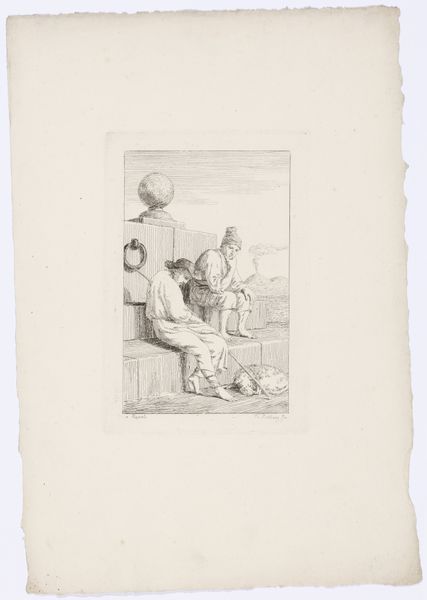
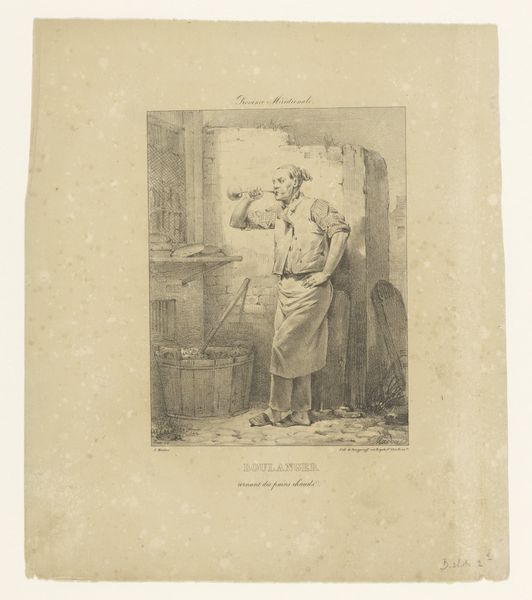
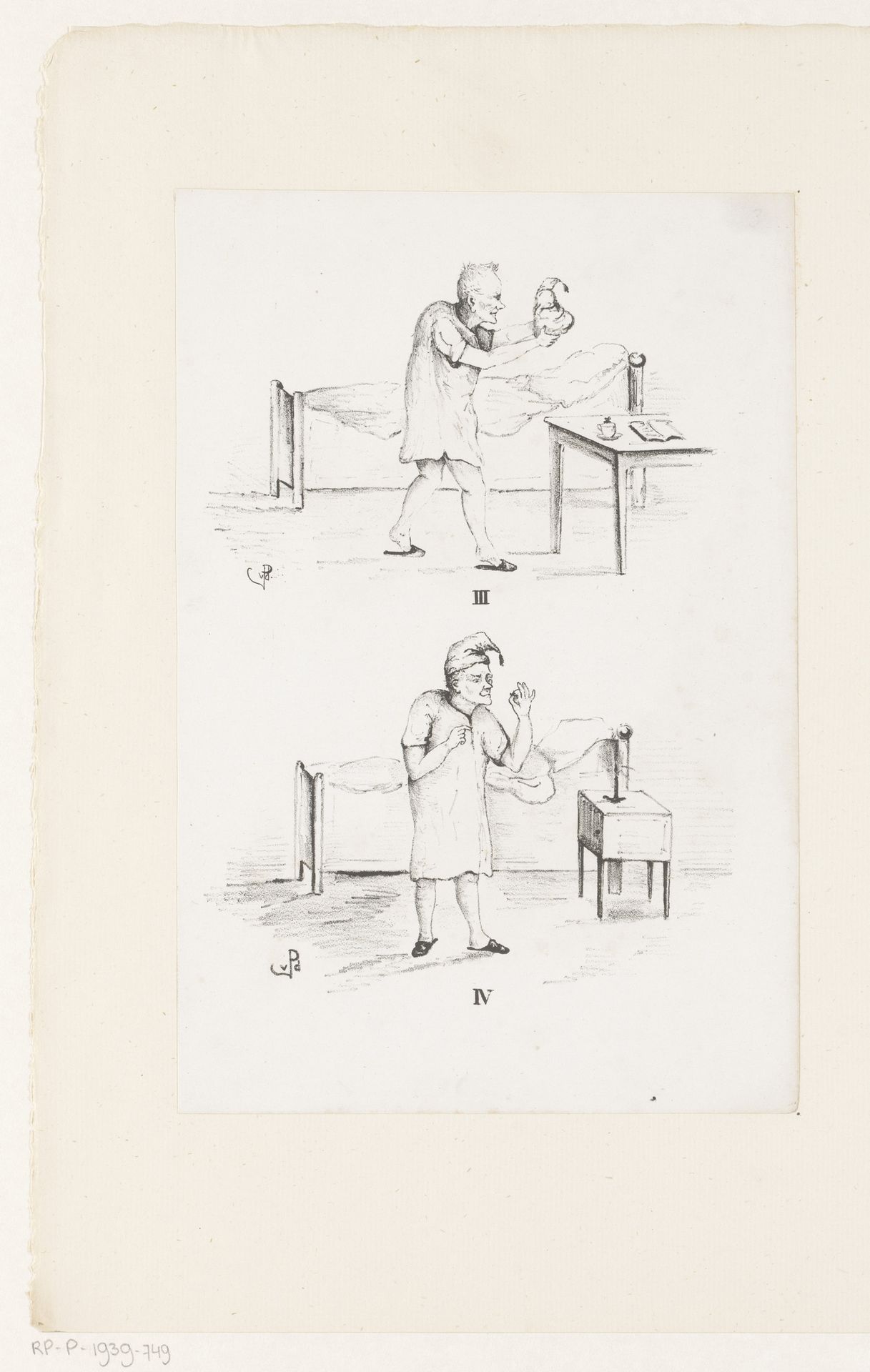
This etching by Jeremias Adriaan Adolf Schill shows a man watching a fly escape. The linear quality of the etching process lends itself particularly well to the narrative structure of the artwork. To create an etching like this, the artist would have covered a metal plate with a waxy, acid-resistant ground. Using a sharp needle, the artist scratched away the ground, exposing the metal beneath. The plate was then immersed in acid, which bit into the exposed lines, creating grooves. After removing the ground, ink was applied to the plate, filling the etched lines. Finally, the plate was pressed onto paper, transferring the ink and creating the print. The degree of intricacy attainable reflects the skills of the artist in physically manipulating materials. Here, the labor, and the precision required, become part of the image's impact. It speaks to a history of creative practices rooted in close observation. The print asks us to consider craft and art, not as distinct categories, but as interconnected ways of engaging with the world.
Man ziet gevangen vlieg wegvliegen
1864 - 1902

Jeremias Adriaan Adolf Schill
1849 - 1902Location
RijksmuseumArtwork details
- Medium
- drawing, pen
- Dimensions
- height 255 mm, width 172 mm
- Location
- Rijksmuseum
- Copyright
- Rijks Museum: Open Domain
Tags
Comments
Share your thoughts
About this artwork
This etching by Jeremias Adriaan Adolf Schill shows a man watching a fly escape. The linear quality of the etching process lends itself particularly well to the narrative structure of the artwork. To create an etching like this, the artist would have covered a metal plate with a waxy, acid-resistant ground. Using a sharp needle, the artist scratched away the ground, exposing the metal beneath. The plate was then immersed in acid, which bit into the exposed lines, creating grooves. After removing the ground, ink was applied to the plate, filling the etched lines. Finally, the plate was pressed onto paper, transferring the ink and creating the print. The degree of intricacy attainable reflects the skills of the artist in physically manipulating materials. Here, the labor, and the precision required, become part of the image's impact. It speaks to a history of creative practices rooted in close observation. The print asks us to consider craft and art, not as distinct categories, but as interconnected ways of engaging with the world.
Comments
Share your thoughts