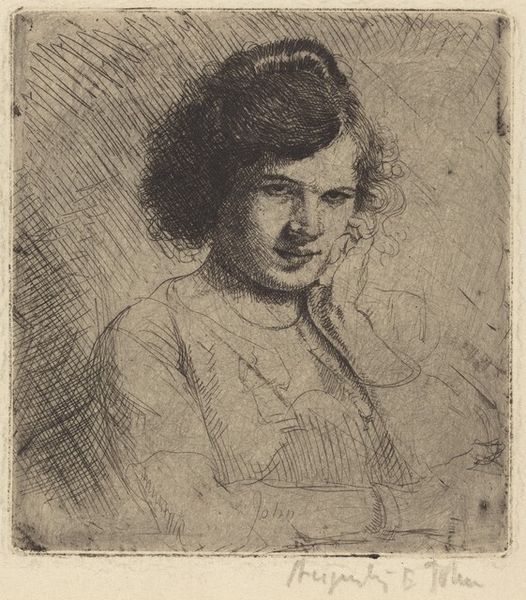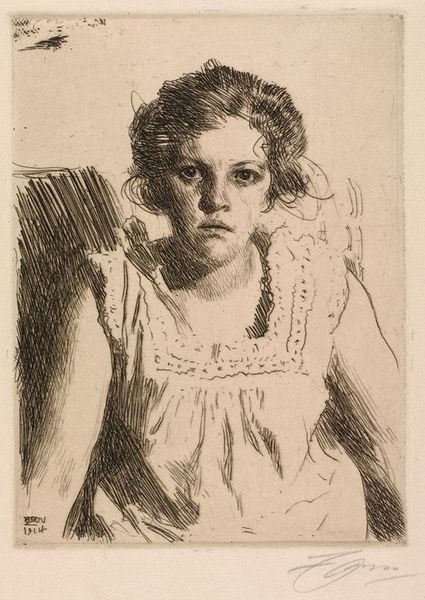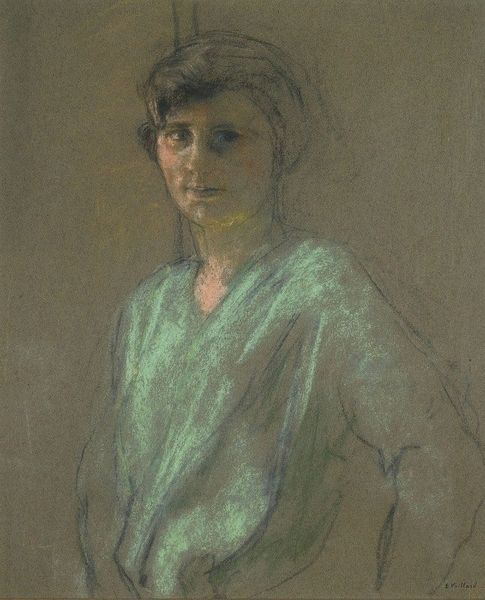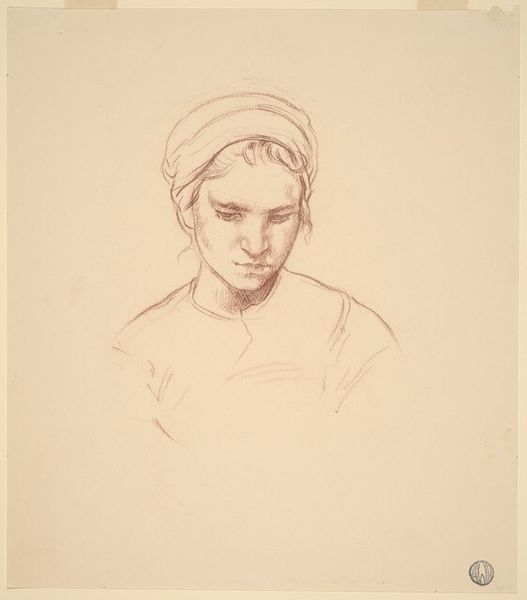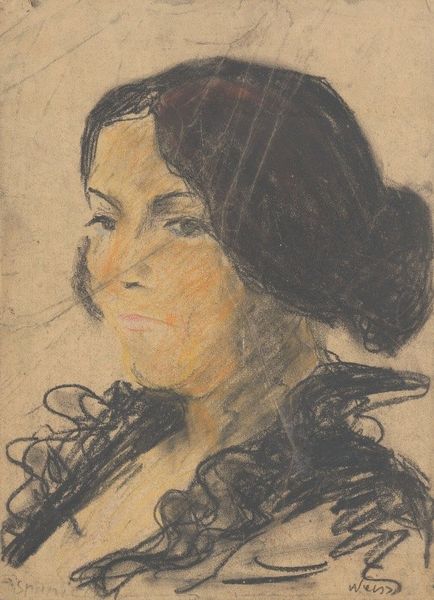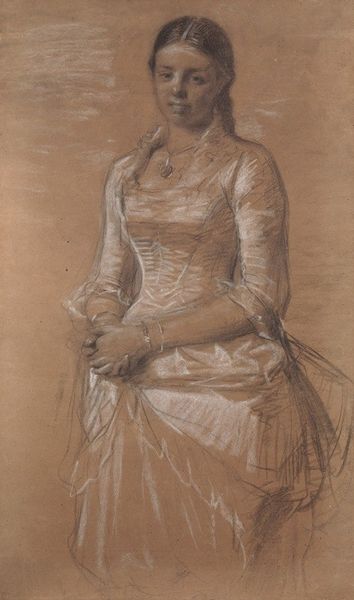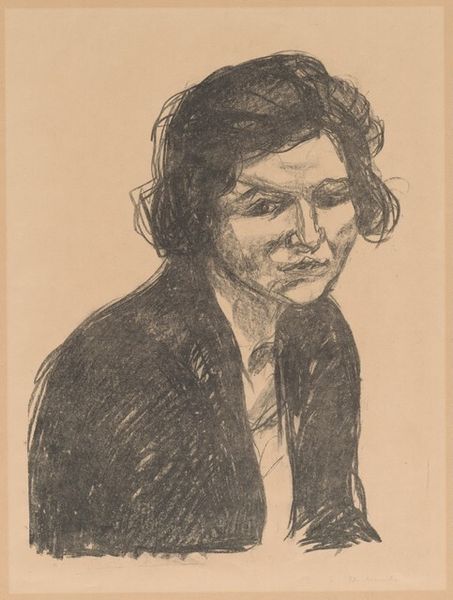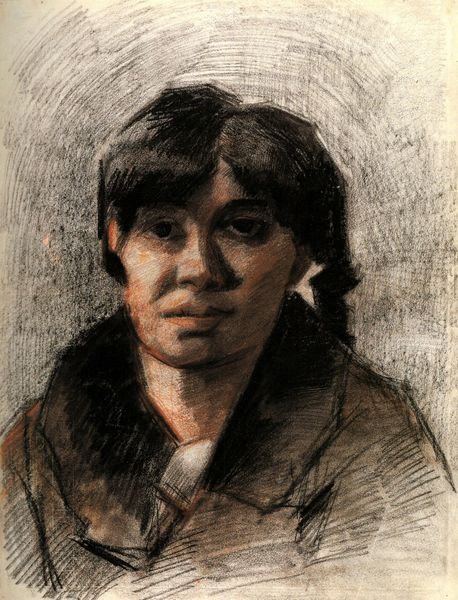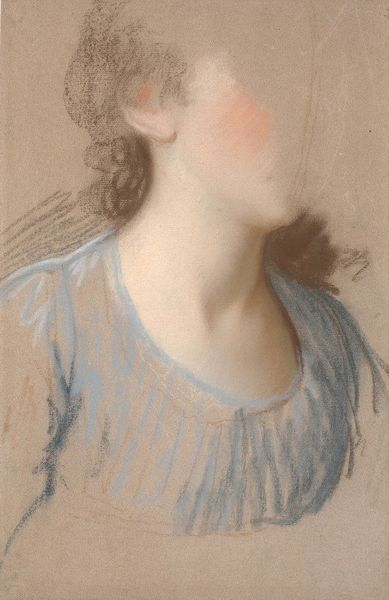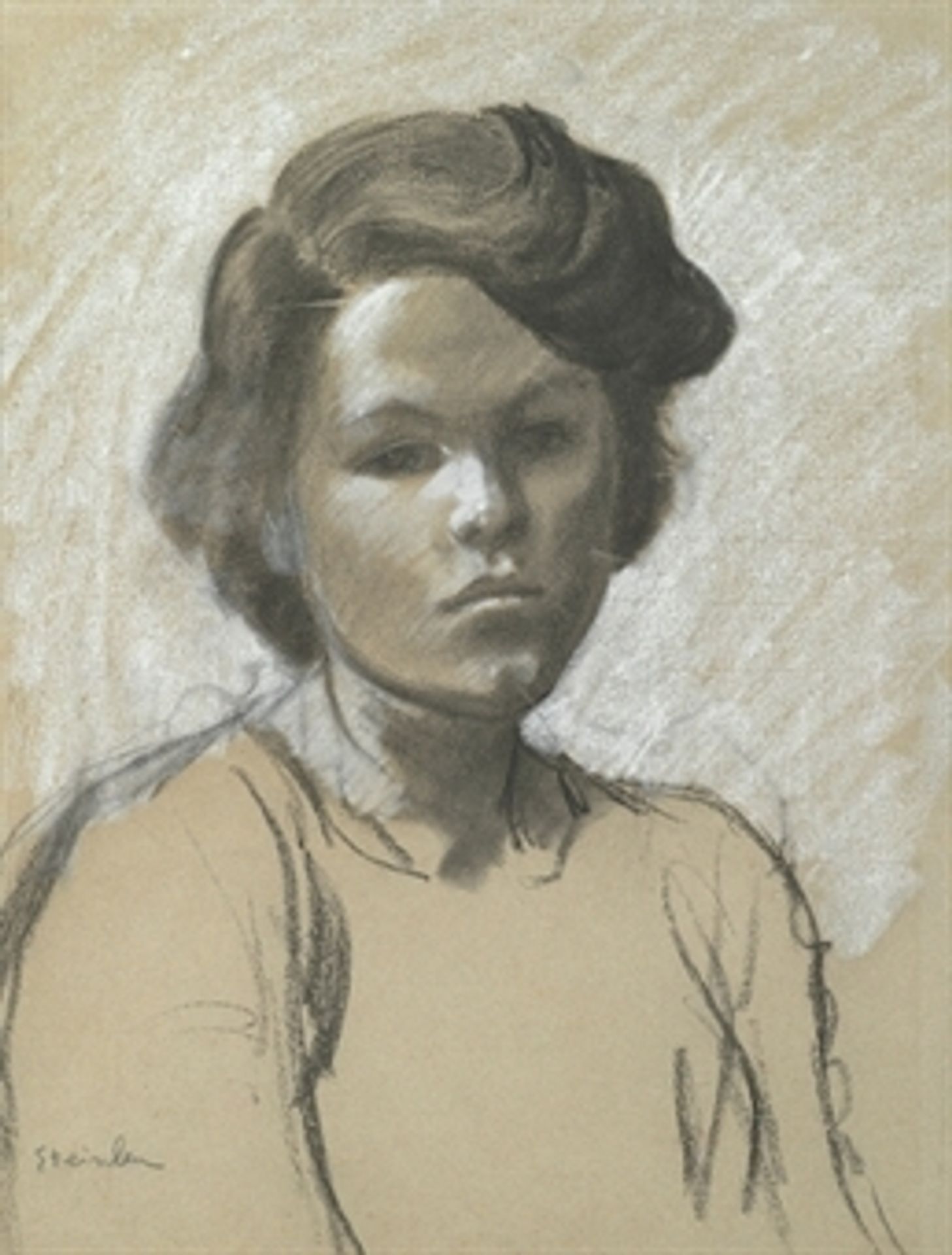
Portrait of Colette, the daughter of the artist

Listen to curator's interpretation
Curatorial notes
Théophile Alexandre Steinlen captured his daughter Colette with charcoal, a medium that lends itself to intimate portraiture. Here, the direction of her eyes is a powerful conduit. Throughout art history, we see the gaze used to convey a myriad of emotions and psychological states. Think of the direct, confrontational stare in Renaissance portraits meant to assert power and status. Now, consider how, in contrast, Colette's gaze carries a quiet intensity. It's not confrontational, but rather introspective, drawing us into her inner world. Such inward-looking gazes can be traced back to ancient Roman portraiture, yet it evolved through the ages, resurfacing, for example, in the works of the Pre-Raphaelites, who sought to capture the inner soul of their subjects. The ability of the artist to capture the complex psychology of the individual serves as a potent reminder of art's ability to tap into our shared human experience.