#
gutai
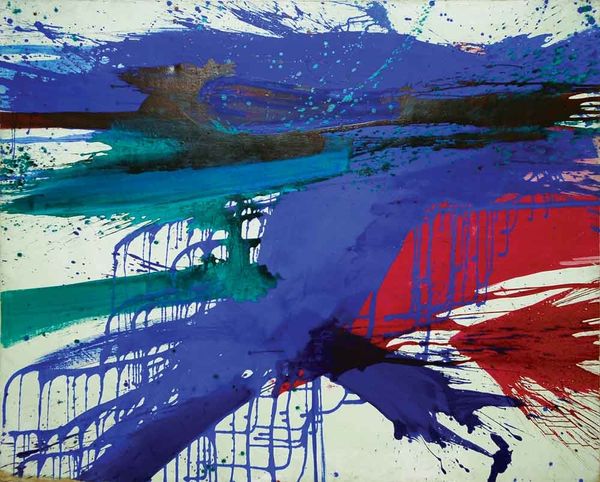
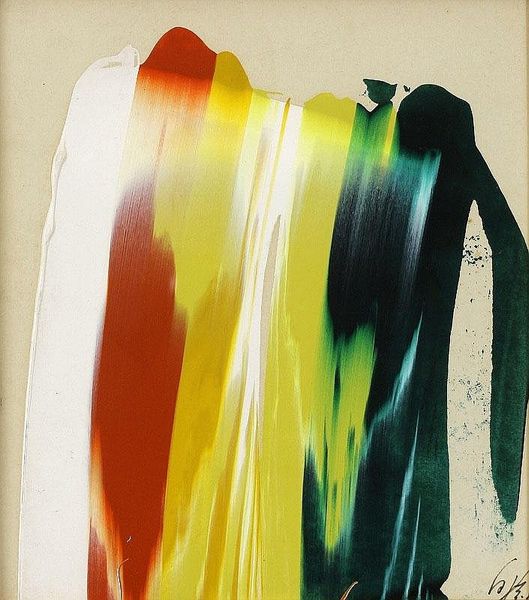
Copyright: Kazuo Shiraga,Fair Use
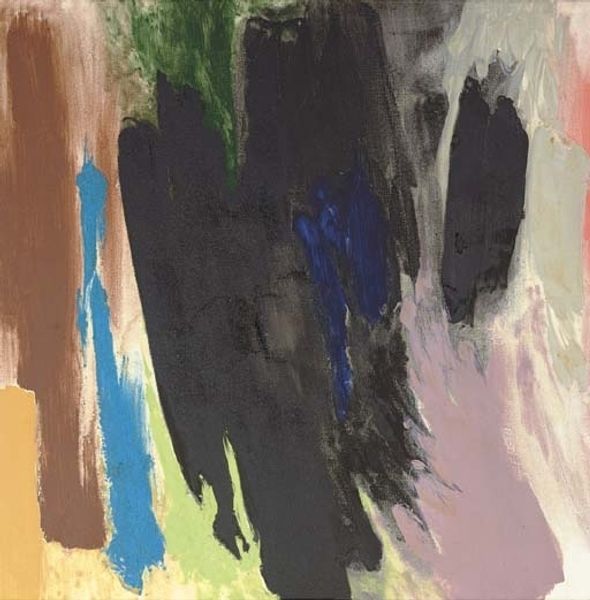
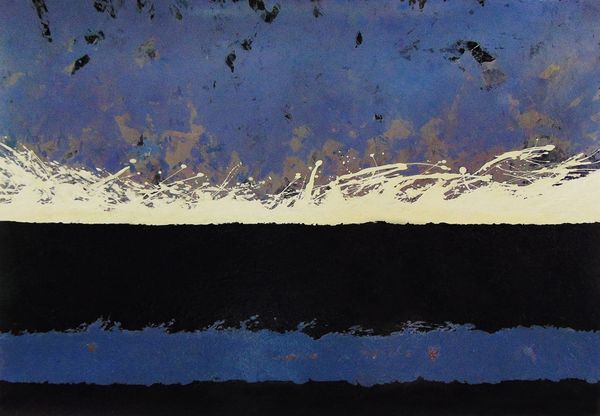
Editor: This is an Untitled acrylic painting by Kazuo Shiraga, created in 1979. I’m immediately struck by the texture, the almost violent streaks of color against the stark black. What’s your interpretation of this piece, particularly in light of the Gutai movement Shiraga was a part of? Curator: It’s a visceral painting, isn't it? Considering Shiraga’s involvement with Gutai, which sought to break free from traditional artistic constraints, the physicality of the work becomes central. Look at how the paint is applied. Does it suggest any particular kind of action or performance? Editor: It definitely feels performative, almost like a dance or some kind of ritual. I read that Shiraga used his feet to paint sometimes; it really brings an interesting physicality to the piece. Curator: Precisely! This embodied practice challenges the notion of the artist as purely intellectual, highlighting the role of the body – especially in post-war Japan as they grappled with redefining identity and the individual's relationship to a rapidly changing world. Where do you see evidence of those struggles, that search for new meanings? Editor: I think the raw energy of the lines suggests this urge to break from the past. The bright colors, although constrained within these harsh black borders, hint at hope. Or is it resistance? Curator: An interesting point. Considering Shiraga's historical context within a patriarchal society, it may reflect his resistance to traditional norms through the very act of creation, by bringing in elements considered more appropriate for other settings or even by how the color lines push and interrupt. Perhaps also resisting what painting could and should be, and what bodies could do, reclaiming space through performance. Editor: So, it's not just about abstract expression, but about challenging established power structures through physical and artistic expression. It makes me see the painting with entirely new eyes. Curator: Indeed. By understanding the historical and cultural backdrop, we move beyond surface-level aesthetics and can better understand the intentions and layered meanings within the work. Editor: I'm glad we discussed the sociopolitical and embodied implications in Shiraga’s artistic choices.
Comments
No comments
Be the first to comment and join the conversation on the ultimate creative platform.
 Collect
 React
React Comment
More like this