About this artwork
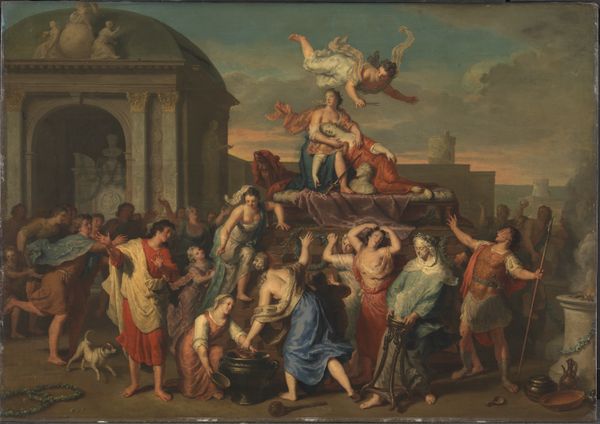
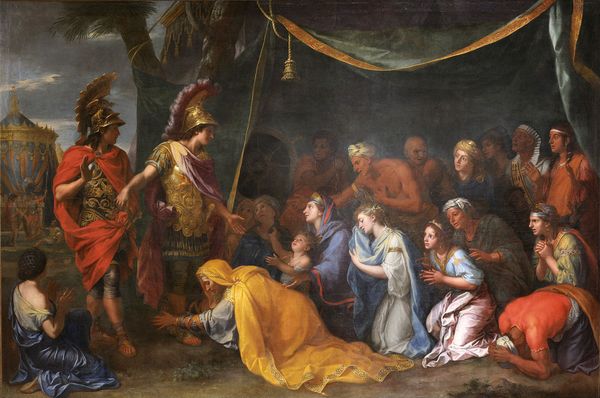
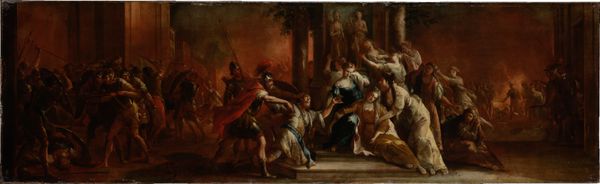
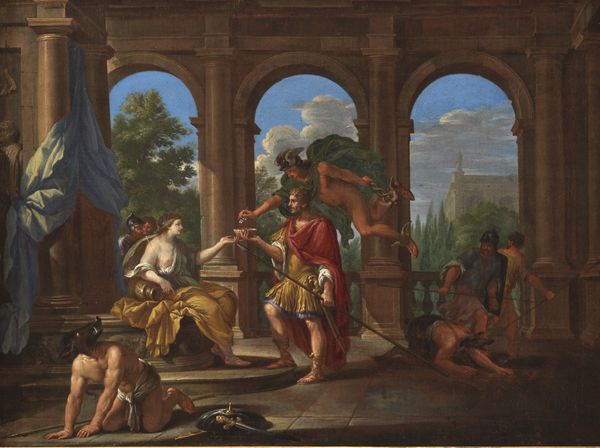
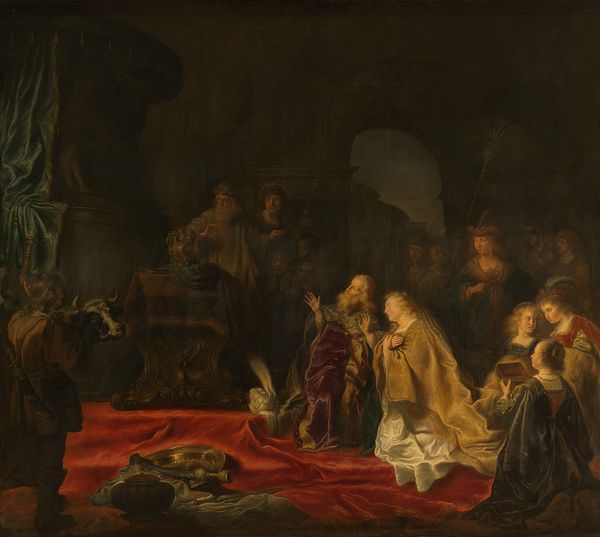
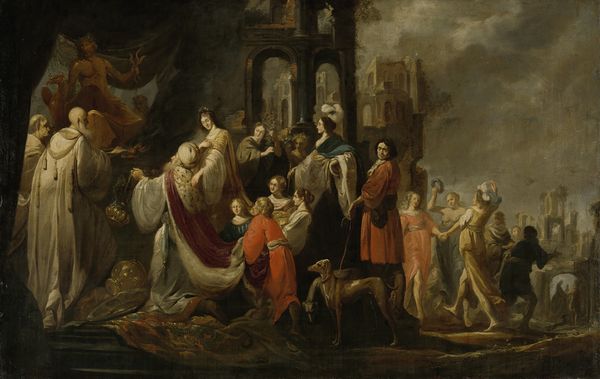
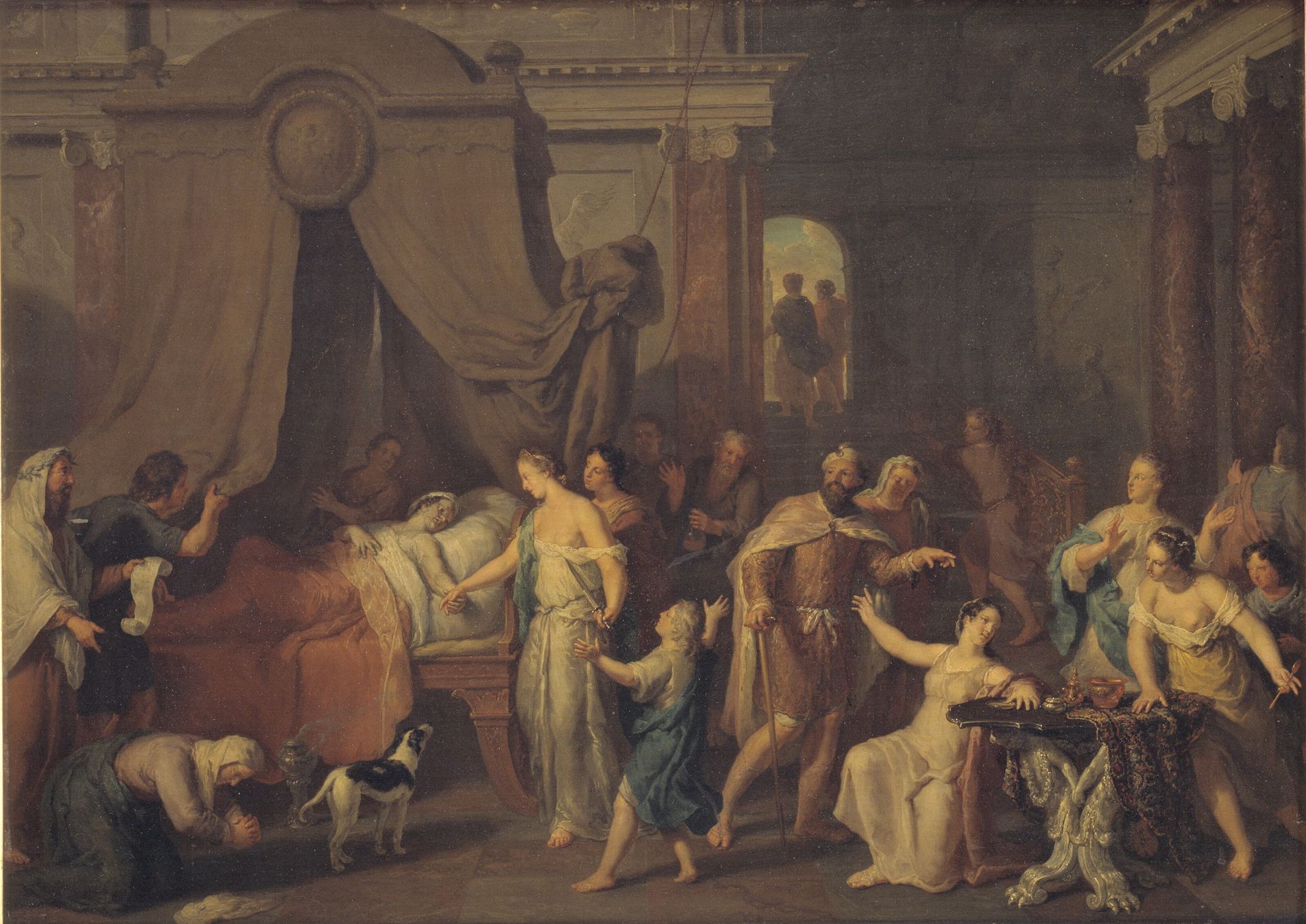
Gerard Hoet painted this depiction of Alcestis and Admetus, capturing a pivotal moment from Greek mythology with oils on canvas. Observe the heart-wrenching gestures of grief. These figures, frozen in postures of sorrow, remind us of similar expressions across epochs – the mourning figures on Roman sarcophagi or even the lamenting women in medieval depositions. Consider the motif of sacrifice, embodied by Alcestis offering her life for her husband. This theme echoes through time, appearing in Christian iconography with the Virgin Mary's sacrifice, or in ancient myths of selflessness. Note the dynamic of extended hands reaching to touch; it’s a powerful visual language to show emotional states. The way Hoet composes the body language conveys the intensity of the moment and engages viewers on a deep, subconscious level. These symbols are not static, but are rather in constant flux, influenced by cultural shifts and the collective memory. The enduring power of these images lies in their ability to tap into our shared human experience.
Alcestis and Admetus
1663 - 1733


Artwork details
- Medium
- oil-paint, wood
- Dimensions
- 43.5 cm (height) x 62 cm (width) (Netto)
- Location
- SMK - Statens Museum for Kunst
Tags
Comments
Share your thoughts
About this artwork
Gerard Hoet painted this depiction of Alcestis and Admetus, capturing a pivotal moment from Greek mythology with oils on canvas. Observe the heart-wrenching gestures of grief. These figures, frozen in postures of sorrow, remind us of similar expressions across epochs – the mourning figures on Roman sarcophagi or even the lamenting women in medieval depositions. Consider the motif of sacrifice, embodied by Alcestis offering her life for her husband. This theme echoes through time, appearing in Christian iconography with the Virgin Mary's sacrifice, or in ancient myths of selflessness. Note the dynamic of extended hands reaching to touch; it’s a powerful visual language to show emotional states. The way Hoet composes the body language conveys the intensity of the moment and engages viewers on a deep, subconscious level. These symbols are not static, but are rather in constant flux, influenced by cultural shifts and the collective memory. The enduring power of these images lies in their ability to tap into our shared human experience.
Comments
Share your thoughts