About this artwork
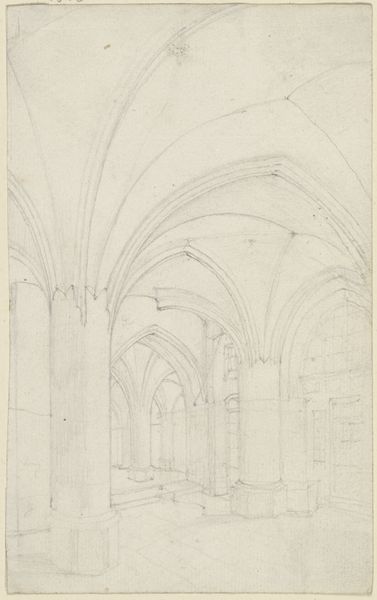
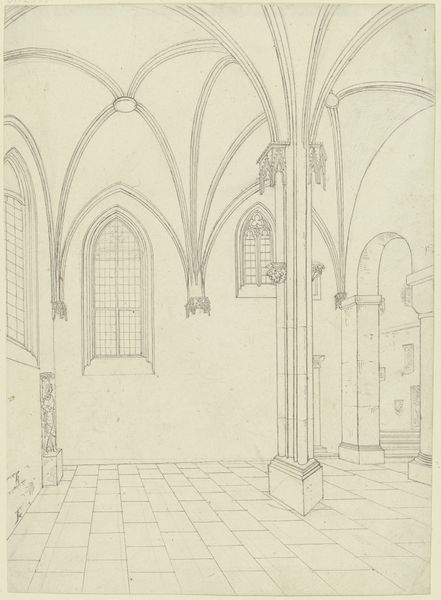
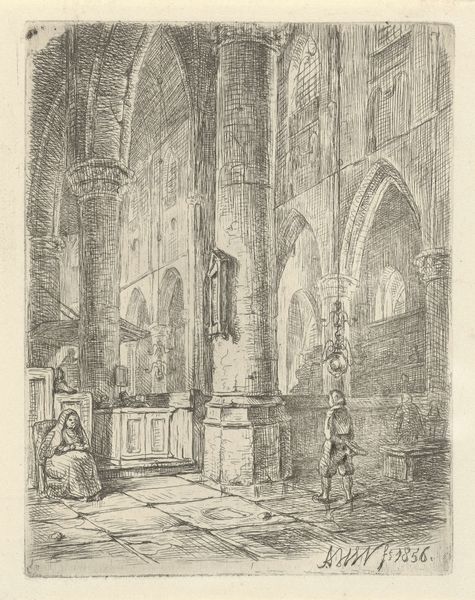
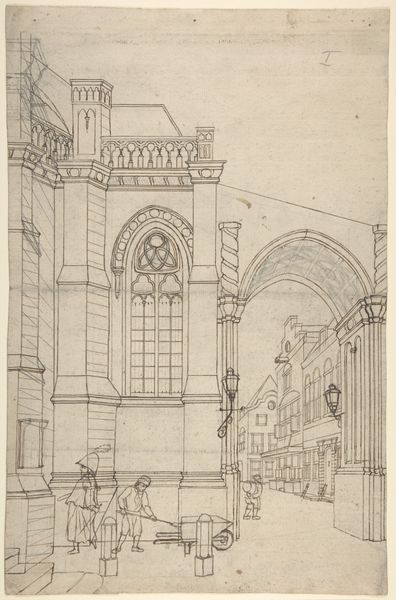
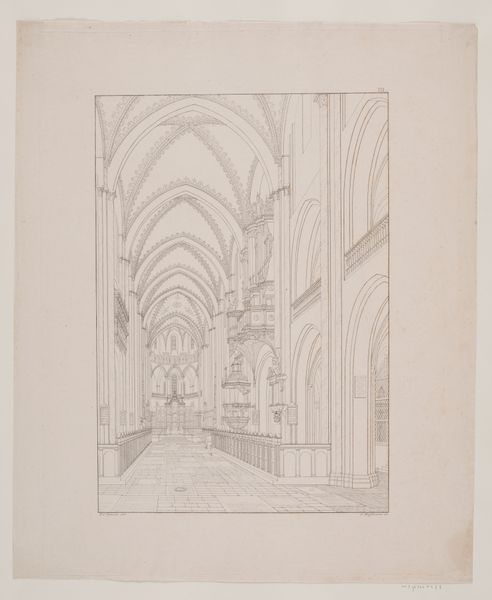
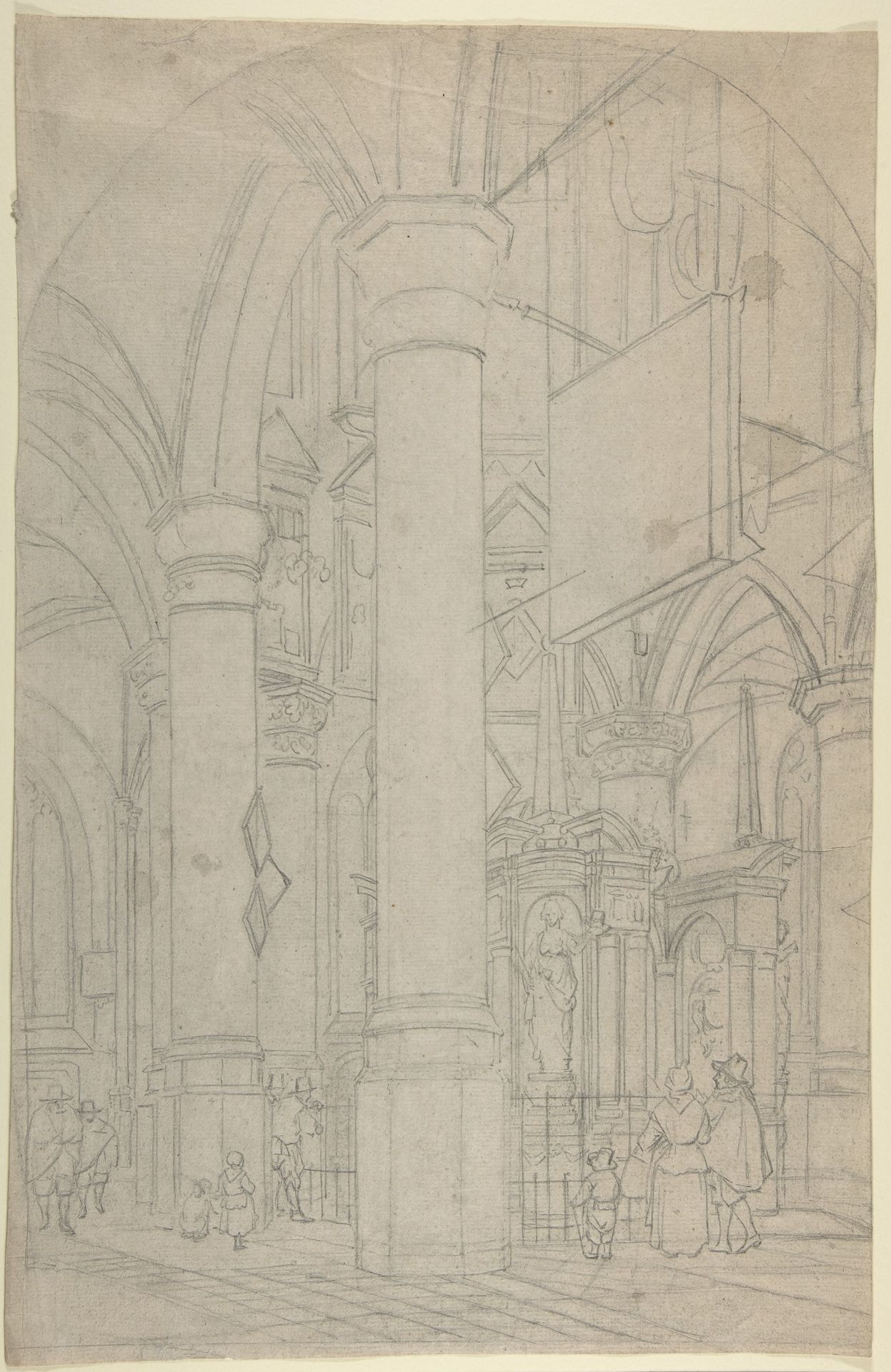
Jan Hendrik Verheyen created this drawing, "Interior of the New Church in Delft with the Tomb of William the Silent," with graphite on paper. The overwhelming impression is one of verticality and architectural precision. Verheyen masterfully uses linear perspective to guide the eye deep into the church's interior. The columns, rendered with meticulous detail, dominate the composition and create a rhythmic pattern that emphasizes the space's grandeur. Look at how Verheyen uses line to articulate the architectural elements, creating a sense of depth and scale. The starkness of the graphite medium enhances the geometric forms, lending a cool, rational quality to the scene. The drawing invites a semiotic reading, where architectural forms act as signs of power and order. Yet, the presence of small figures provides a human scale, contrasting with the imposing structure. The drawing mediates between monumentality and the everyday, inviting contemplation on how we experience and interpret space.
Interior of the New Church in Delft with the Tomb of William the Silent 1793 - 1846

Jan Hendrik Verheyen
1778 - 1846
The Metropolitan Museum of Art
Metropolitan Museum of Art, New York, NYArtwork details
- Medium
- drawing, pencil
- Dimensions
- 17-5/16 x 11-3/16 in. (44.0 x 28.4 cm)
- Location
- Metropolitan Museum of Art, New York, NY
- Copyright
- Public Domain
Tags
drawing
medieval
landscape
perspective
geometric
pencil
realism
Comments
No comments
About this artwork
Jan Hendrik Verheyen created this drawing, "Interior of the New Church in Delft with the Tomb of William the Silent," with graphite on paper. The overwhelming impression is one of verticality and architectural precision. Verheyen masterfully uses linear perspective to guide the eye deep into the church's interior. The columns, rendered with meticulous detail, dominate the composition and create a rhythmic pattern that emphasizes the space's grandeur. Look at how Verheyen uses line to articulate the architectural elements, creating a sense of depth and scale. The starkness of the graphite medium enhances the geometric forms, lending a cool, rational quality to the scene. The drawing invites a semiotic reading, where architectural forms act as signs of power and order. Yet, the presence of small figures provides a human scale, contrasting with the imposing structure. The drawing mediates between monumentality and the everyday, inviting contemplation on how we experience and interpret space.
Comments
No comments