About this artwork
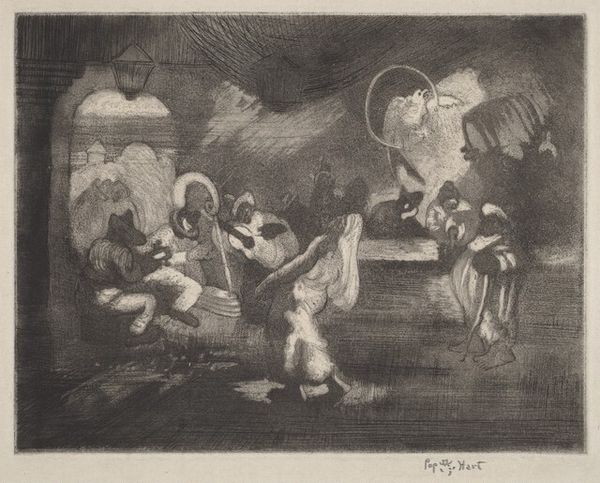
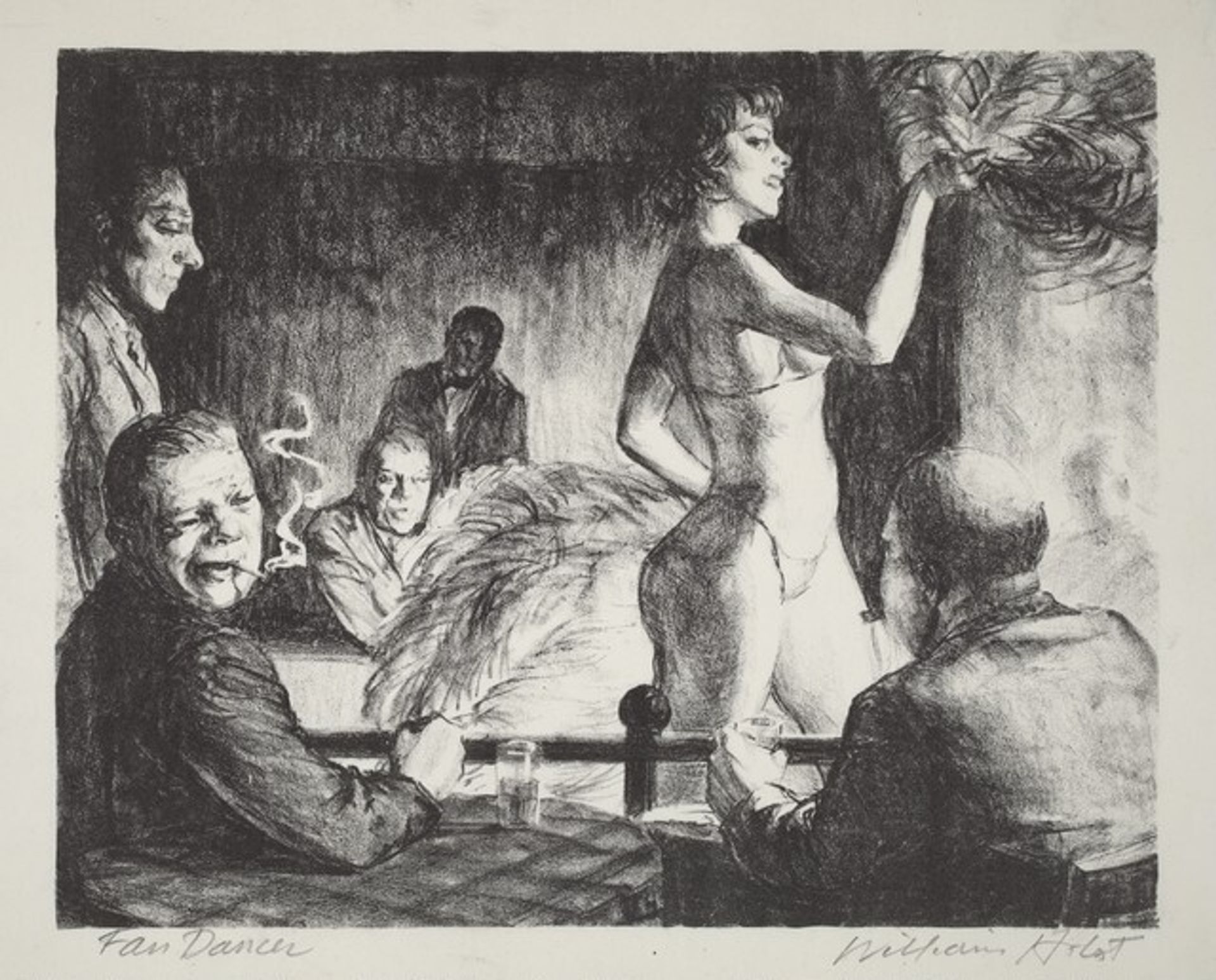
William H. Holst created this print, "Fan Dancer," sometime during his career, which spanned much of the 20th century. In a work like this, Holst is in dialogue with a long history of representing the female body for a predominantly male gaze. Here, he depicts a burlesque dancer, a figure often associated with both allure and exploitation. What does it mean to frame this performer in front of an audience that seems almost entirely composed of men, in what looks like a private room? The men are drinking and smoking, their faces a mixture of expectation and boredom. The dancer herself, caught in a moment of performance, is both the center of attention and seemingly disconnected from the scene's overall mood. Holst invites us to consider how performance, gender, and class intersect, and how the act of looking can both empower and objectify. The emotional complexity here leaves us contemplating the dynamics of power and the role of the artist in portraying these interactions.


Artwork details
- Medium
- drawing, print, graphite, charcoal
- Dimensions
- image: 181 x 222 mm paper: 244 x 279 mm
- Copyright
- National Gallery of Art: CC0 1.0
Tags
Comments
Share your thoughts
About this artwork
William H. Holst created this print, "Fan Dancer," sometime during his career, which spanned much of the 20th century. In a work like this, Holst is in dialogue with a long history of representing the female body for a predominantly male gaze. Here, he depicts a burlesque dancer, a figure often associated with both allure and exploitation. What does it mean to frame this performer in front of an audience that seems almost entirely composed of men, in what looks like a private room? The men are drinking and smoking, their faces a mixture of expectation and boredom. The dancer herself, caught in a moment of performance, is both the center of attention and seemingly disconnected from the scene's overall mood. Holst invites us to consider how performance, gender, and class intersect, and how the act of looking can both empower and objectify. The emotional complexity here leaves us contemplating the dynamics of power and the role of the artist in portraying these interactions.
Comments
Share your thoughts