About this artwork
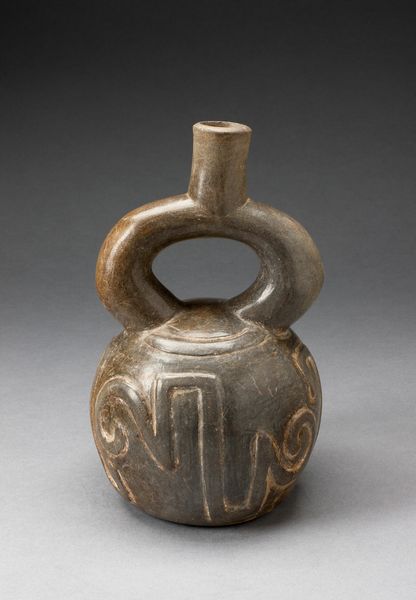
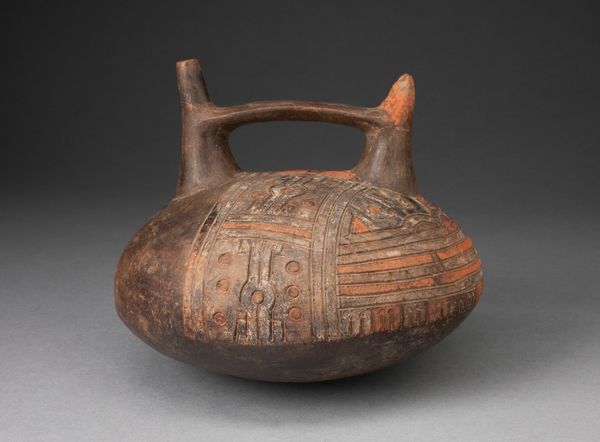
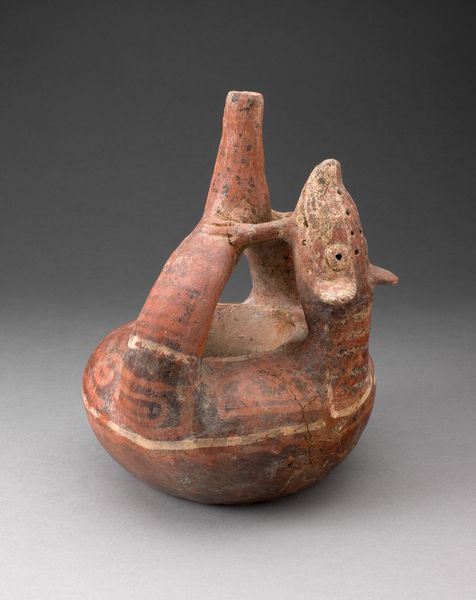
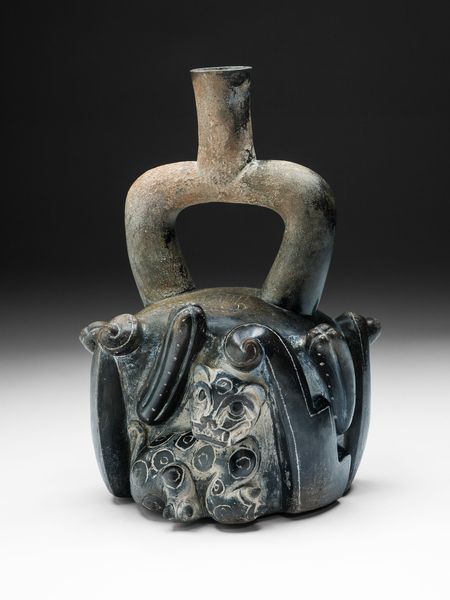
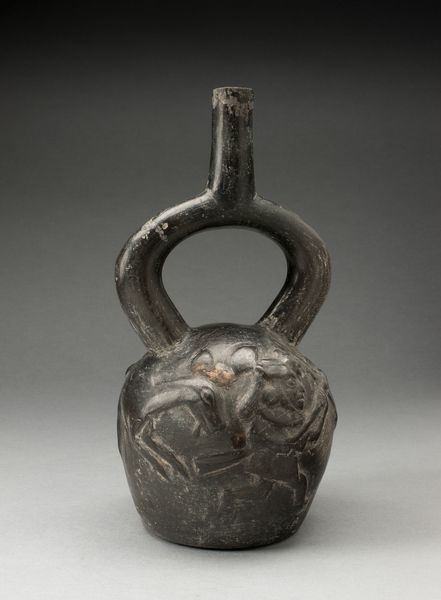
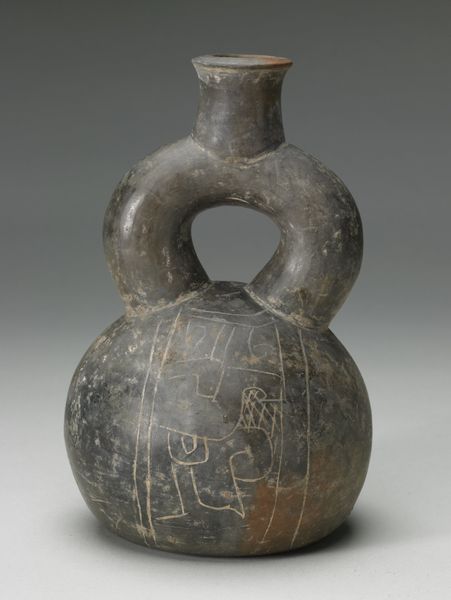
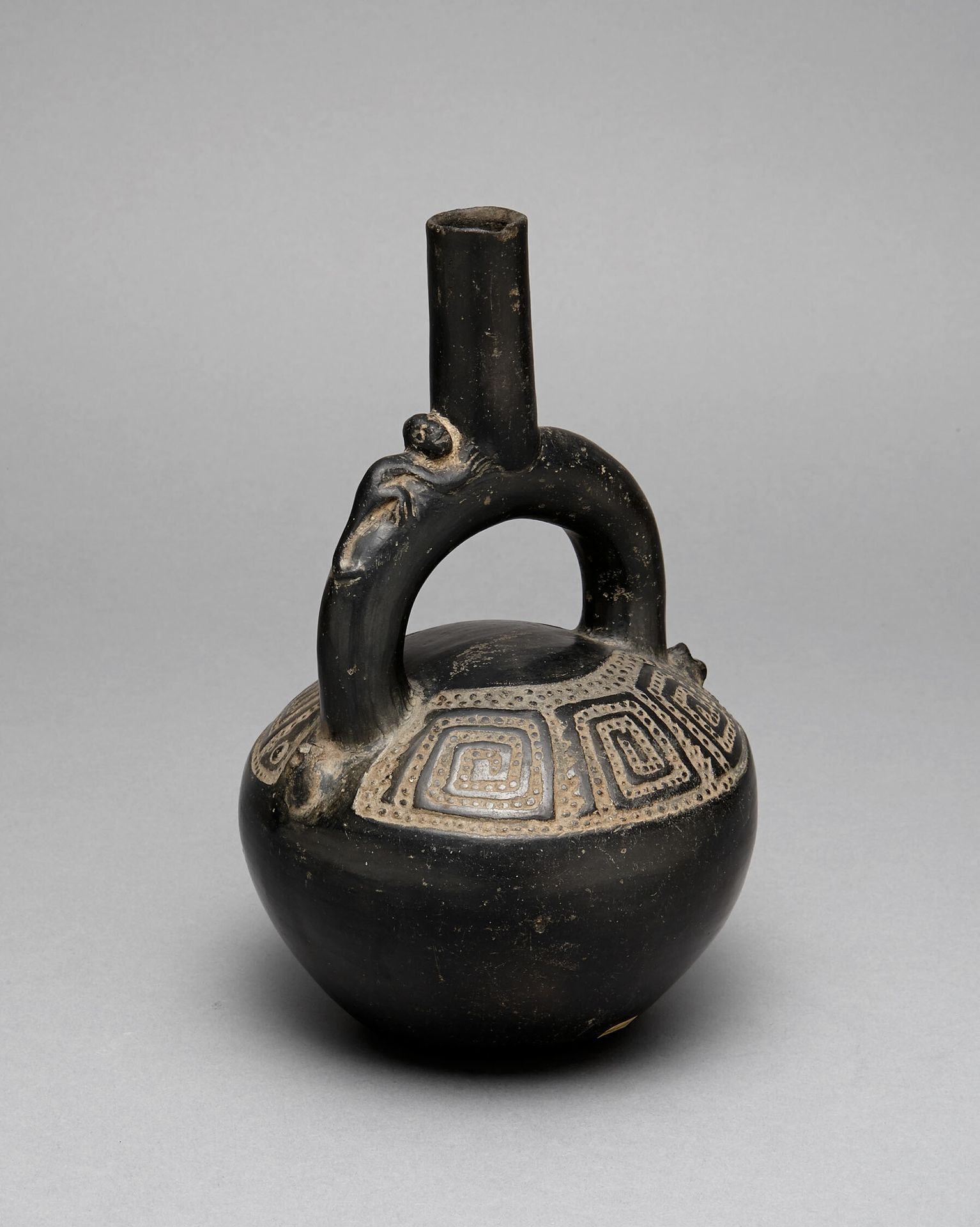
This blackware stirrup spout vessel with incised squared spiral motif was created by the Chimú people in ancient Peru. The Chimú were skilled in pottery. Their work often reflected their worldview, social structures, and daily life. This vessel, with its distinctive stirrup spout, represents an important feature of Chimú art. The squared spiral motif incised on the surface may symbolize concepts related to water, agriculture, or cosmology. Its significance would have been immediately legible to members of Chimú society. The vessel's blackware finish, achieved through specialized firing techniques, would have added to its allure. We know that it may have served a practical purpose for storing liquids. It may also have been used in ritual contexts. Understanding the symbolism and cultural context of Chimú pottery requires interdisciplinary research, drawing on archaeology, ethnography, and art history. By studying such objects, we gain insight into the beliefs, practices, and artistic achievements of the Chimú civilization, and we can appreciate the role of art in shaping social identities.
Blackware Stirrup Spout Vessel with Incised Squared Spiral Motif
Possibly 1200 - 1450


Artwork details
- Medium
- ceramic, inorganic-material
- Dimensions
- 23.5 × 13.2 cm (9 1/4 × 5 13/16 in.)
- Location
- The Art Institute of Chicago
- Copyright
- Public Domain
Tags
Comments
Share your thoughts
About this artwork
This blackware stirrup spout vessel with incised squared spiral motif was created by the Chimú people in ancient Peru. The Chimú were skilled in pottery. Their work often reflected their worldview, social structures, and daily life. This vessel, with its distinctive stirrup spout, represents an important feature of Chimú art. The squared spiral motif incised on the surface may symbolize concepts related to water, agriculture, or cosmology. Its significance would have been immediately legible to members of Chimú society. The vessel's blackware finish, achieved through specialized firing techniques, would have added to its allure. We know that it may have served a practical purpose for storing liquids. It may also have been used in ritual contexts. Understanding the symbolism and cultural context of Chimú pottery requires interdisciplinary research, drawing on archaeology, ethnography, and art history. By studying such objects, we gain insight into the beliefs, practices, and artistic achievements of the Chimú civilization, and we can appreciate the role of art in shaping social identities.
Comments
Share your thoughts